
The intersection of high fashion and television prestige was on full display as Hollywood’s biggest stars, producers, and tastemakers gathered for an exclusive pre-Emmy Awards celebration. Co-hosted by luxury fashion house Loewe and cultural publication W Magazine, the intimate September 2026 dinner served as a high-profile runway preview ahead of the television industry’s main competitive ceremonies. Held in Los Angeles, the event brought together nominees from various critically acclaimed series, turning a private dining experience into a significant stylistic showcase. However, the sartorial choices made by the evening’s attendees underscored a growing trend in modern red-carpet fashion: the deliberate ambiguity surrounding contemporary dress codes. While high-end designer collaborations typically demand strict adherence to formal or avant-garde parameters, the ensemble selections at the Loewe and W Magazine gathering reflected a diverse spectrum of interpretations, ranging from elevated casualwear to structurally complex haute couture.

Event Background and Chronology of the Pre-Emmy Circuit
The calendar leading up to the Primetime Emmy Awards has historically functioned as a crucial testing ground for major fashion houses seeking visibility during peak awards season. In recent years, the week preceding the main broadcast has evolved from traditional cocktail mixers into carefully curated brand activations. Loewe, under the creative direction of Jonathan Anderson, has increasingly positioned itself at the center of this cultural nexus, fusing theatrical silhouettes with wearable art.

The timeline of the evening followed standard Hollywood protocol: arrivals began in the early evening, with photographers capturing the arrivals against a bespoke step-and-repeat featuring the co-hosts’ branding. Guests moved from the photo-call area into the private dining space, where industry peers mingled ahead of the Academy’s formal voting closures and ceremony nights. This particular gathering drew heavy hitters from both film and television, creating a cross-pollination of talent that naturally attracted significant media scrutiny regarding wardrobe coordination.

Sartorial Analysis: A Breakdown of Notable Attendee Ensembles
The breadth of Loewe’s design catalog was heavily represented throughout the evening, though individual styling choices elicited varied critical assessments from fashion commentators and industry observers alike.

Emerging Talent and Contemporary Silhouettes
Cailee Spaeny arrived in a piece that showcased Loewe’s penchant for structural juxtaposition. While the foundational elements of the look received cautious approval, the inclusion of an apron-style bodice introduced a polarizing architectural element that detracted from the garment’s overall fluidity. Similarly, Dakota Fanning opted for a relatively straightforward, youthful silhouette that registered as clean and approachable, standing in contrast to her sister Elle Fanning’s more understated approach. Elle Fanning’s choice prioritized comfort and minimalism—hallmarks of her recurring red-carpet philosophy—though critics noted that the unfussy nature of the garment lacked the high-impact photogenic quality typically expected at major fashion-forward events.

Television breakout stars also made notable statements. Hannah Einbinder and Julia Garner both gravitated toward upscale casual interpretations. While the garments worn by both actresses carried significant luxury price tags and fine craftsmanship, their overall aesthetic leaned toward a relaxed formality that occasionally blurred the line between eveningwear and daytime luxury. For Garner, the ensemble worked as a charming, age-appropriate look, whereas Einbinder’s styling was perceived by fashion critics as overly downscale for a major pre-gala event.

Avant-Garde Experiments and Textured Fabrics
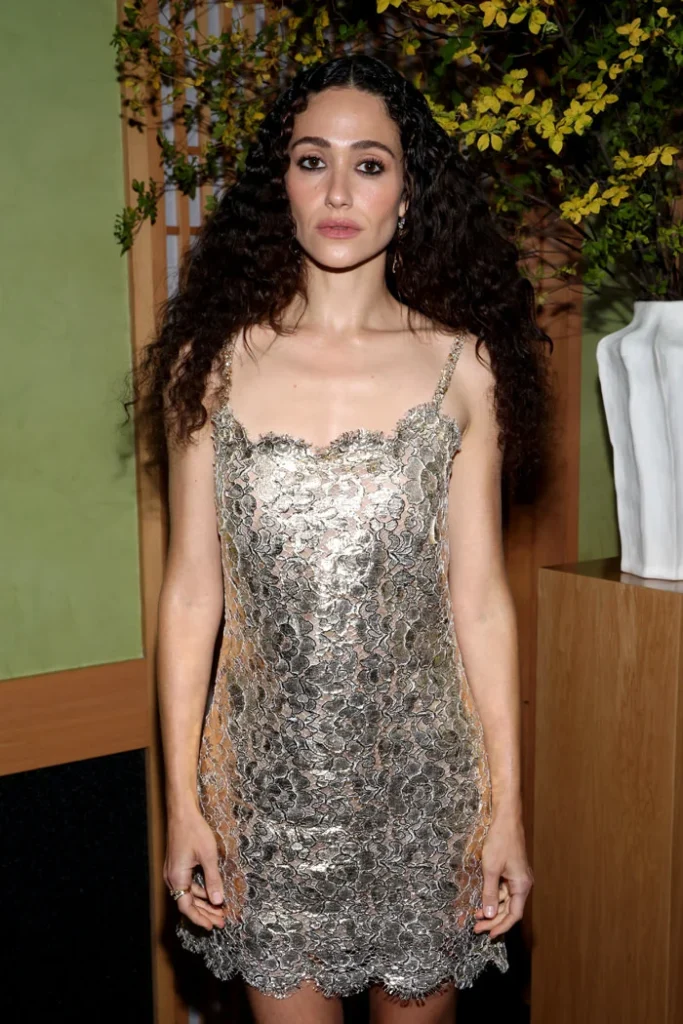
Textural experimentation was a dominant theme for several attendees, yielding mixed results. Emmy Rossum made a rare public appearance in a textured dress that immediately drew comparisons to domestic vinyl lace surfaces, an association that overshadowed the intricate construction of the garment. Furthermore, an unexpected beauty and makeup direction rendered the actress nearly unrecognizable to photographers upon arrival.

Linda Cardellini incorporated leather trim to add visual depth to her evening attire, though the specific geometry of the bustline introduced unnecessary complication to an otherwise sophisticated look. Kaia Gerber faced scrutiny for the upper construction of her ensemble, with particular criticism directed toward the restrictive shaping of the sleeves and neckline. Meanwhile, Louisa Jacobson embraced a menswear-inspired, butch aesthetic on the upper half, which received praise for its boldness, though the heavy proportions of the lower half created an unbalanced silhouette.

Menswear and Gender-Fluid Styling
The men and non-binary attendees at the dinner similarly tested conventional boundaries, blending traditional tailoring with Loewe’s signature unconventional textures. Kingston Rumi Southwick showcased an expensive yet largely anonymous ensemble, redeemed primarily by a supple leather shirt that added tactile interest. Richard Gadd paired a cozy, well-received knit sweater with unconventional footwear choices that drew skepticism from style commentators. Riz Ahmed selected a sharp foundational suit that was unfortunately undermined by the introduction of a pink sweater, a hue that fashion critics argued clashed with his complexion.

Conversely, actors such as Yahya Abdul-Mateen II experienced structural challenges; while the fabric and craftsmanship of his jacket were undeniably luxurious, the cut and proportion proved excessively unflattering on the red carpet.

Industry Implications and the Evolution of Red Carpet Culture
The divergence in dress codes observed at the Loewe and W Magazine dinner points to a broader shift in how celebrities and their styling teams approach pre-gala events. As formal wear becomes increasingly democratized and experimental, traditional boundaries dictating what constitutes "evening appropriate" are continuously being rewritten.

Luxury brands frequently utilize these intimate gatherings to test avant-garde pieces that might be considered too risky for the primary televised red carpet. Consequently, attendees often serve as living laboratories for experimental design—explaining the presence of polarizing elements such as apron bodices, vinyl-textured lace, and unorthodox layering.

Furthermore, the economic implications of such events are substantial. Partnerships between publications like W Magazine and heritage luxury houses like Loewe generate billions of impressions across digital and social media platforms. Every critique, whether favorable or skeptical, contributes to the ongoing marketing lifecycle of the featured collections, cementing the symbiotic relationship between Hollywood prestige and the global fashion industry. As the television academy prepares for its ultimate night of recognition, events like this ensure that the conversation remains firmly fixed not only on who takes home trophies, but on the cultural architects dictating contemporary style.