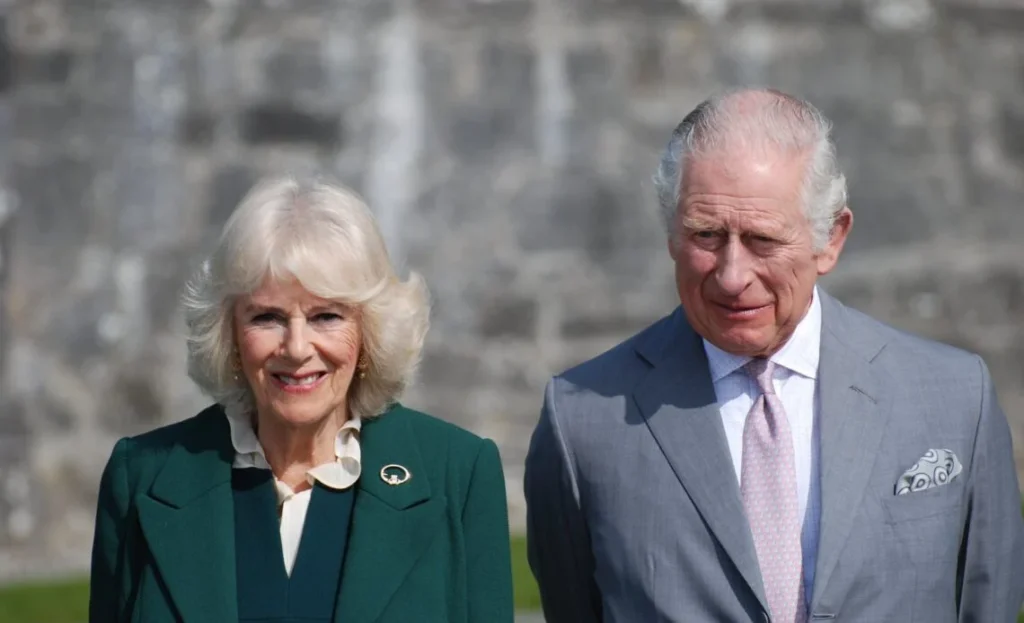

The King and Queen are scheduled to travel to Wales next week for a landmark constitutional and ceremonial engagement: the official opening of the seventh Senedd. Taking place on Thursday, 15 October 2026, the high-profile visit to Cardiff marks the first time Their Majesties will preside over the opening of the Welsh Parliament in their capacities as monarch and consort. The event carries profound symbolic weight for the institution, coming on the heels of a historic electoral expansion that has increased the Senedd’s membership from 60 to 96 MSs, designed to enhance legislative and scrutiny capacities.
The visit underscores the enduring relationship between the Crown and the devolved administration in Wales, a bond that has evolved significantly over the past quarter-century. As Their Majesties step forward to formally inaugurate this new legislative term, the ceremony will blend time-honored military pageantry with contemporary Welsh culture, reflecting a modern parliament deeply rooted in its heritage.
Arrival and Ceremonial Welcomes
The royal itinerary begins on Pierhead Street, where The King and Queen will receive a formal Welsh welcome. Two dedicated guard formations—provided by the 3rd Battalion, The Royal Welsh, and the 157 (Welsh) Regiment Royal Logistics Corps—will stand at attention to greet the royal motorcade. Concurrently, a Royal Navy Guard of Honour will be stationed to deliver a traditional Royal Salute as Their Majesties step onto the grounds of the Senedd precinct.
Following the military salutes, a civic line-up of dignitaries will welcome the royal couple before presenting them to key parliamentary figures. Among those greeting The King and Queen will be the Llywydd of the Senedd, Huw Irranca-Davies MS, and the First Minister of Wales, Rhun ap Iorwerth MS.
Upon entering the building, a celebratory fanfare will ring out to signal the official commencement of the ceremony. The King and Queen will proceed to meet with various political leaders, the Chief Executive and Clerk of the Senedd, and the Deputy Presiding Officer, engaging with key architects of the nation’s governance.
Inside the Siambr and Cultural Highlights
As Their Majesties make their formal entry into the Siambr—the Senedd’s debating chamber—they will be greeted by the ethereal sounds of The King’s Harpist, Mared Pugh-Evans, performing live.
The proceedings inside the chamber are designed to highlight the breadth of Welsh artistic expression and civic identity. The Llywydd will open the floor with introductory remarks, setting a tone of democratic renewal, followed by a formal address from The King. The First Minister of Wales will also deliver remarks on behalf of the Welsh Government, reflecting on the legislative priorities and aspirations of the seventh Senedd.
Cultural performances will feature prominently throughout the ceremony. The National Poet of Wales, Hanan Issa, will take the podium to read a specially commissioned poem written exclusively for the inauguration of the seventh Senedd. Additionally, the Merched Plastaf Choir is slated to perform O Gymru, a stirring choral piece composed by renowned Welsh musician Rhys Jones.
Post-Ceremony Engagements and a Poignant Tribute
Following the conclusion of the formal proceedings in the Siambr, Their Majesties will transition to the Cwrt. In this space, the royal couple will engage directly with a diverse cross-section of Welsh society. The guest list includes members of the Welsh Youth Parliament, Senedd Commissioners, newly elected Members of the Senedd, and delegates from numerous community and youth organizations across the principality.
Before departing the parliament buildings, The King and Queen will receive a floral posy from Noah Jones. The presentation holds profound historical resonance: Mr. Jones is the great-grandson of the caretaker at Pantglas Junior School in Aberfan, a heroic figure who risked his life to save numerous children during the tragic Aberfan disaster of 1966. The inclusion of this tribute bridges decades of shared national memory, linking contemporary royal duties with moments of deep collective grief and resilience in Welsh history.
Background Context: The Evolution of the Senedd
The upcoming ceremonial opening arrives at a pivotal juncture in the institutional history of Welsh devolution. Established initially in 1999 as the National Assembly for Wales following the passage of the Government of Wales Act 1997, the institution was born out of a desire to bring governance closer to the people of Wales through the transfer of specific powers from Westminster.
Over the subsequent two and a half decades, the institution underwent a structural and constitutional maturation. In 2007, the executive and legislative branches were formally separated. A landmark referendum in 2011 granted the institution primary law-making powers in devolved areas without requiring the approval of the UK Parliament. In May 2020, the body officially changed its name to Senedd Cymru (Welsh Parliament), or simply the Senedd, to reflect its status as a fully-fledged national parliament.
The institution reached another major milestone in July 2024, when The King and Queen visited Cardiff to celebrate the Senedd’s 25th anniversary, reflecting on a quarter-century of devolved legislation concerning health, education, transport, and the environment.
The 2026 Senedd Election and Institutional Expansion
The backdrop to next week’s opening is the historic election to the seventh Senedd, which resulted in the most significant administrative expansion in the parliament’s history. To better equip the legislature for its expanding responsibilities—including the passage of primary legislation, taxation powers, and rigorous scrutiny of the Welsh Government—the total number of Members of the Senedd was increased from 60 to 96.
This expansion aimed to correct a long-standing criticism that the Senedd was under-resourced compared to other devolved legislatures like the Scottish Parliament and the Northern Ireland Assembly. With a larger intake of MSs, the seventh Senedd operates with enhanced committee capacities, allowing for deeper oversight of public services and governmental accountability.
Continuity of the Crown and Devolution
The participation of The King and Queen in next week’s ceremony highlights the evolving role of the Monarchy within a devolved United Kingdom. While Queen Elizabeth II presided over the opening of the sixth Senedd in October 2021—an event attended by the then-Prince of Wales and Duchess of Cornwall in their former roles—the 2026 ceremony establishes a new precedent under the current reign.
Constitutional experts note that the Monarchy serves as a vital non-partisan unifying symbol across the four nations of the United Kingdom. By personally inaugurating the newly expanded Senedd, His Majesty reaffirms the Crown’s commitment to supporting democratic institutions and recognizing the distinct legislative identities of Wales, Scotland, Northern Ireland, and England.
Broader Implications and Outlook
The opening of the seventh Senedd is expected to set a constructive tone for the legislative term ahead. With a larger and more diverse intake of politicians, the Welsh Parliament faces pressing policy challenges, ranging from economic revitalization and regional infrastructure to healthcare reform and climate change mitigation.
As Their Majesties depart Cardiff on 15 October, the focus will shift immediately to the legislative agenda of the 96 MSs now occupying the chamber. The intersection of royal pageantry and democratic transition on Thursday will not only mark the formal beginning of a new parliamentary chapter but will also underscore the resilience, cultural vitality, and constitutional maturity of modern Wales.