
The triumphant return of historical television’s most lavish period drama was marked by considerable fanfare on October 27, 2026, as the cast and creative team of HBO’s hit series gathered in New York City for the official Season 4 premiere. Trading the heavy wool waistcoats, elaborate bustles, and signature corsetry of the 1880s for contemporary haute couture, the ensemble cast brought a distinct modern sensibility to the red carpet. The high-profile event underscored the ongoing cultural footprint of Julian Fellowes’ grand historical tapestry, which continues to capture global audiences with its meticulous set designs, sweeping socio-economic rivalries, and dramatic storytelling.

As the television industry navigates a rapidly shifting landscape of streaming viewership and prestige television production, the longevity of The Gilded Age remains a notable success story for Home Box Office. The series, which initially debuted to mixed critical comparisons regarding its British predecessor Downton Abbey, has steadily carved out its own identity by focusing on the fascinating friction between "Old New York" aristocracy and the burgeoning "New Money" industrial titans. The fourth season premiere serves not only as a celebration of the show’s continued production milestones but also as a vital marketing anchor for Warner Bros. Discovery as it positions its premier Sunday night programming for the upcoming broadcast quarter.

The Red Carpet Showcase: Designer Choices and Tailoring Insights

The red carpet arrivals featured a diverse array of established luxury houses, archival statement pieces, and contemporary indie designers, offering fashion critics plenty to analyze.

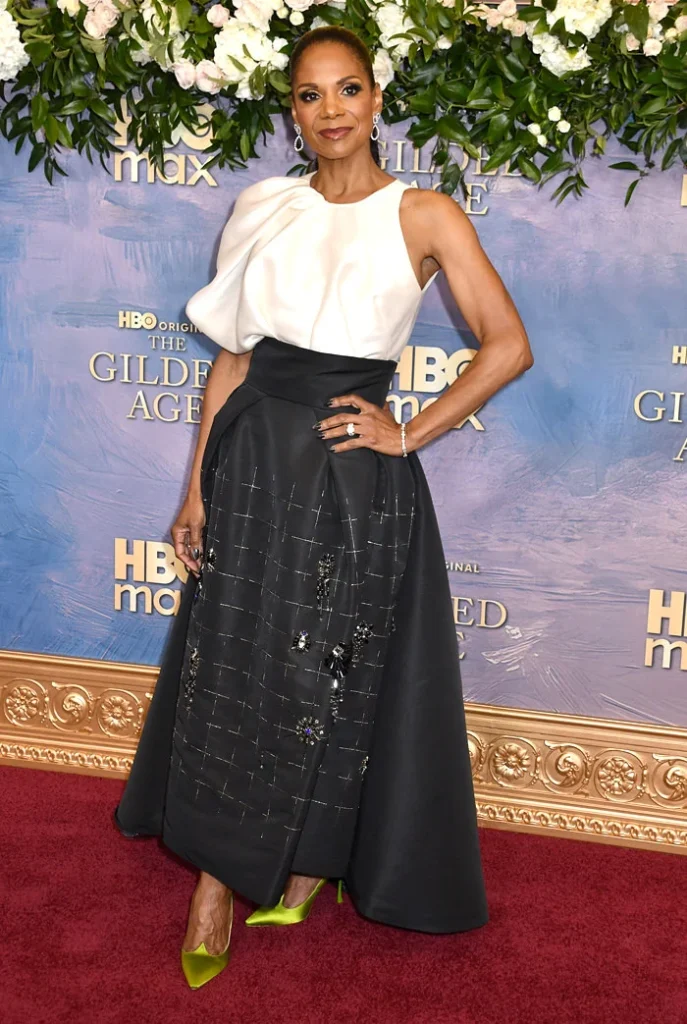
Audra McDonald arrived in a striking creation by Bibhu Mohapatra. While the intricate skirt design and radiant jewelry drew universal praise, the unconventional sleeve construction sparked mild debate among fashion commentators, highlighting the ongoing industry trend toward architectural, avant-garde silhouettes in formal evening wear.

The menswear selections proved equally compelling, though occasionally plagued by common tailoring pitfalls. Ben Ahlers stepped out in a well-proportioned jacket, though critics noted that the inclusion of a cummerbund proved structurally unnecessary, compounded by trousers that required minor hem adjustments. Similarly, Blake Ritson opted for a sharp, classic suit, yet his overall presentation suffered from casual styling choices, including unmanaged hair and hands tucked deep into pockets, which detracted from the formality of the event.

Carrie Coon, celebrated for her magnetic portrayal of Bertha Russell on screen, embraced her signature penchant for unconventional fashion by selecting a piece from Acne Studios. The eccentric and daring silhouette matched Coon’s renowned off-screen fearlessness, complemented by polished hair, subtle makeup, and striking earrings. Conversely, Cynthia Nixon’s choice of an Edeline Lee ensemble drew unfavorable comparisons, with critics likening the heavily textured fabric to decorative textiles.

Archival Fashion Moments and Standout Darlings

One of the evening’s most notable sartorial nods to American fashion history came via Denée Benton, who graced the red carpet in an archival Bob Mackie creation. The breathtaking garment showcased the legendary designer’s mastery of embellishment, though fashion experts noted slight fitting discrepancies, suggesting the vintage piece was originally tailored for a shorter frame and resulted in an uneven hemline.

Male cast members exhibited a mix of traditional and contemporary tailoring. Dennis Haysbert cut a commanding figure in classic evening wear, while Harry Richardson opted for a pristine suit, though critics voiced fatigue over the modern footwear trend favoring low-profile, slipper-style shoes over traditional oxfords. Simon Jones radiated classic Hollywood charm, effortlessly carrying his tailored look with palpable enthusiasm.

Among the standout minimalist successes of the evening was Kelley Curran, who appeared in Lein Studio. Featuring an immaculate drape and understated, elegant styling, Curran’s look received universal acclaim from fashion chroniclers. Meanwhile, Louisa Jacobson—performing under the creative direction of Conner Ives—delivered one of the night’s most discussed ensembles. Blending sharp tailoring with an edgy, gender-fluid sensibility, Jacobson successfully distanced her red-carpet persona from the more demure historical garments of her character, while simultaneously stepping out from the formidable shadow of her familial legacy.

Additional appearances included Jessica Frances Dukes in a sophisticated gown, Maggie Kuntz in a delicate silhouette that bypassed the need for heavy neckwear, and Taissa Farmiga in a sleek Galvan London dress that prompted mild speculation regarding its contemporary relevance compared to more cutting-edge 2026 trends. The collective showcase reinforced the symbiotic relationship between prestige television publicity and the high-fashion sector, cementing the cast’s status as formidable style icons both on and off the screen.

Background Context and Production Timeline

The path to the fourth season of The Gilded Age has been characterized by steady production schedules and an expanding narrative scope. Following the critical and commercial success of its preceding seasons, HBO officially greenlit the fourth installment to satisfy sustained viewer demand for high-production-value historical fiction. The series, created and principally written by Julian Fellowes alongside writer Sonja Warfield, employs a massive ensemble cast that recreates the opulent galas, industrial boardrooms, and domestic machinations of late 19th-century Manhattan.

The timeline of the series has meticulously advanced through the socioeconomic upheavals of the Gilded Age, tracking the fierce operational battles of robber barons, the development of modern labor movements, and the rigid social gatekeeping enforced by figures like Mrs. Astor. By the time production wrapped on Season 4 earlier in the year, anticipation among the show’s dedicated fan base—colloquially known as "Gilded Gladiators"—had reached a fever pitch, ensuring that the New York premiere would serve as a major cultural event for the network.

Industry Implications and Cultural Impact

The premiere of Season 4 arrives at a crucial juncture for premium cable and subscription video-on-demand services. As audiences increasingly demand immersive, escapist content with high production values, period dramas have emerged as reliable anchors for subscriber retention. The ability of The Gilded Age to maintain a consistent cultural conversation week after week places it in elite company alongside other prestige titles.

From an economic perspective, the production of the series generates significant employment within the New York and East Coast regional film and television sectors. Utilizing extensive practical sets, period-accurate digital effects, and thousands of handmade costumes, the show operates as a massive enterprise supporting local artisans, costume houses, and catering logistics. The promotional rollout, anchored by red carpet events featuring prominent designers like Bibhu Mohapatra, Edeline Lee, and Maison Margiela, further bridges the gap between historical storytelling and modern luxury fashion marketing.

As the fourth season officially launches to the public, initial critical responses suggest that the narrative momentum will not slow down. The amalgamation of high-stakes societal maneuvering, romantic intrigue, and visual splendor ensures that The Gilded Age will remain a dominant fixture in the television landscape throughout its broadcast run. The New York premiere not only celebrated the hard work of its extensive cast and crew but also solidified the series’ enduring legacy as a defining cultural artifact of 2020s television.