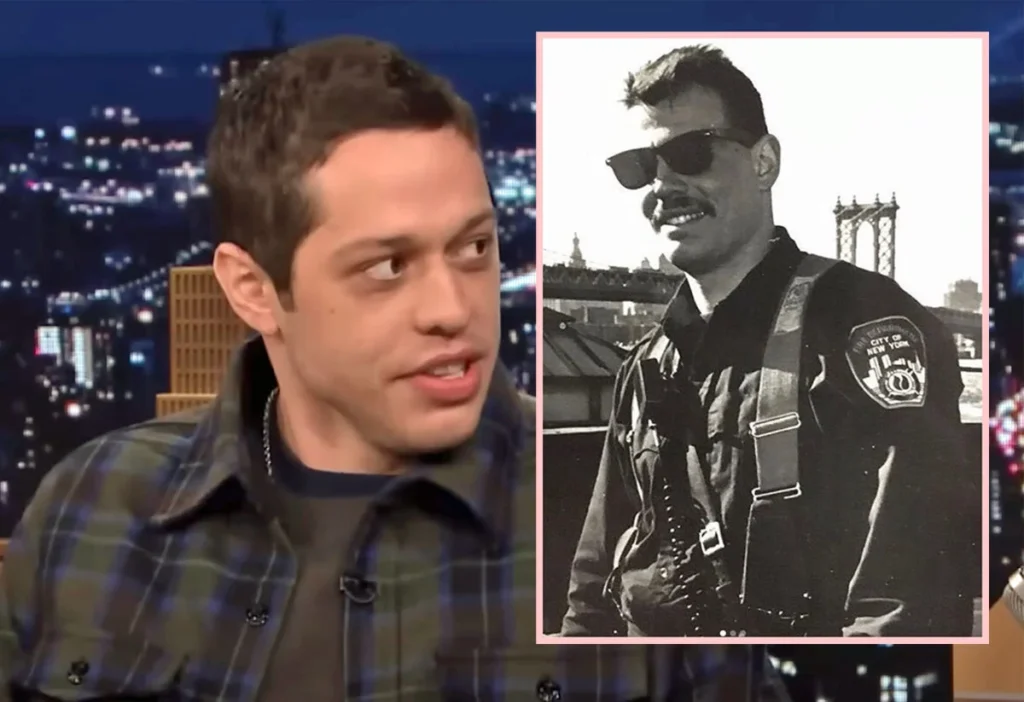

The intersection of national tragedy and political rhetoric has once again come to the forefront of public discourse following comments made by former President Donald Trump regarding his presence at the World Trade Center site in the aftermath of the September 11, 2001, terrorist attacks. Comedian and actor Pete Davidson, whose father, Scott Davidson, was a New York City firefighter who perished during the collapse of the towers, recently addressed these claims during an extensive interview with Variety. His response underscores a broader national tension regarding the politicization of one of the deadliest days in American history.
The Origin of the Disputed Claim
The controversy began in September 2024, when Donald Trump recounted a specific narrative during a public address. Trump claimed that shortly after the attacks, while visiting the site of a building he was constructing in New York, he witnessed the United States Steel building “creaking” and in danger of imminent collapse. He further alleged that two large, strong firefighters physically lifted him under his arms and carried him to safety to avoid the structural hazard.
This narrative was met with immediate skepticism from historians, journalists, and fact-checkers. Extensive documentation of the days following the 9/11 attacks exists, yet there is no record—photographic, video, or anecdotal—of such an event involving the former president. When pressed for clarification, Trump adjusted his stance, stating on social media that he was present shortly after the collapse with a group of construction workers and maintained that his account was accurate. However, the lack of corroborating evidence from emergency services or contemporary media coverage has led many to characterize the story as a fabrication or a conflation of events.
Pete Davidson’s Perspective and Personal Connection
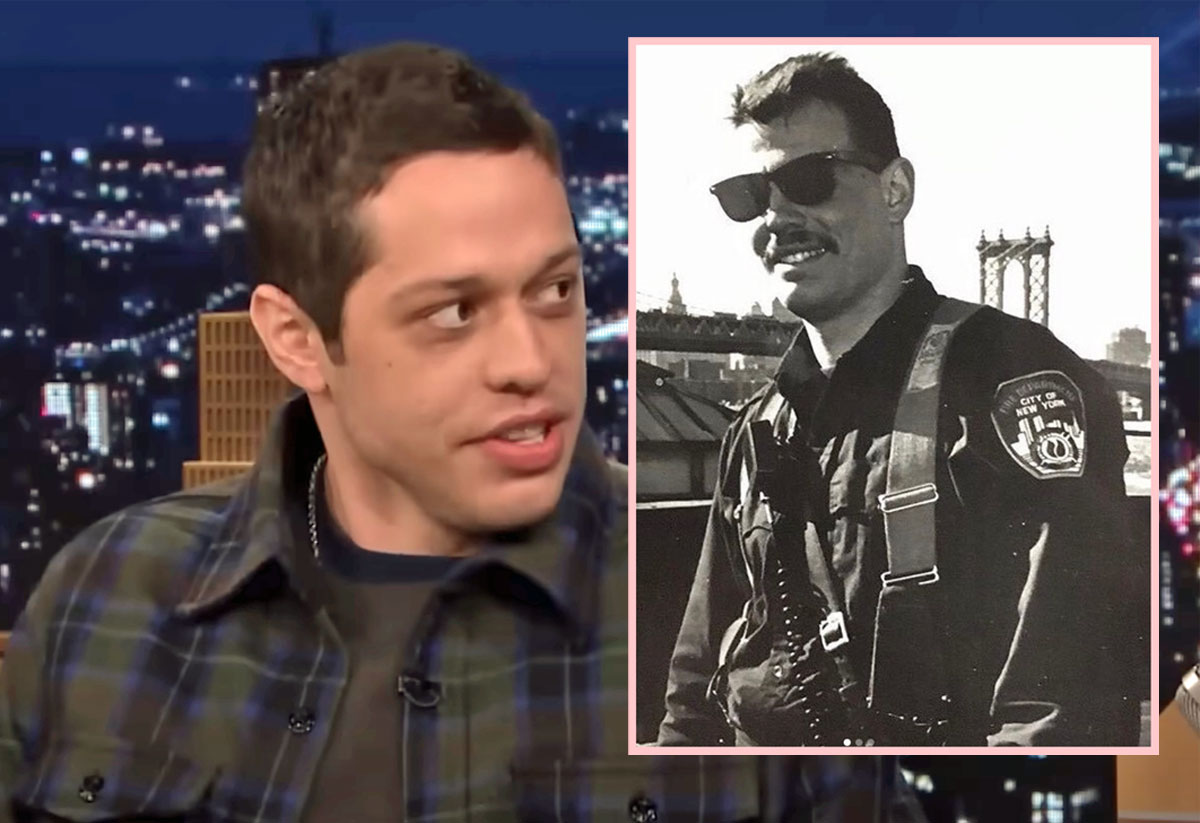
For Pete Davidson, the issue is not merely political; it is deeply personal. Scott Davidson was a first responder with Ladder Company 118 in Brooklyn. He was last seen running up the stairs of the Marriott World Trade Center hotel, which was destroyed when the South Tower collapsed. Growing up in the shadow of this loss has profoundly shaped Davidson’s worldview.
In his interview with Variety, Davidson addressed the Trump anecdote with a mix of resignation and sharp critique. He described the former president’s tendency to make unverifiable or inflammatory claims as akin to a "drunk uncle" who, despite his erratic behavior, wields immense power. "Nothing that guy says is surprising anymore," Davidson remarked. "It’s sad that it’s to the point where it’s so ridiculous that you’re like, ‘Yeah, whatever.’ He’s the drunk uncle, but he has the keys to the nukes. That’s the problem."
This critique highlights a growing sentiment among many Americans who find the constant stream of contradictory information from political leaders to be a source of national exhaustion. By drawing this comparison, Davidson emphasizes the existential anxiety that arises when the highest office in the land is associated with narratives that appear detached from reality.
The Historical Record of 9/11
To understand the sensitivity surrounding these claims, one must look at the historical reality of the recovery efforts. The collapse of the Twin Towers created a catastrophic environment that claimed the lives of 2,977 victims, including 343 members of the FDNY. The recovery phase at Ground Zero involved thousands of construction workers, ironworkers, police officers, and firefighters working in hazardous conditions for months.
The United States Steel building, referenced in Trump’s account, is not a landmark typically cited in the timeline of the 9/11 recovery. The logistical difficulty of navigating the "Pile," as the debris field became known, was so immense that physical movement was restricted to heavy machinery and specialized search-and-rescue teams. The assertion that a civilian could be "lifted and run" through such an area by firefighters—who were operating under extreme stress and life-threatening conditions—contradicts the documented operational procedures of the time.
The Role of Narrative in Modern Politics
The incident involving Trump’s 9/11 story serves as a case study in the role of narrative in modern political campaigning. Political strategists often argue that personal stories, even when factually loose, serve to create an emotional connection with a target audience. For his supporters, the anecdote may be viewed as a demonstration of the former president’s closeness to the tragedy and his purported bravery. For critics, it represents a cynical attempt to co-opt a national trauma for personal branding.
Fact-checkers have noted that Trump has frequently referenced his presence at Ground Zero over the years, though the details of his involvement have shifted. In the early 2000s, he often spoke about his role in the reconstruction of New York City; however, the specific story of being carried by firefighters is a relatively recent addition to his repertoire. This evolution in storytelling is often examined by political scientists as a tactic to solidify a populist image.
Broader Implications for Public Discourse
The public reaction to Davidson’s comments has been polarized, reflecting the broader division within the United States. While many praise Davidson for using his platform to hold public figures accountable, others argue that entertainers should refrain from commenting on political matters. However, given that the subject matter directly impacts the legacy of 9/11 victims, the discourse extends beyond simple political bickering.
The "post-truth" era of American politics, as described by many media analysts, is characterized by the diminishing weight of objective facts. When high-profile figures make claims that are easily debunked but persist in the public consciousness, it erodes the shared reality necessary for a functional democracy. The frustration expressed by individuals like Davidson serves as a bellwether for the public’s struggle to reconcile political rhetoric with lived history.
The Intersection of Mental Health and Public Life
The Variety interview also served as a moment of transparency for Davidson, who has been open about his personal battles with mental health. His appearance followed a period of private treatment, marking a return to the public eye. His ability to articulate complex feelings regarding both his family history and the current political climate illustrates a shift in how celebrities manage their public personas.
By addressing the Trump story, Davidson is not just engaging in political commentary; he is asserting his right to defend the memory of his father and the dignity of the first responders who served that day. The incident acts as a reminder that for many families, 9/11 is not an abstract historical event but a permanent, defining feature of their lives.
Conclusion
As the United States continues to navigate a turbulent political landscape, the clash between narrative and historical fact remains a central point of contention. The comments made by Pete Davidson serve as a poignant reminder that even as the years pass, the events of September 11, 2001, remain a raw nerve in the American psyche. Whether through the lens of a comedian or a political analyst, the demand for accountability in public discourse remains as pressing as ever. As for the former president, the debate over his recollection of 9/11 will likely continue to serve as a litmus test for his supporters and detractors alike, illustrating the deep-seated divisions that define contemporary American life.