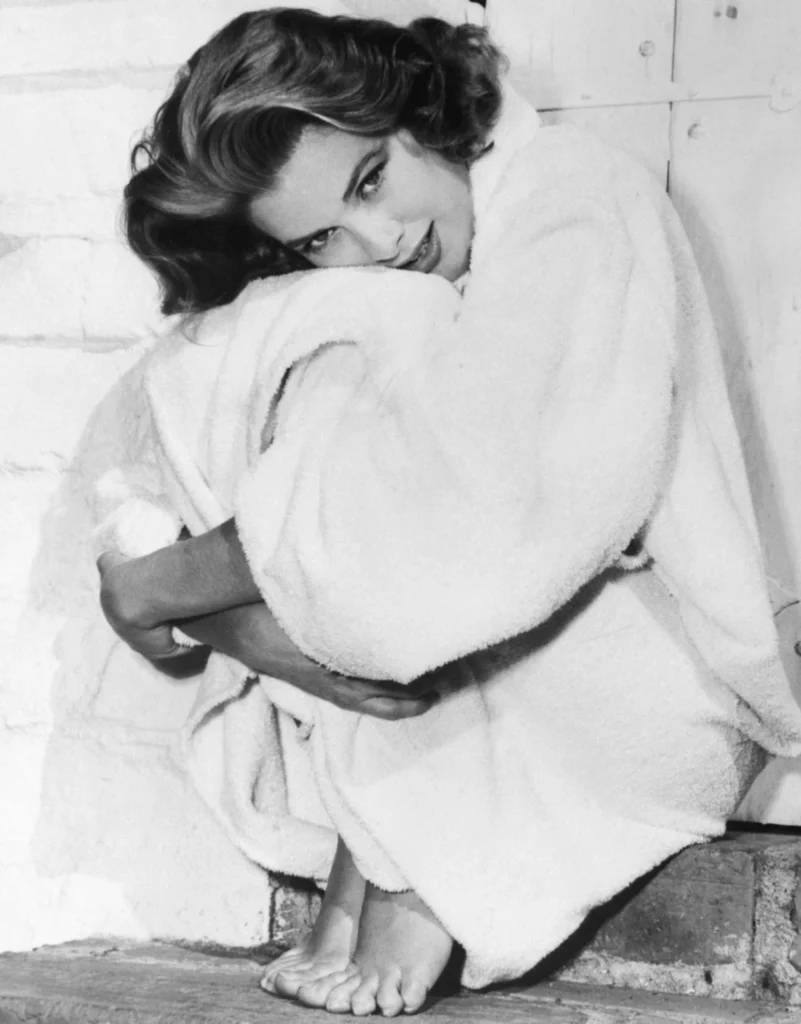

The trajectory of Grace Kelly’s life remains one of the most compelling narratives of the 20th century, bridging the gap between the golden age of American cinema and the centuries-old traditions of European royalty. Born into a prominent Philadelphia family on November 12, 1929, Kelly’s ascent to the pinnacle of Hollywood was remarkably swift, culminating in an Academy Award at the age of 25. However, it was her subsequent transition from a global screen icon to the Princess Consort of Monaco that solidified her place in history. This evolution was not merely a change in title but a profound shift in lifestyle, moving from the fast-paced, public-facing world of a film star to the structured, regally refined environment of the House of Grimaldi.
The Philadelphia Roots and the Ascent to Hollywood
Grace Patricia Kelly was born into a family that already understood the complexities of public life. Her father, John B. Kelly Sr., was a triple Olympic gold medalist in rowing and a self-made millionaire, while her mother, Margaret Katherine Majer, was the first coach of women’s athletic teams at the University of Pennsylvania. This background of discipline and achievement heavily influenced Grace’s professional conduct.
After graduating from the American Academy of Dramatic Arts in New York, Kelly began her career in theatrical productions and live television dramas. Her move to Hollywood in the early 1950s coincided with the industry’s search for a new type of leading lady—one who possessed "regal" poise and sophisticated charm. Her breakout role in the 1952 Western High Noon, starring alongside Gary Cooper, established her as a serious talent. However, it was her collaboration with director Alfred Hitchcock that defined her cinematic legacy. Between 1954 and 1955, she starred in three of Hitchcock’s most celebrated films: Dial M for Murder, Rear Window, and To Catch a Thief.
In 1955, Kelly reached the zenith of her acting career when she won the Academy Award for Best Actress for her performance in The Country Girl. At 25, she was the darling of the industry, yet her most significant life change was only months away.
The 1955 Cannes Film Festival and the Meeting of Two Worlds
The turning point in Kelly’s life occurred in May 1955, during the Cannes Film Festival. While leading the American delegation, she was invited to a photo session at the Prince’s Palace of Monaco with Prince Rainier III. At the time, Monaco was a small principality seeking to revitalize its international image and economic standing. Prince Rainier, the 31-year-old sovereign, was looking for a consort who could bring grace and global attention to his realm.
The meeting, though brief and initially delayed, sparked a correspondence that lasted throughout the year. By Christmas 1955, Prince Rainier had traveled to Philadelphia to propose. The announcement of their engagement in early 1956 sent shockwaves through the entertainment world. Kelly was at the height of her powers, having just completed High Society, a musical remake of The Philadelphia Story. It would serve as her final film, a symbolic farewell to the industry that had made her a household name.
The Great Transition: From Actress to Civilian to Sovereign
The move from Hollywood to Monaco was a logistical and psychological undertaking of immense proportions. In April 1956, Kelly departed from New York aboard the SS Constitution, accompanied by dozens of trunks, her family, and her beloved poodle. Upon her arrival in Monaco, she was greeted by thousands of spectators and a media frenzy that would be dubbed "The Wedding of the Century."
Kelly’s transition was marked by a significant shift in her sense of self. In the biography High Society: The Life of Grace Kelly by Donald Spoto, she reflected on the difficulty of adjusting to "civilian life." Having spent a decade in the highly artificial and demanding environment of professional acting, she noted that her definition of a "normal person" had been skewed toward those in the film industry. The adjustment to the protocols of a sovereign state required a total recalibration of her public and private identity.

Domestic Life and the Philosophy of Serenity
Once established as Princess Grace of Monaco, Kelly turned her attention to the domestic sphere, applying her refined aesthetic to the Prince’s Palace and other family residences. Her approach to interior design and homemaking was rooted in a desire for equilibrium. In her 1980 publication, My Book of Flowers, she articulated a philosophy that prioritized the home as a sanctuary. She wrote that because the outside world is often disturbing to one’s equilibrium, it is of paramount importance to find serenity and calm within one’s own milieu.
This pursuit of tranquility was reflected in her choice of decor, which often incorporated floral arrangements and classic European styles. She was known for her "regally refined" design aesthetic, which balanced the grandeur required of a palace with the warmth necessary for a family home. During her marriage, she and Prince Rainier had three children: Princess Caroline, Prince Albert II (the current reigning sovereign), and Princess Stéphanie. Her role as a mother became her primary focus, and she worked diligently to ensure her children had a sense of stability despite their public roles.
A Portfolio of International Residences
While the Prince’s Palace in Monte Carlo was her primary residence, Princess Grace’s life was mapped across several notable locations:
- Philadelphia, Pennsylvania: Her childhood home in the East Falls neighborhood served as the foundation of her upbringing. The 17-room Georgian colonial house was purchased by her father in 1929 and remained a touchstone for her throughout her life.
- New York City: During her early acting years, she lived at the Barbizon Hotel for Women and later in an apartment on Manhattan’s Upper East Side. These spaces reflected the independence of a working actress in the late 1940s.
- West Hollywood, California: During her peak Hollywood years, she maintained a modest but elegant apartment that served as a base for her film work.
- The Prince’s Palace, Monaco: A 12th-century fortress transformed into a palace, this was her official residence for 26 years. She was instrumental in modernizing parts of the interior while preserving its historical integrity.
- Roc Agel, France: This private retreat in the hills overlooking Monaco provided the family with a space away from the public eye. It was here that Kelly could indulge in her love for gardening and a more rustic lifestyle.
- Paris and Switzerland: The family maintained residences in Paris for official visits and often spent winters in Switzerland, reflecting the cosmopolitan nature of European royalty.
Cultural and Diplomatic Impact
Princess Grace’s influence extended far beyond the walls of her homes. She is credited with significantly boosting Monaco’s profile, transforming it from a quiet Mediterranean enclave into a world-renowned destination for luxury and the arts. She founded the Princess Grace Foundation in 1964 to support local artisans and later the Princess Grace Academy of Classical Dance.
Her impact on fashion was equally profound. The "Kelly bag" by Hermès, which she used to shield her pregnant belly from paparazzi, remains one of the most coveted luxury items in the world. Her style—characterized by clean lines, pearls, and white gloves—defined the "ladylike" look of the 1950s and continues to influence designers today.
Diplomatically, she served as a bridge between the United States and Monaco. Her presence brought an American sensibility to the European court, and she remained a beloved figure in her home country until her untimely death in 1982.
Chronology of Key Events
- 1929: Born in Philadelphia, Pennsylvania.
- 1947: Enrolls in the American Academy of Dramatic Arts.
- 1952: Stars in High Noon, her first major film success.
- 1954: Stars in Rear Window and Dial M for Murder.
- 1955: Wins the Academy Award for Best Actress for The Country Girl.
- May 1955: Meets Prince Rainier III at the Cannes Film Festival.
- January 1956: Engagement to Prince Rainier is officially announced.
- April 19, 1956: Marries Prince Rainier III in a civil and religious ceremony in Monaco.
- 1957-1965: Birth of her three children: Caroline, Albert, and Stéphanie.
- 1964: Establishes the Princess Grace Foundation.
- 1980: Publishes My Book of Flowers.
- September 14, 1982: Passes away following a tragic car accident in the hills of Monaco.
Legacy and Analysis
The transition of Grace Kelly from the silver screen to the throne of Monaco represents a unique intersection of celebrity culture and traditional statehood. Analysis of her life often focuses on the "fairytale" aspect, but a factual review suggests a woman of significant agency and discipline. She successfully navigated two of the most scrutinized roles in the world—Hollywood star and European Princess—with a level of professionalism that preserved her dignity and that of the institutions she represented.
Her domestic legacy, particularly her emphasis on creating "serenity and calm" within the home, offers a glimpse into the private pressures of a woman who lived her entire adult life in the public eye. By curating her environment and focusing on her family and charitable endeavors, she managed to craft a meaningful second act that transcended her cinematic beginnings. Today, her children continue her philanthropic work, and her aesthetic influence remains a cornerstone of both the film and fashion industries, proving that the "Grace Kelly" brand is one of enduring substance and style.