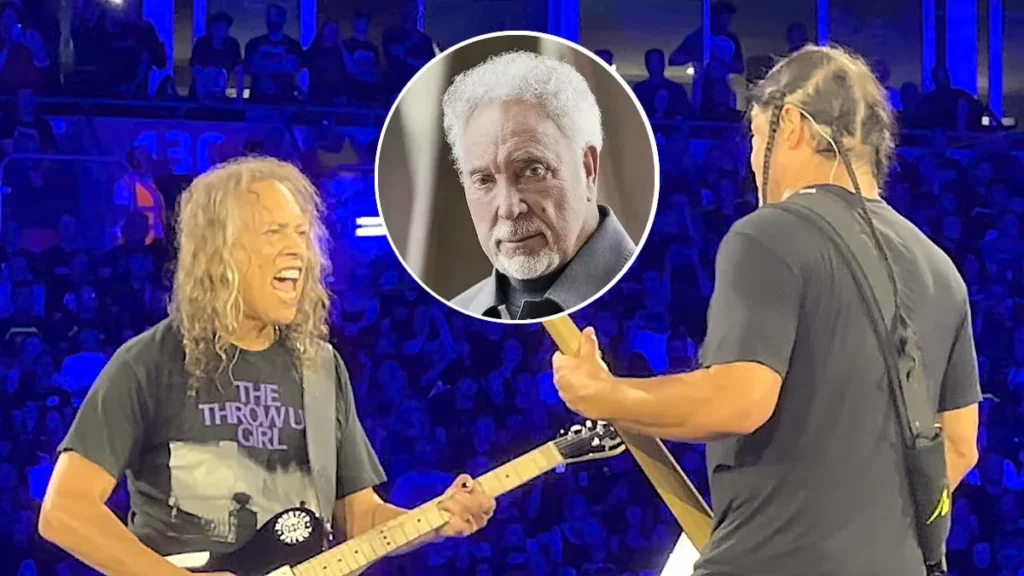

In a moment that blurred the lines between musical homage, cultural tradition, and institutional prohibition, legendary heavy metal band Metallica performed a rendition of Tom Jones’ iconic yet controversial song “Delilah” during their concert on Sunday night, June 23rd, 2026, at Principality Stadium in Cardiff, Wales. The performance was not merely a tribute to a local legend; it was a defiant, or perhaps oblivious, act in a venue where the very song has been officially banned for several years due to its lyrical content.
The Unforeseen Performance at Principality Stadium
The incident unfolded during the “doodle” portion of Metallica’s long-running “M72 World Tour.” This segment of their elaborate concert structure typically features bassist Robert Trujillo and guitarist Kirk Hammett performing instrumental covers that pay tribute to acts local to the specific venue’s region. In Cardiff, a city synonymous with the vibrant musical heritage of Wales, the choice fell upon Sir Tom Jones, a global superstar and undeniable Welsh icon. Trujillo and Hammett launched into a bluesy, instrumental, and somewhat improvised take on “Delilah,” a song instantly recognizable to anyone familiar with Welsh culture and particularly its rugby traditions.
The crowd, a mix of ardent Metallica fans and local enthusiasts, reacted with immediate recognition and enthusiastic participation. Videos from the event show thousands of voices joining in, singing the familiar melody and lyrics of the chorus, transforming the stadium into a massive, impromptu karaoke session. The moment was electric, charged with the collective energy of a crowd embracing a beloved, albeit forbidden, anthem. The performance, captured and shared widely across social media platforms, quickly garnered attention not just for its novelty but for its provocative context.
A Song Steeped in Controversy: The Banning of “Delilah”
“Delilah,” released in 1968, quickly became one of Tom Jones’ signature hits and a global sensation. Its dramatic narrative tells the story of a man who sees his former lover, Delilah, with another man, leading him to murder her in a fit of jealous rage. Despite its dark lyrical themes, the song’s catchy melody, powerful orchestration, and Jones’ commanding vocal performance propelled it to immense popularity. In Wales, it transcended its commercial success to become an unofficial national anthem, particularly beloved and frequently sung by rugby fans at national matches held at the Principality Stadium (formerly the Millennium Stadium). For decades, its chorus reverberated through the stands, a unifying chant that became as much a part of the match-day experience as the game itself.
However, over time, the problematic nature of the lyrics began to draw increasing scrutiny. As societal awareness and condemnation of domestic violence grew, the romanticization or casual acceptance of a song depicting femicide became increasingly uncomfortable for many. Critics argued that continuing to embrace "Delilah" as a celebratory anthem sent a dangerous message, particularly in a public sporting arena that aimed to be inclusive and safe for all.
This growing unease culminated in a decisive action by the Welsh Rugby Union (WRU). In early 2023, the WRU officially announced a ban on the song from being performed by choirs or sung by supporters at Principality Stadium. The decision followed a comprehensive review of the WRU’s cultural practices and was part of a broader commitment to combat domestic violence and promote a more inclusive environment. A spokesperson for the WRU stated at the time, "The WRU condemns domestic violence of any kind. We have sought advice from experts on the issue, and we are making a clear statement that ‘Delilah’ is not appropriate. It is a song about the murder of a woman, and that message is not one we want to be associated with." This move was met with mixed reactions, with some praising the WRU for its progressive stance and others lamenting the loss of a cherished tradition, arguing that the song should be viewed as a piece of artistic expression rather than a literal endorsement of its narrative.
Sir Tom Jones himself weighed in on the ban shortly after its implementation. In comments widely reported by the BBC, he expressed his bewilderment and defiance, stating, “You can’t stop us singing ‘Delilah.’ Can you imagine… Who was the man who didn’t want us to sing ‘Delilah’?” His reaction highlighted the deep emotional connection many Welsh people still hold for the song, irrespective of its lyrical content, viewing it as an integral part of their cultural identity and sporting folklore.
Metallica’s Tour Philosophy and the "Doodle" Tradition
Metallica’s “M72 World Tour” is notable for its innovative "No Repeat Weekend" format, where the band plays two distinct shows in each city, each featuring a completely different setlist and supporting acts. This ambitious approach ensures a unique experience for fans attending both nights. Within this structure, the "doodle" segment by Trujillo and Hammett has become a beloved tradition, offering a lighter, more spontaneous moment in the otherwise meticulously planned heavy metal spectacle.
The intent behind the "doodle" is genuinely celebratory: to acknowledge and honor the musical landscape and heritage of the specific location they are visiting. This has led to a diverse array of covers, ranging from local folk tunes to regional rock anthems, showcasing the duo’s versatility and respect for diverse musical traditions. For instance, during their stop in Dublin, Ireland, they might perform a snippet of a traditional Irish jig or a Thin Lizzy classic. The choice of "Delilah" in Cardiff perfectly aligned with this established pattern, recognizing Sir Tom Jones’ undeniable status as a monumental figure in Welsh music.
However, the question arises: was Metallica aware of the ban? The original article suggests, "Either Metallica didn’t get the memo or were being a bit rebellious." Given the band’s long history of anti-establishment attitudes and their reputation for artistic independence, a deliberate act of defiance is certainly within the realm of possibility. Metallica has always prided itself on pushing boundaries and challenging conventions. Performing a banned song in its own stadium, especially one so deeply ingrained in local culture, could be seen as a subtle nod to artistic freedom and a challenge to perceived censorship. Alternatively, with the whirlwind schedule of a global tour, it is plausible that the specific nuances of a local stadium’s policy might have simply been overlooked by the band or their tour management, focusing instead on the cultural significance of the song itself as a Welsh tribute. Regardless of intent, the outcome was a powerful statement.
The Night in Cardiff: Crowd Reaction and Resonance
The atmosphere at Principality Stadium on Sunday night was undoubtedly charged. When Trujillo and Hammett began the familiar strains of “Delilah,” there would have been an initial ripple of surprise, followed by a surge of recognition. The immediate and widespread singing from the crowd underscores the song’s enduring popularity and its deep roots in the Welsh collective consciousness. It speaks to a sentiment among many that despite its controversial lyrics, “Delilah” remains a powerful symbol of Welsh identity and pride.
For the audience, participating in the performance of a song officially banned from that very venue likely added an extra layer of exhilaration. It transformed a standard concert segment into a moment of shared, communal defiance, a fleeting reclamation of a cultural artifact. The sight and sound of thousands of heavy metal fans passionately belting out a Tom Jones classic, knowing its forbidden status, created a truly unique and memorable experience that will likely be recounted for years to come. This impromptu chorus was not just about the song; it was about the assertion of cultural memory and, perhaps, a subtle pushback against institutional decisions perceived by some as overreaching.
Reactions and Implications
Following the performance, official reactions are anticipated but likely to remain consistent with established stances. The Welsh Rugby Union is unlikely to issue a direct statement condemning Metallica, as their ban applies to the official endorsement and performance by WRU-affiliated entities within the stadium, not necessarily to visiting artists who may choose to perform any song. However, their position against domestic violence and the rationale for the ban will almost certainly remain unchanged. The WRU’s commitment to safeguarding and promoting inclusivity is a deeply held institutional value that predates this incident.
Metallica, known for their focus on the music and their connection with fans, typically do not engage in extensive public commentary on such specific controversies. Their performance itself, whether intentional or not, serves as their statement: a recognition of local culture and, implicitly, a stand for artistic expression. It’s improbable they will issue a formal apology or explanation, preferring to let the music speak for itself.
Sir Tom Jones, while not directly involved, might view Metallica’s cover with a sense of validation or amusement. His earlier comments indicated his belief that the song’s cultural significance should not be suppressed. Seeing one of the world’s biggest bands perform it in the very stadium where it was banned could be seen as a powerful endorsement of its enduring legacy and a testament to its artistic rather than literal interpretation.
The broader implications of this event touch upon the ongoing societal debate between artistic freedom and social responsibility. While the WRU’s ban was a principled stand against lyrics that could be seen to glorify violence, Metallica’s performance highlights the complexities of attempting to legislate cultural expression. It raises questions about whether banning a song truly erases its problematic undertones or merely drives it underground, potentially giving it an added allure of forbidden fruit. This incident may reignite discussions about how societies navigate historical artistic works whose content clashes with contemporary ethical standards. It also underscores the power of live music to create spontaneous moments that challenge established norms and foster collective identity.
A Brief Timeline of "Delilah" and its Controversies
- 1968: Tom Jones releases "Delilah." It becomes a massive international hit, reaching No. 2 in the UK singles chart and gaining significant popularity in the United States.
- 1970s-2000s: "Delilah" solidifies its status as an unofficial anthem for Welsh rugby fans, regularly sung at matches at the National Stadium (later Millennium Stadium, then Principality Stadium). Its association with Welsh identity becomes deeply ingrained.
- Early 2010s: Isolated concerns begin to surface regarding the song’s lyrics and their depiction of domestic violence, primarily in academic or social commentary circles.
- 2014: The song is briefly removed from the Welsh Rugby Union’s official playlist but quickly reinstated after public outcry and a perceived lack of clear communication from the WRU.
- 2019-2022: Increased public discourse and media attention on the issue of domestic violence, particularly in sports contexts, lead to renewed scrutiny of "Delilah." Advocacy groups and some public figures call for its permanent removal from sporting events.
- January 2023: Following a comprehensive review of its cultural practices and in light of safeguarding issues within the organization, the Welsh Rugby Union officially bans "Delilah" from being sung by choirs or performed by official entities at Principality Stadium. The WRU explicitly states its condemnation of domestic violence as the reason.
- July 2023: Sir Tom Jones publicly reacts to the ban, expressing confusion and suggesting that the song cannot truly be stopped from being sung by the people.
- June 23rd, 2026: Metallica performs "Delilah" during their "M72 World Tour" concert at Principality Stadium, igniting a fresh wave of discussion about the song, its ban, and the intersection of music, culture, and controversy.
The Road Ahead for Both Legends
While this incident has created a notable ripple, both Metallica and Tom Jones continue their illustrious careers. Metallica, after wrapping up their UK tour, is preparing for an ambitious 24-date “Life Burns Faster” residency at Las Vegas’ Sphere, running from October 1st, 2026, through March 13th, 2027. This residency promises to be a visually and sonically groundbreaking experience, further cementing their status as one of the most innovative live acts in music history.
Meanwhile, the evergreen Sir Tom Jones, at 86 years old, continues to defy expectations with his touring schedule. Following a UK and European run this summer, he is set to embark on a North American tour this fall. His enduring vocal prowess and magnetic stage presence continue to captivate audiences worldwide, proving his timeless appeal.
The Metallica performance of "Delilah" in Cardiff stands as a fascinating intersection of rock and roll rebellion, cultural heritage, and contemporary social debate. It’s a moment that will likely be remembered not just for the unexpected musical fusion, but for its nuanced commentary on the complexities of art, tradition, and responsibility in the modern era.