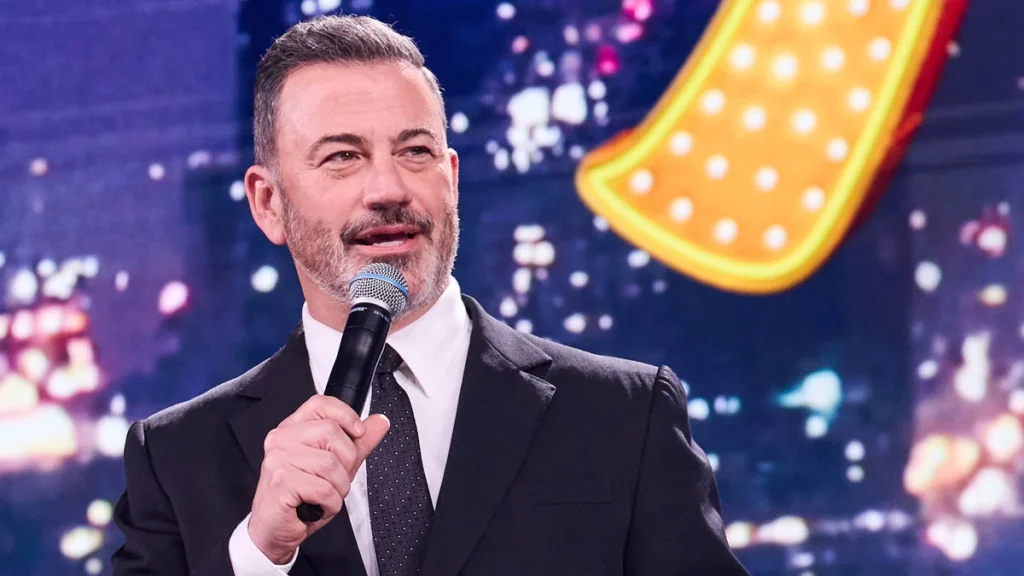

Veteran late-night host Jimmy Kimmel delivered his customary sharp-witted roast at the annual Disney upfronts on Tuesday, May 13, 2026, where he light-heartedly claimed his politically charged year had cost the entertainment conglomerate a staggering “billions.” Addressing an audience of advertisers and media executives at the highly anticipated industry event, Kimmel’s self-deprecating humor centered on the controversies surrounding his public political commentary, framing it as a significant financial detriment to his employer. His remarks underscore a turbulent period for the host, whose outspoken views have generated both increased viewership and considerable backlash.
The 2026 Disney upfronts served as a crucial platform for the company to showcase its extensive portfolio of upcoming programming across its broadcast, cable, and streaming platforms, including ABC, Disney+, Hulu, ESPN, and FX. These annual presentations are vital for networks to secure advertising commitments for the upcoming television season, making the tone and content of such events highly strategic. Kimmel, a long-standing fixture of ABC’s late-night lineup with Jimmy Kimmel Live!, traditionally hosts a segment designed to entertain and satirize the industry, often including pointed jabs at his own network and its competitors.
During his presentation, Kimmel quipped, “I cost our company a lot of money this year. Billions. It is very possible that no employee in the history of any company has cost their employer more.” He continued with a characteristic blend of hyperbole and self-effacement, suggesting, “Hiring me 24 years ago, just from a purely mathematical standpoint, was the worst personnel decision that Disney Corporation has ever made. Not even the captain of the Exxon Valdez did more damage.” This comparison, referencing the infamous 1989 oil spill, aimed to comically magnify the perceived financial fallout of his recent public profile. The jokes, while delivered with Kimmel’s signature smirk, resonated against a backdrop of real-world political polarization that has increasingly entangled media personalities and their corporate backers.
To further the comedic effect, Kimmel dispatched his long-time sidekick, Guillermo Rodriguez, into the audience with a collection basket, humorously soliciting donations from the advertisers to help offset his alleged financial impact on Disney. This theatrical gesture, while clearly a jest, subtly highlighted the immense financial stakes involved in the upfronts, where billions of dollars in advertising revenue are negotiated.
Despite his jests about financial losses, Kimmel also noted a significant uptick in his show’s viewership. He revealed that Jimmy Kimmel Live! had experienced a 25% ratings spike over the past year within the coveted 18-49 demographic. He wryly attributed this surge, in part, to “our partners in Washington,” a thinly veiled reference to the highly charged political climate and the prominent role of political discourse on his program. This acknowledgment points to a broader trend in late-night television, where political engagement, while polarizing, often correlates with increased engagement among certain segments of the audience.
However, Kimmel was quick to temper this ratings boast with a dose of reality regarding the broader historical context of late-night television. He contrasted his show’s current performance with the heyday of the genre, stating, “If Johnny Carson woke up one day with my ratings, he’d have gone straight under the sink and [drank] all the Draino he found there.” This remark highlights the dramatic shift in television viewership over the decades, particularly for linear broadcast television, where even a significant percentage increase in ratings might still represent a much smaller absolute audience compared to the “golden age” of late night. The fragmentation of media consumption, driven by streaming services and digital platforms, has fundamentally altered the landscape, making historical comparisons challenging but still relevant for perspective.
Background: The Disney Upfronts and Kimmel’s Political Stance
The Disney upfronts are a cornerstone event in the television industry, typically held in New York City each May. They serve as the primary opportunity for Disney’s advertising sales teams to present their upcoming programming slate to major advertising agencies and corporate clients. For Disney, a global entertainment behemoth, these presentations are critical for locking in multi-billion dollar advertising deals that underpin the financial health of its broadcast network (ABC), its cable channels (ESPN, FX, National Geographic), and its burgeoning streaming platforms (Disney+, Hulu, ESPN+). The atmosphere is usually a mix of glitzy presentations, celebrity appearances, and strategic business negotiations.
Jimmy Kimmel’s role as a recurring host of the Disney upfront roast has evolved over his 24-year tenure at ABC. Initially known for his edgy, often irreverent humor, Kimmel has, particularly in recent years, increasingly incorporated political commentary into his show. This shift intensified following the 2016 U.S. presidential election and has continued through subsequent political cycles. His monologues often address current events, healthcare debates, and various policy issues, frequently adopting a critical stance toward conservative politicians and policies. This political pivot has distinguished Jimmy Kimmel Live! within the crowded late-night landscape, but it has also drawn significant criticism from political opponents.
A Chronology of Kimmel’s "Dramatic Year" and Political Fallout
Kimmel’s reference to his "dramatic year" and "political turmoil" likely alludes to a series of events and escalating tensions that reached a peak in the months leading up to the 2026 upfronts. While specific details for 2026 are speculative based on the article’s future dating, the context suggests a continuation of trends observed in previous years.
In April 2026, reports emerged of heightened calls from certain political factions for Kimmel’s removal from ABC. These campaigns, often amplified on social media, accused the host of partisan bias and using his platform for political advocacy rather than entertainment. These sentiments coalesced around specific instances where Kimmel directly criticized prominent political figures or government policies. A particularly notable point of contention, implied by the reference to "partners in Washington," might have involved former President Donald Trump. In previous political cycles, Trump himself has publicly criticized Kimmel, even suggesting that the Federal Communications Commission (FCC) should investigate Kimmel’s broadcast license. Such statements, whether serious or rhetorical, invariably ignite intense debate and often lead to further calls for boycotts or disciplinary action against the host and his network.
The potential for an FCC investigation, even if never formally pursued, introduces a layer of political risk for ABC and its parent company, Disney. Broadcast licenses are valuable assets, and any perceived threat to them, however remote, is a serious matter for a network. Kimmel’s willingness to continue engaging in politically charged commentary, even in the face of such pressure, underscores a strategic decision by both the host and, implicitly, Disney, to embrace a certain level of controversy for its potential to drive viewership and cultural relevance. This approach, however, comes with inherent risks of alienating segments of the audience and potentially impacting advertiser relations, which Kimmel humorously acknowledged in his upfronts speech.
Super Bowl Hype and Other Industry Jabs
Beyond his self-deprecating political commentary, Kimmel also used his stage time to promote upcoming Disney programming and to satirize other networks. He highlighted Disney’s acquisition of the Super Bowl broadcast rights, noting, “This will be the first Super Bowl on ABC in 20 years and we are going to milk the bejesus out of it. We are going to spend the whole year promoting the already most popular thing on Earth.” The return of the Super Bowl to ABC is indeed a significant event, offering an unparalleled advertising platform and a massive audience reach. Kimmel then injected his characteristic humor, adding, “And as if the country isn’t already divided enough, we put the game on Valentine’s Day, just to be dicks.” This timing, while coincidental, provides ample comedic fodder for the host.
He also poked fun at the highly anticipated halftime show, a cultural phenomenon in its own right. “Let me tell you what, the halftime show this year is going to be the whitest shit you’ve ever seen. Goodbye, Bad Bunny. Welcome back, O-Town.” This joke, referencing a popular Latin artist and a late-90s/early-2000s boy band, played on expectations and stereotypes surrounding Super Bowl performers, simultaneously offering a humorous critique of potential network programming choices.
Kimmel extended his critique to rival networks, demonstrating his traditional role as an industry satirist. He took a swipe at NBC’s prolific output of Chicago-based dramas, remarking, “Seriously, is someone at NBC fucking the mayor of Chicago? I mean, Jesus Christ.” This joke targets the perceived over-saturation of certain programming genres on competing networks. He also referenced the impending departure of Stephen Colbert from late-night on CBS, a significant development in the late-night landscape. Kimmel quipped, “As you know, CBS is turning 11:35 into a leased time slot. Leased as in least likely to offend the President.” This barbed comment not only highlights Colbert’s often politically charged humor but also hints at the potential pressures and considerations networks face when selecting late-night talent, particularly in a politically sensitive era.
Implications and Broader Impact
Kimmel’s upfronts performance offers several insights into the current state of television and advertising. His humor about costing Disney “billions” and his show’s ratings spike due to “partners in Washington” reflects a complex reality. While direct financial costs due to a host’s political stance are difficult to quantify precisely in the billions, there is an undeniable impact on brand perception and advertiser comfort. Some advertisers might shy away from shows perceived as overly partisan, fearing backlash from consumers aligned with opposing political views. Conversely, others might be drawn to the increased engagement and passionate viewership that politically charged content can generate, especially within key demographics like 18-49.
For Disney, Kimmel represents a calculated risk. As a family-friendly brand, Disney navigates a delicate balance when its talent engages in divisive political commentary. However, in an era of declining linear television viewership, maintaining cultural relevance and generating buzz is paramount. Kimmel’s ability to drive conversation, even controversial ones, contributes to the overall visibility of ABC and the broader Disney ecosystem. The 25% ratings increase, even if modest in absolute terms compared to past eras, is a significant win in a highly competitive and fragmented media environment. It suggests that while polarization can alienate some, it effectively mobilizes and attracts others, particularly in a demographic vital for advertisers.
The joke about Stephen Colbert’s departure from CBS and the subsequent "leased time slot" also underscores the evolving challenges for traditional networks in late night. The landscape is increasingly competitive, with hosts vying for attention in a fragmented digital world. The pressure to secure top talent and maintain relevance is immense, and the political leanings of hosts have become a defining characteristic.
The segment concluded with Guillermo returning to the stage, having collected a modest $7 and a tennis ball from the audience. The tennis ball was a humorous nod to tennis legend Billie Jean King, who had reportedly been hitting balls into the audience earlier in the presentation. This small, tangible result from the collection basket further emphasized the lighthearted nature of Kimmel’s self-deprecating financial woes. Following his segment, Kimmel and his 11-year-old daughter introduced pop superstar Olivia Rodrigo, who performed her new single “Drop Dead” live, closing out the night with a blend of established comedic talent and contemporary musical appeal, a testament to Disney’s broad appeal strategy.
The Future of Late Night and Kimmel’s Enduring Role
Jimmy Kimmel’s continued presence and provocative humor at the Disney upfronts highlight his unique position in the late-night television landscape. As one of the longest-serving hosts, he has successfully adapted to the changing media environment, integrating political commentary more deeply into his comedic repertoire. The “billions” joke, while an obvious exaggeration, serves as a meta-commentary on the real economic and reputational stakes involved when media personalities engage in public discourse that extends beyond traditional entertainment.
The future of late-night television continues to evolve, moving beyond the traditional monologue-and-interview format to embrace viral clips, social media engagement, and increasingly, overt political advocacy. Kimmel’s ability to remain relevant and even experience a ratings surge in this climate suggests that audiences are increasingly seeking hosts who are willing to speak their minds, even if it means alienating others. For Disney, this represents a strategic tightrope walk: leveraging the influence and cultural currency of its talent while managing potential controversies. The 2026 upfronts underscored that for Jimmy Kimmel, and by extension, Disney, the blend of sharp humor, self-awareness, and politically charged commentary remains a potent, albeit sometimes costly, formula for engagement in the modern media landscape.