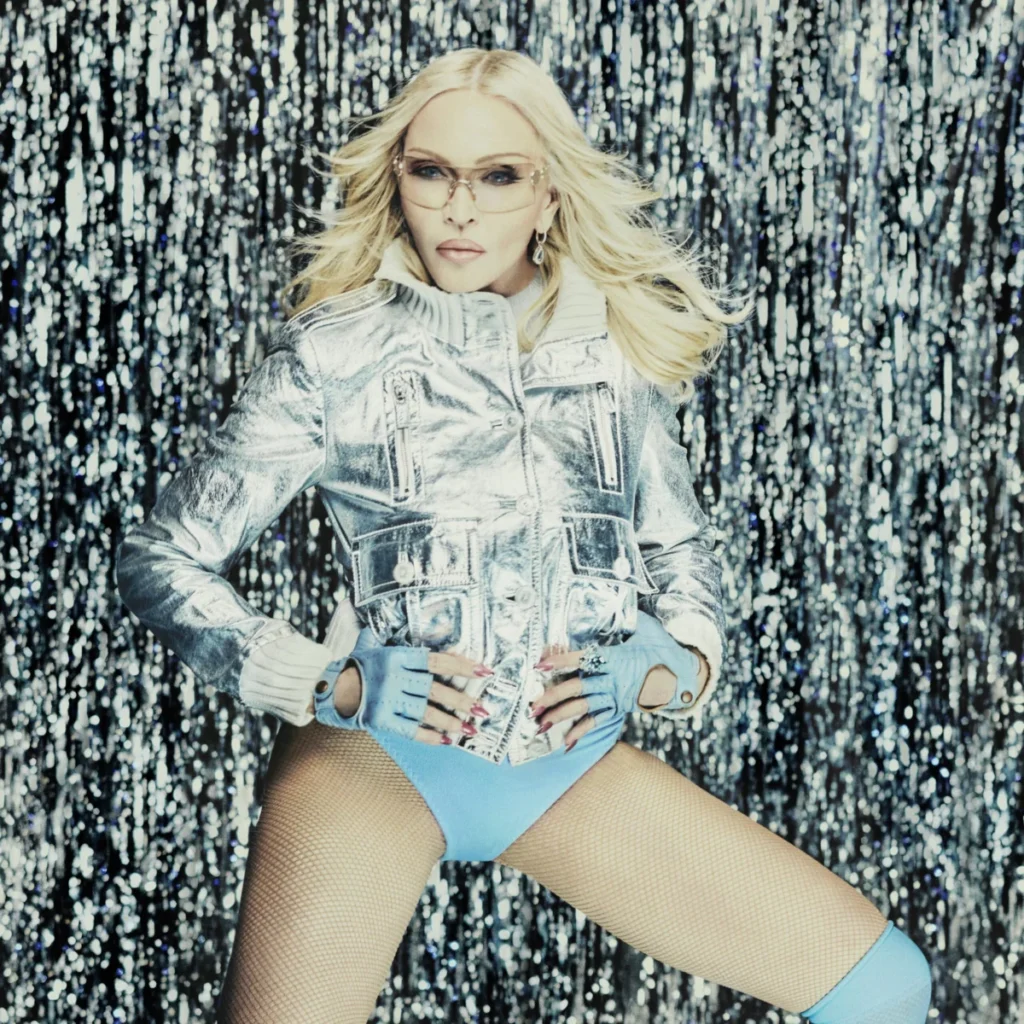

The Queen of Pop, Madonna, has once again ascended to the pinnacle of musical achievement, claiming her tenth career No. 1 album as Confessions II debuted atop the coveted Billboard 200 albums chart. The monumental success, officially confirmed by Billboard on Sunday, marks a significant milestone in the illustrious career of an artist who continues to defy industry expectations and trends. This latest triumph not only reaffirms Madonna’s unparalleled longevity and cultural impact but also positions her further among the elite few artists with a double-digit tally of chart-topping albums.
Chart Performance and Commercial Triumph
Confessions II launched with an impressive 134,000 equivalent album units in its inaugural week. Delving deeper into the metrics, Billboard reported that a substantial 114,000 of these units stemmed from traditional album sales, a testament to the album’s broad appeal and the dedicated fanbase eager to own a physical or digital copy. In an era increasingly dominated by streaming, this strong traditional sales figure underscores the album’s immediate commercial power. Complementing these sales, the album also garnered a robust 20.1 million on-demand streams during its first week, illustrating its resonance across various consumption platforms. This blended performance highlights Madonna’s ability to capture both traditional music buyers and engage with contemporary streaming audiences, a crucial factor in securing a No. 1 position in today’s diverse music market.
The Billboard 200 chart calculates equivalent album units by combining traditional album sales, track equivalent albums (TEA), and streaming equivalent albums (SEA). Each unit equals one album sale, or 10 individual tracks sold from an album (TEA), or 3,750 ad-supported or 1,250 paid subscription on-demand audio and video streams from an album (SEA). The strong traditional sales component of Confessions II‘s debut demonstrates a potent engagement with Madonna’s core audience, while the significant streaming numbers indicate successful outreach to a broader, digitally native demographic. This balanced success is particularly noteworthy for an artist who debuted decades before the streaming revolution, showcasing her remarkable adaptability.
A Legacy of Chart Dominance: Madonna’s Historic Ten No. 1s
With Confessions II now added to her storied discography, Madonna joins an exclusive club of artists who have achieved ten or more No. 1 albums on the Billboard 200. This achievement places her alongside legends such as The Beatles (19), Jay-Z (14), Barbra Streisand (11), Bruce Springsteen (11), and Eminem (10). Her previous chart-toppers include a diverse array of critically acclaimed and commercially successful albums that have shaped the sound of pop music for generations. Her journey to this milestone began with her third studio album, Like a Virgin, which hit No. 1 in 1985. Subsequent chart leaders included True Blue (1986), Like a Prayer (1989), Erotica (1992), Bedtime Stories (1994), Music (2000), American Life (2003), Confessions on a Dance Floor (2005), and MDNA (2012). Each of these albums represented a distinct artistic evolution and a continued engagement with global cultural discourse, reflecting her chameleon-like ability to reinvent herself while maintaining an undeniable artistic core.
This consistent chart presence over four decades is virtually unprecedented for a female artist, underscoring not only her artistic resilience but also her unwavering connection with a global fanbase. Industry analysts often point to Madonna’s meticulous artistic control, innovative visual presentations, and provocative themes as key drivers of her sustained success, allowing her to remain relevant and influential across rapidly changing musical landscapes.
The Echo of an Era: ‘Confessions II’ and Its Predecessor
Confessions II marks Madonna’s first full-length studio album since 2019’s Madame X, which itself debuted at No. 2 on the Billboard 200. While Madame X was lauded for its experimental sound and global influences, Confessions II is drawing significant critical acclaim for a different reason: it is widely being lauded as her best album since 2005’s original Confessions on a Dance Floor. The original Confessions on a Dance Floor was a monumental success, earning Madonna a Grammy Award for Best Dance/Electronic Album and producing global smash hits like "Hung Up" and "Sorry." That album was celebrated for its pure, unadulterated embrace of disco and electronic dance music, a sound that resonated deeply with critics and fans alike.
The comparison to its predecessor is not merely coincidental. Confessions II appears to revisit the vibrant, dance-oriented ethos that defined the original, albeit with a contemporary twist. Critics have highlighted the album’s infectious energy, sophisticated production, and Madonna’s signature blend of vulnerability and defiance. This return to a critically adored sound, while still pushing creative boundaries, has clearly struck a chord, demonstrating that revisiting past triumphs can be a powerful strategy when executed with artistic integrity and fresh perspective. The thematic continuity, coupled with a refreshed sonic palette, offers both a nostalgic nod for longtime fans and an accessible entry point for new listeners.
A Masterclass in Modern Album Promotion: The Strategic Rollout
The months leading up to the release of Confessions II were characterized by a meticulously orchestrated and high-visibility promotional campaign, showcasing Madonna’s enduring prowess in engaging her audience across diverse platforms. The rollout began with a surprise appearance in April at the Coachella Valley Music and Arts Festival, where she joined pop sensation Sabrina Carpenter during her headlining set. This unexpected collaboration generated immediate buzz, with Madonna debuting the lead single, “Bring Your Love,” to a massive and globally broadcast audience. The intergenerational pairing not only introduced new music but also highlighted Madonna’s continued relevance and influence on contemporary artists.
Following this high-profile festival debut, Madonna continued to build momentum through a series of intimate and exclusive engagements. These included impromptu pop-up shows in iconic locations such as West Hollywood and New York’s Times Square. These guerrilla-style performances, often announced with minimal notice, created a sense of urgency and exclusivity, driving fan engagement and media coverage. Such events are a hallmark of Madonna’s career, demonstrating her ability to blend grand spectacle with raw, direct interaction, thereby fostering a deep connection with her audience.
Further cementing the album’s artistic narrative, Madonna also premiered a short film connected to Confessions II at the prestigious Tribeca Film Festival last month. This cinematic component underscored the multimedia approach to her artistry, treating the album not just as a collection of songs but as a comprehensive artistic statement. The film, reportedly exploring themes inherent in the album, provided an additional layer of depth and intellectual engagement for both critics and fans, positioning the album as a significant cultural event rather than just a musical release. This multi-faceted promotional strategy—combining massive festival exposure, intimate fan interactions, and high-art cinematic presentations—underscores Madonna’s understanding of how to dominate the modern media landscape.
The Competitive Arena: Outpacing Formidable Contenders
Madonna’s No. 1 debut for Confessions II was achieved in a highly competitive week, where she successfully surpassed several other prominent artists. Notably, she beat out Olivia Rodrigo’s critically acclaimed album You Seem Pretty Sad for a Girl So in Love, which landed at No. 2. Despite being in its fourth week on the chart, Rodrigo’s album still maintained significant commercial strength, registering over 100,000 equivalent album units. This speaks volumes about Madonna’s pulling power, managing to edge out one of the hottest young artists in music today.
The rest of the top five included Ella Langley’s Dandelion at No. 3, Morgan Wallen’s perennial chart-sitter I’m the Problem at No. 4, and Drake’s Iceman rounding out the top 5. The presence of established hitmakers like Wallen and Drake, alongside rising stars like Rodrigo and Langley, illustrates the diverse and competitive nature of the contemporary music charts. Madonna’s ability to cut through this crowded field and claim the top spot underscores her unique position in the industry – an icon who can still command attention and sales on par with, or even exceeding, artists decades her junior.
Looking Ahead: Global Stage at the FIFA World Cup Halftime Show
With the No. 1 album firmly secured, Madonna is not slowing down. Her album campaign is set to reach an even broader global audience with a co-headlining slot at the inaugural FIFA World Cup Halftime Show. This highly anticipated event will see her share the stage with a constellation of global superstars: Justin Bieber, the K-pop phenomenon BTS, and the electrifying Shakira. The FIFA World Cup Halftime Show is arguably one of the most visible performance platforms in the world, reaching hundreds of millions of viewers across every continent.
This performance offers an unparalleled opportunity for Madonna to showcase Confessions II to an immense, diverse, and global audience. Her inclusion in such a prestigious lineup, alongside artists who represent different facets of global pop culture, further solidifies her status as an enduring and universally recognized entertainment force. It is a strategic move that promises to extend the album’s reach and impact well beyond its initial chart success, potentially introducing her new music to millions who may not actively follow Western music charts but are avid consumers of global sporting and entertainment events. This grand finale to her album rollout is a clear indication that Madonna continues to operate at the highest echelons of global entertainment.
Analysis: Enduring Influence in a Dynamic Industry
Madonna’s tenth No. 1 album with Confessions II is far more than just a commercial achievement; it is a profound statement on her enduring influence and adaptability in an ever-evolving music industry. In an era where legacy artists often struggle to maintain chart relevance amidst a torrent of new talent and rapidly shifting consumption habits, Madonna has consistently defied expectations. Her success with Confessions II demonstrates several key aspects of her enduring power.
Firstly, it highlights the strength of her brand and the unwavering loyalty of her fanbase. The significant traditional sales figures are a clear indicator that her dedicated followers are invested in her new work, often opting for physical copies or digital purchases to directly support the artist. Secondly, her savvy promotional strategy, blending surprise live performances with high-art film presentations and strategic collaborations, serves as a blueprint for how established artists can effectively engage a multi-generational audience. She understands the importance of spectacle, but also the power of intimacy and artistic integrity.
Thirdly, the critical reception of Confessions II, drawing comparisons to her seminal Confessions on a Dance Floor, suggests a renewed artistic vigor. It indicates that Madonna is not merely resting on her laurels but actively engaging with her own legacy in a way that feels fresh and relevant. This artistic vitality is crucial for sustained success in a creative industry.
Finally, her upcoming performance at the FIFA World Cup Halftime Show underscores her continued global appeal and her ability to command the world’s biggest stages. It reinforces the idea that Madonna is not just an American or European icon, but a truly global superstar whose influence transcends geographical and cultural boundaries. In an industry constantly seeking the next big thing, Madonna continues to prove that true artistry, combined with relentless innovation and strategic brilliance, can secure an artist an unparalleled reign. Confessions II is not just a chart-topper; it’s a reaffirmation of Madonna’s status as the undisputed Queen of Pop, a testament to her unparalleled career, and a blueprint for artistic longevity.