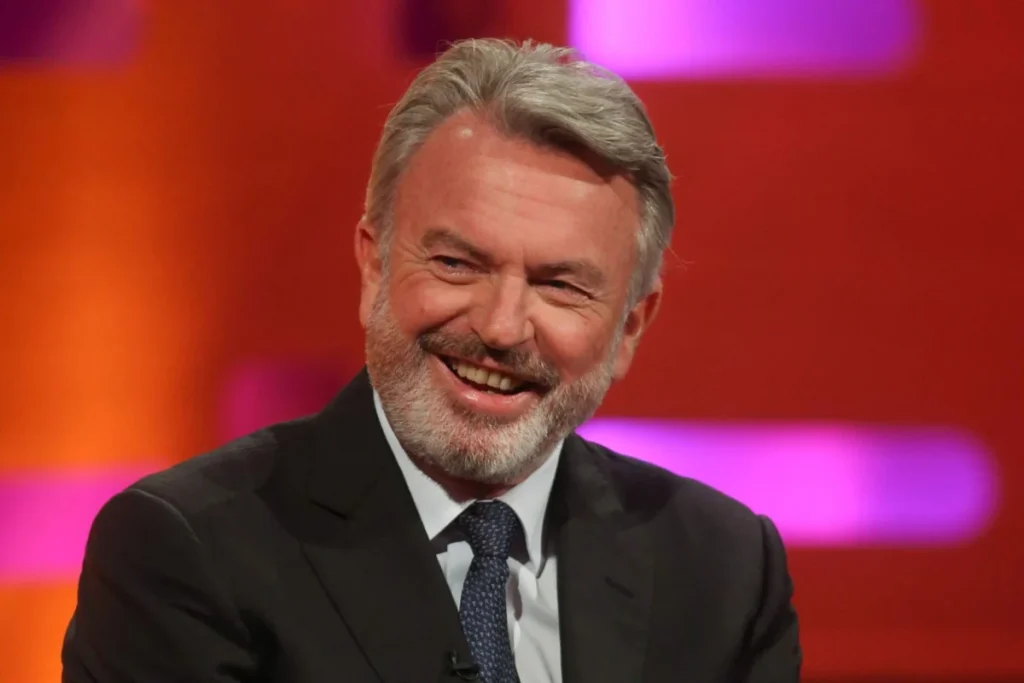

The world of cinema and maritime heritage is mourning the passing of acclaimed actor Sam Neill, who has died at the age of 78. Neill, globally recognized for his iconic roles, including Dr. Alan Grant in the Jurassic Park franchise, was remembered by the Friends of TS Queen Mary charity for his profound love of “ships, the sea, and Scotland.” Neill had served as the Commonwealth patron of the historic Clyde steamship TS Queen Mary, which is currently undergoing a multimillion-pound restoration project, a cause to which he brought immense enthusiasm and unwavering support. His passing marks the loss of a significant advocate for Scottish industrial and cultural heritage, particularly for a vessel that embodies a golden era of pleasure cruising and shipbuilding.
Sam Neill: A Distinguished Career and Enduring Legacy
Born Nigel John Dermot Neill in Omagh, Northern Ireland, in 1947, Sam Neill’s family moved to New Zealand in 1954, where he spent his formative years. He began his acting career in New Zealand, first gaining international attention in the late 1970s and early 1980s. His breakthrough came with roles in films such as My Brilliant Career (1979) and Omen III: The Final Conflict (1981). Throughout his extensive career, Neill built a reputation as a versatile and compelling actor, effortlessly transitioning between blockbuster franchises and critically acclaimed independent films. His filmography boasts over 100 credits, including memorable performances in Dead Calm (1989), The Hunt for Red October (1990), The Piano (1993), and his most globally recognized role as paleontologist Dr. Alan Grant in Steven Spielberg’s Jurassic Park (1993), a role he reprised in Jurassic Park III (2001) and Jurassic World Dominion (2022). Beyond the big screen, Neill also made significant contributions to television, earning Golden Globe nominations for his work in Reilly, Ace of Spies and Merlin, and captivating audiences in the critically acclaimed series Peaky Blinders.
Beyond his professional accomplishments, Neill was known for his thoughtful demeanor, his deep connection to his New Zealand home, where he owned a vineyard, and his various philanthropic endeavors. His interest in heritage and history often shone through, making his patronage of the TS Queen Mary a natural extension of his personal values. His public persona was one of quiet dignity and genuine passion, qualities that endeared him to both colleagues and fans alike. The news of his death has prompted an outpouring of tributes from across the entertainment industry and from the numerous organizations he supported, underscoring the broad impact of his life and work.
The Grand Dame of the Clyde: A History of TS Queen Mary
The TS Queen Mary, often affectionately referred to as "Britain’s finest pleasure steamer," represents a pivotal chapter in Scottish maritime history. Launched on April 27, 1933, from the renowned William Denny and Brothers shipyard in Dumbarton, the vessel was a marvel of engineering and design for its time. Built for the Williamson-Buchanan Steamers company, it was specifically designed to provide an unparalleled experience for passengers cruising the Firth of Clyde, a popular leisure destination in the inter-war period. The Clyde steamers were more than just transport; they were an integral part of Scottish social life, offering day trips, scenic tours, and a touch of luxury for families and holidaymakers.

During its heyday, the Queen Mary was a symbol of elegance and efficiency. It was capable of carrying an astonishing 13,000 passengers each week, ferrying them to picturesque destinations along the Clyde such as Rothesay, Dunoon, and Arran. Its sleek design, comfortable amenities, and reliable service quickly made it a favourite among the public. The ship featured spacious decks, elegant saloons, and dining facilities, providing a refined experience that contrasted sharply with the industrial backdrop of Glasgow. The vessel’s twin diagonal triple-expansion steam engines, capable of propelling it at speeds of up to 19 knots, were a testament to the advanced shipbuilding capabilities of the Clyde shipyards, which at the time were world-leading. The period from the late 19th century through the mid-20th century was the golden age of Clyde passenger steamers, and the TS Queen Mary stood out as one of its most illustrious examples.
However, as tastes changed and other forms of transport became more prevalent, the era of the grand pleasure steamer began to wane. The Queen Mary continued its service for many decades, undergoing various modernizations, including a significant refit in 1957 when it was renamed Queen Mary II (to avoid confusion with the Cunard ocean liner RMS Queen Mary). Its commercial service ultimately concluded in 1977, marking the end of an illustrious operational life. Following its retirement, the ship faced an uncertain future, falling into disrepair and changing hands several times. For years, it languished, a stark reminder of its former glory, until a concerted effort began to save it from dereliction.
The Multimillion-Pound Restoration Project: A Vision for the Future
The journey to restore the TS Queen Mary began in earnest with the formation of the charity Friends of TS Queen Mary. Established by a dedicated group of volunteers and enthusiasts, the charity embarked on an ambitious mission to rescue, restore, and preserve the vessel for future generations. Recognizing its immense historical and cultural significance, the charity successfully acquired the ship in 2015. This acquisition was a critical first step in what would become a monumental task. The ship was subsequently moved to its current berth at the Glasgow Science Centre in Govan, a location that symbolically links its industrial past with a future focused on education and public engagement.
The restoration project is an intricate and costly undertaking, estimated to require several million pounds. The vision for the restored Queen Mary is multifaceted: to serve as a static heritage attraction, an educational facility, and a unique events venue. The restoration involves extensive structural repairs, hull plating replacement, engine room preservation, and the meticulous recreation of its original interiors. It is a highly complex engineering challenge, requiring specialist skills and significant financial investment. The project relies heavily on fundraising, grants, and the tireless efforts of volunteers. Key milestones have included dry-docking for hull assessment and repairs, asbestos removal, and initial structural work. The charity aims to return the ship to a condition that reflects its 1930s glory, allowing visitors to step back in time and experience the grandeur of a bygone era. The ongoing work not only preserves a piece of history but also serves as a living classroom for traditional maritime skills and engineering.
Sam Neill’s Deep Connection and Patronage
Sam Neill’s connection to the TS Queen Mary project was both personal and profound. He formally took on the role of Commonwealth patron in 2022, a decision largely influenced by his close friend, the late Robbie Coltrane. Coltrane, a beloved Scottish actor also known for his roles in Harry Potter and Cracker, was a passionate advocate for Scottish heritage and had a deep affection for the Clyde and its history. It was Coltrane’s encouragement that led Neill to lend his considerable influence and support to the TS Queen Mary. This act underscored the strong bonds within the Scottish and wider British acting community, where personal friendships often translated into shared philanthropic endeavors.

For the Friends of TS Queen Mary, Neill’s patronage was invaluable. Iain Sim, chairman of the Friends of TS Queen Mary, articulated the depth of this relationship in his tribute: “We are shocked and saddened by the passing of Sam, our Commonwealth Patron. His loss is immeasurable and we send our sincere condolences to his family and friends.” Sim further elaborated on Neill’s character and commitment, stating, “Sam was universally popular within the movie industry and beyond thanks to a stellar career and he lived a full and rewarding life. We will miss him immensely.”
Sim’s words painted a vivid picture of Neill’s genuine engagement: “It was typical of Sam that he needed little persuading to take up the role – a lifelong lover of ships, the sea, and of Scotland, he understood instinctively what TS Queen Mary meant, both as a piece of maritime history and as a symbol of what a community can achieve when it refuses to let something remarkable be lost.” This statement highlights Neill’s intuitive grasp of the project’s significance, not merely as a physical artifact but as a testament to community spirit and perseverance. He wasn’t just a figurehead; he was a true believer in the cause.
Neill’s dedication went beyond lending his name. Sim recounted, “Sam was unfailingly supportive and encouraging, following our progress with genuine enthusiasm and never short of kind words for the volunteers and trustees giving their time to bring Queen Mary back to life. His patronage brought not just his name but his heart to our cause.” This level of personal involvement, characterized by regular inquiries about progress and consistent encouragement, deeply resonated with the volunteers who tirelessly dedicate their time and effort to the restoration. His presence and support provided a significant morale boost and helped to elevate the project’s profile, drawing attention from potential donors and the wider public. Neill’s celebrity status, combined with his authentic passion, proved to be a powerful asset for the charity, helping to garner crucial support for the multimillion-pound endeavor.
A Legacy of Support for Scottish Heritage
Neill’s affinity for "ships, the sea, and Scotland" was deeply ingrained. While born in Northern Ireland, his upbringing in New Zealand, an island nation with a rich maritime history, likely fostered an early appreciation for the ocean and seafaring. His travels around Scotland during the 1970s would have exposed him to the country’s breathtaking coastlines, its deep-rooted shipbuilding traditions, and the enduring romance of its lochs and islands. These experiences undoubtedly solidified his connection to the region and its unique heritage, making his decision to support the TS Queen Mary a natural culmination of these lifelong passions.
The actor’s support for the TS Queen Mary underscores the broader impact that prominent figures can have on cultural and historical preservation efforts. In an era where funding for heritage projects often faces significant challenges, the endorsement of a beloved public figure like Sam Neill can be transformative. It brings national and international visibility, attracts media attention, and encourages both individual donations and corporate sponsorships. His involvement helped to tell the story of the Queen Mary to a wider audience, demonstrating that such historical assets are not merely relics of the past but vibrant components of a nation’s identity that deserve active preservation.
Neill’s death represents a profound loss, not only to the entertainment industry but also to the heritage sector he so genuinely supported. His commitment to the TS Queen Mary stands as a testament to his character and his belief in the power of community to preserve something truly remarkable. The Friends of TS Queen Mary, alongside the countless volunteers and supporters, will undoubtedly continue their vital work, carrying forward the torch of enthusiasm that Neill helped to ignite. His legacy will not only be found in his timeless performances on screen but also in the continued journey of the TS Queen Mary, a grand vessel brought back to life, in part, by his unwavering heart and patronage. The restoration project, now imbued with the memory of its dedicated patron, will serve as a lasting tribute to Sam Neill’s passion for the sea, Scotland, and the ships that sail its historic waters.