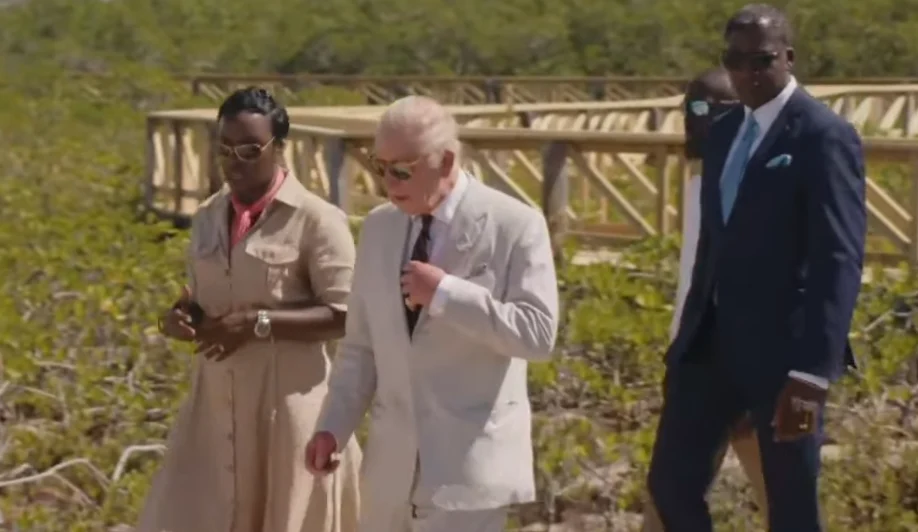

The protection of vulnerable island ecosystems and the urgent global imperative to combat climate change took center stage on Wednesday as King Charles III toured the lush landscapes of Bonefish Pond National Park in the Bahamas. Marking the second day of a significant nine-day Caribbean tour, the British monarch—who serves as Patron of The Bahamas National Trust—used the high-profile platform to draw international attention to the frontline realities faced by low-lying island nations. Against a backdrop of rising sea levels and intensifying tropical storm systems, the royal visit served as a potent reminder of the intersection between environmental preservation, local livelihoods, and long-term climate adaptation.
Bonefish Pond National Park, established as a protected area in 2002 and spanning approximately 1,235 acres of vibrant tidal wetlands, offers a masterclass in coastal conservation. During his immersive afternoon engagement, the King walked along an elevated wooden boardwalk that meanders deep into the park’s dense mangrove forest. Accompanied by local government officials, environmental scientists, and representatives from The Bahamas National Trust, His Majesty received an in-depth briefing on the complex ecological restoration initiatives currently underway to safeguard the nation’s fragile natural barriers.
Chronology of the Royal Itinerary and the Wider Caribbean Tour
The visit to Bonefish Pond National Park represents a pivotal cornerstone of King Charles’s broader itinerary across the Caribbean. The sovereign’s journey began on Tuesday with an official arrival in the Bahamas, setting a tone centered heavily on environmental stewardship and sustainable development. Following the conclusion of his engagements in the archipelago, the King is scheduled to travel to Guyana to review ongoing forestry and biodiversity preservation projects.
The tour will ultimately culminate in Antigua and Barbuda, where His Majesty will be joined by Queen Camilla for the highly anticipated Commonwealth Heads of Government Meeting (CHOGM). Throughout this multi-nation tour, environmental protection and climate resilience remain the overarching themes, threading a common narrative through each diplomatic and community-focused stop. This strategic focus underscores the Royal Family’s longstanding commitment to environmental advocacy, a cause King Charles championed for decades prior to his accession to the throne, most notably through initiatives like the Sustainable Markets Initiative and various rainforest preservation campaigns.
The Ecological and Economic Significance of Bahamian Mangroves
At the heart of the King’s educational tour was an examination of the indispensable role that mangrove forests play in the ecological and economic architecture of the Bahamas. Often referred to as the kidneys of the coast, these tidal ecosystems provide a multitude of vital ecosystem services that are virtually irreplaceable by artificial engineering.
Scientifically, mangroves are extraordinary carbon sinks. Their complex root networks and waterlogged soils capture and store atmospheric carbon—often termed "blue carbon"—at rates up to ten times higher than terrestrial tropical rainforests. For a global community racing to meet net-zero emissions targets, preserving and restoring these habitats is a matter of planetary urgency.
Furthermore, mangroves act as a formidable natural defense system for coastal communities. The dense maze of stilt roots significantly attenuates wave energy during severe storm surges, blunting the destructive impact of hurricanes that increasingly batter the Caribbean basin with heightened frequency and ferocity. In a region where a vast majority of the population and critical infrastructure reside within close proximity to the coast, these natural barriers save countless lives and mitigate billions of dollars in potential property damage.
Beyond storm protection and carbon sequestration, the wetlands of Bonefish Pond National Park are vital nurseries for marine biodiversity. The intricate network of roots, tidal creeks, and seagrass beds offers a safe haven for juvenile fish, crustaceans, and a diverse array of shorebirds. This rich biological productivity directly feeds into the local commercial and recreational fishing industries, sustaining the livelihoods of generations of Bahamian fishers and bolstering national food security.
Empowering the Next Generation of Environmental Stewards
A central highlight of the royal engagement was an interactive session with young people participating in educational and conservation outreach programs coordinated by The Bahamas National Trust. Recognizing that the long-term survival of the nation’s natural heritage depends heavily on active local stewardship, the Trust has developed robust educational initiatives designed to connect youth with their environment.
King Charles engaged directly with students and youth leaders, listening intently to their perspectives on how climate change is visibly altering their local landscapes and threatening their communities. These educational frameworks teach young Bahamians about the intricate relationship between ecological health, climate resilience, and sustainable economic futures. By fostering a deep-seated appreciation for nature at an early age, these programs aim to cultivate a new generation of scientists, policymakers, and advocates equipped to tackle the unprecedented environmental challenges of the twenty-first century.
The Bahamas National Trust, which manages Bonefish Pond alongside 31 other national parks and protected areas encompassing hundreds of thousands of acres of marine and terrestrial habitats, relies heavily on community engagement to enforce conservation laws and promote sustainable practices. The monarch’s endorsement of these youth programs provides a powerful morale boost to local educators and volunteers working tirelessly on the ground.
Commemorating the Milestone Visit
To permanently mark the occasion of his visit to Bonefish Pond National Park, King Charles participated in a traditional tree-planting ceremony. His Majesty planted a silver buttonwood tree (Conocarpus erectus var. sericeus), an indigenous species native to the Bahamian coastal landscape. Frequently referred to locally as a silver mangrove due to its similar habitat preferences and silvery-green foliage, the tree symbolizes endurance, growth, and a rooted commitment to the restoration of the land.
Following the tree planting, the King unveiled a commemorative plaque detailing his visit, leaving a lasting physical marker of the royal endorsement of the park’s conservation mission. This gesture resonated deeply with the local conservationists, who noted that international visibility of this caliber helps elevate local environmental struggles onto the global stage, potentially attracting vital research partnerships, funding, and international solidarity.
Broader Impact and Implications for Island Nations
The visit of King Charles to the Bahamas arrives at a critical juncture for small island developing states (SIDS). While nations like the Bahamas contribute negligibly to global greenhouse gas emissions, they bear a disproportionate and immediate burden of the consequences of global warming. Rising sea levels, warming ocean temperatures that fuel more destructive hurricanes, and severe coral bleaching events threaten the very physical and economic existence of these island nations.
Observers and political analysts note that royal visits of this nature carry significant diplomatic and soft-power weight. By physically walking the boardwalks of restored wetlands and engaging with local climate scientists, the monarch helps amplify the policy demands of the Caribbean region within international forums. The visibility generated by the tour draws much-needed attention to the shortfall in global climate finance, particularly the urgent need for industrialized nations to fulfill pledges supporting loss, damage, and climate adaptation in vulnerable regions.
As the international community grapples with escalating environmental crises, the preservation work showcased at Bonefish Pond National Park stands as a beacon of hope and a practical blueprint for resilience. Through a combination of rigorous ecological restoration, community-based management, and the active empowerment of youth, the Bahamas continues to demonstrate leadership in environmental defense. King Charles’s visit not only honored these ongoing efforts but cemented a shared global commitment to ensuring that the natural heritage of the islands endures for the benefit of all future generations.