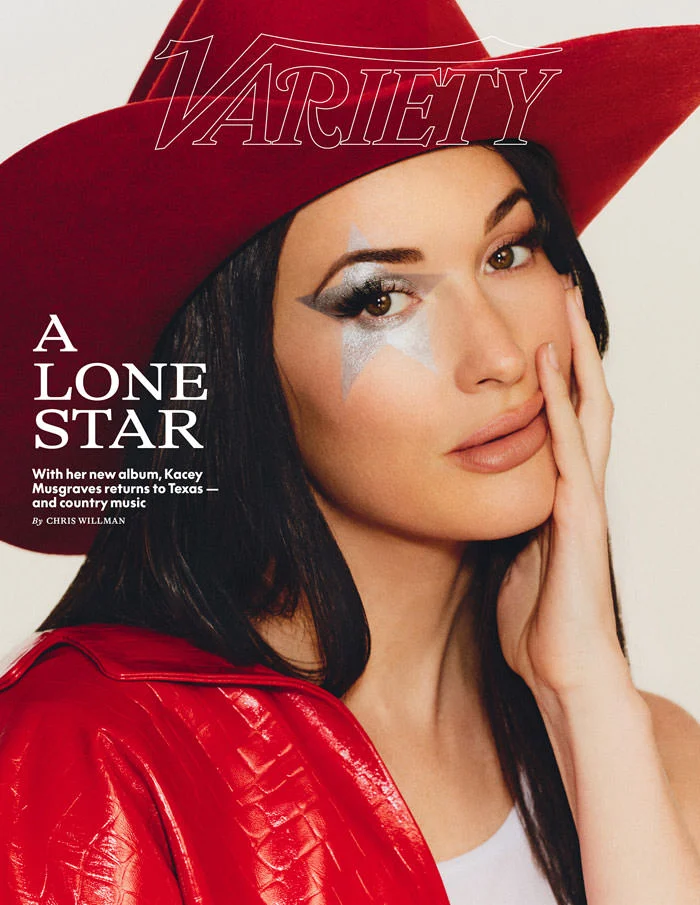

Kacey Musgraves, the seven-time Grammy Award-winning artist who has spent over a decade redefining the boundaries of country music, is entering a new era of radical transparency with the release of her latest studio album, Middle of Nowhere. In a comprehensive digital cover story for Variety, Musgraves sat down with Senior Music Writer and Chief Music Critic Chris Willman to peel back the layers of a project that is as much a homecoming as it is a bold step into uncharted lyrical territory. The interview, which spans topics from the intricacies of female sexuality to the resolution of a long-standing industry feud with fellow Texan Miranda Lambert, paints a portrait of an artist who has moved beyond the need for approval, seeking instead a profound sense of groundedness.
Middle of Nowhere arrives at a pivotal moment in Musgraves’ career, following the psychedelic folk-leanings of her 2024 album Deeper Well and the divorce-centric narrative of 2021’s Star-Crossed. This new body of work finds the singer returning to her roots—both literally and figuratively—while addressing subjects that remain largely taboo within the traditionalist confines of the Nashville establishment. Central to this evolution is her willingness to discuss self-pleasure, the complexities of modern dating after a public divorce, and the necessity of finding peace in solitude.
The Genesis of Middle of Nowhere and the Return to Golden
The conceptual heart of the album was found in a small, unassuming town in East Texas. Musgraves, seeking clarity following a period of personal upheaval and a high-profile breakup, returned to her hometown of Golden. It was there that a simple piece of local signage provided the spark for the album’s title and its overarching philosophy.
Musgraves recounted seeing a sign in the center of town that read, “Golden, Texas: Somewhere in the Middle of Nowhere.” To the singer, the phrase was more than just a self-deprecating local joke; it was a revelation. She noted that while the sign was meant to be humorous, it possessed a "quiet confidence" that resonated with her current state of mind. After years of navigating the frenetic energy of global stardom and the scrutiny of the public eye, the idea of being "nowhere" represented a sanctuary rather than a void. This sense of place permeates the record, which features a more stripped-back, organic sound that echoes the landscape of her youth.
Breaking Taboos: The Narrative of Dry Spell
Perhaps the most talked-about track on the new album is "Dry Spell," a song that sees Musgraves exploring the concept of self-pleasure with a frankness rarely seen in mainstream country music. Specifically, the lyric "sitting on the washing machine" has become a focal point of the album’s rollout. Musgraves admitted to Willman that she had never addressed the topic of masturbation in her songwriting before, marking a significant first in her discography.
While the artist finds the line to be a favorite for its honesty and relatability, she acknowledged with a laugh that it might not sit as well with her more traditional family members. "It’s not my grandma’s favorite line, but it’s mine, I guess," she remarked. The accompanying music video for the track further leans into this provocative honesty, featuring a supermarket setting filled with phallic fruit and suggestive imagery.
Beyond the shock value, Musgraves explained that "Dry Spell" is rooted in a deeper discussion about abstinence and the protection of one’s personal energy. She spoke candidly about the period of "dry spell" she experienced, noting that it can become easy to remain in a state of solitude because it feels safe. She described the internal struggle of weighing the "transient energy" of a new romantic partner against the hard-won peace of being alone. This exploration of sexual autonomy and the "cost-benefit analysis" of modern dating adds a sophisticated layer to her songwriting, moving the conversation beyond simple heartbreak into the realm of self-actualization.
Family Crisis and the Intersection of Art and Reality
The production of the "Dry Spell" music video was marred by a frightening personal emergency that highlighted the tension between Musgraves’ public persona and her private life. During the middle of the shoot, Musgraves received a text from her father stating that her grandmother, Nana, had been rushed to the hospital following an extreme high-blood-pressure incident.
The singer described the emotional whiplash of filming a video centered on sexual liberation while fearing for her grandmother’s life. She recalled being on the phone in tears, joking through the trauma that if her grandmother survived the ordeal, she would likely "hate" the video being filmed. This anecdote serves as a reminder of the human stakes behind the polished imagery of the music industry. Fortunately, her grandmother recovered, though the contrast between the "phallic fruit" of the supermarket set and the clinical reality of a hospital room remains a vivid memory for the artist.
The Great Reconciliation: Horses, Divorces, and Miranda Lambert
One of the most significant reveals in the Variety cover story is the formal end of a long-rumored "beef" between Musgraves and country superstar Miranda Lambert. The two women, both powerhouses of Texas country music, had been the subject of industry speculation regarding a cold war for several years. Musgraves confirmed to Willman that the tension was very much real, describing it as "grass-fed, grade A" beef.
The reconciliation began unexpectedly when Musgraves saw an Instagram post of Lambert riding a horse. The image sparked a realization: despite their differences, the two women shared two major life experiences—a love for horses and the experience of high-profile divorces. This led Musgraves to the hook of a new song: "Horses and Divorces."
Taking a leap of faith, Musgraves reached out to Lambert, whom she hadn’t spoken to in years. Her pitch was blunt and devoid of pretension: "I’m not trying to be your friend, but we should write this song at least." To her surprise, Lambert was immediately on board. The resulting duet was the final addition to Middle of Nowhere, recorded in January. Musgraves noted that the song’s authenticity stems from the fact that it didn’t come from a "contrived place in a writing room," but rather from a genuine moment of professional respect and shared history.
The Willie Nelson Factor: A Texan Partnership
Continuing her tradition of honoring country music’s legends, Musgraves also collaborated with Willie Nelson for the new project. She described Nelson as the "patriarch of truth in storytelling" and "everybody’s favorite gangster grandpa." Musgraves sought Nelson’s involvement specifically to help her "throw a little bit of shade" on the album, leveraging his iconic status to add weight to her more satirical and sharp-tongued observations. Their relationship remains one of the most enduring mentorships in the industry, bridging the gap between the "Outlaw Country" movement of the 1970s and the modern "Kacey country" sound.
Industry Context and the Evolution of Female Country Stardom
The release of Middle of Nowhere and Musgraves’ candid interview come at a time of significant transition for women in country music. Historically, female artists in the genre have been held to strict standards of domesticity and traditionalism. However, the success of artists like Musgraves, alongside the recent country-crossover success of figures like Beyoncé and the continued dominance of Taylor Swift, has opened the door for more diverse narratives.
Data from the past five years suggests a growing appetite for "vulnerability-driven" country music. Streaming platforms have seen a 35% increase in engagement for female country artists who incorporate elements of folk, pop, and social commentary into their work. Musgraves has been a pioneer in this space, having successfully navigated the "Nashville Machine" while maintaining her artistic integrity. Her willingness to discuss topics like masturbation and industry feuds openly is expected to further influence the lyrical landscape for the next generation of singer-songwriters.
Broader Impact and Implications
Kacey Musgraves’ latest revelations signal a shift in how major music stars manage their narratives. By leaning into the "Middle of Nowhere" philosophy, Musgraves is rejecting the pressure to be constantly "on" or perpetually in the spotlight. Her focus on groundedness, Texas roots, and the resolution of past conflicts suggests a more mature, self-assured phase of her career.
The collaboration with Miranda Lambert, in particular, has broader implications for the industry. In an era where "stan culture" often thrives on perceived rivalries between female artists, Musgraves and Lambert’s decision to turn their "beef" into art is a powerful statement of professional solidarity. It suggests that even in a competitive industry, there is room for reconciliation and mutual respect based on shared experience.
As Middle of Nowhere begins its journey into the charts, it stands as a testament to Musgraves’ ability to find the universal in the specific. Whether she is singing about a washing machine in a laundry room or the quiet streets of Golden, Texas, she continues to prove that the most compelling stories are often found in the places everyone else overlooks. Through this Variety cover story, Musgraves has not only promoted an album but has also reinforced her position as one of the most honest and essential voices in contemporary American music.