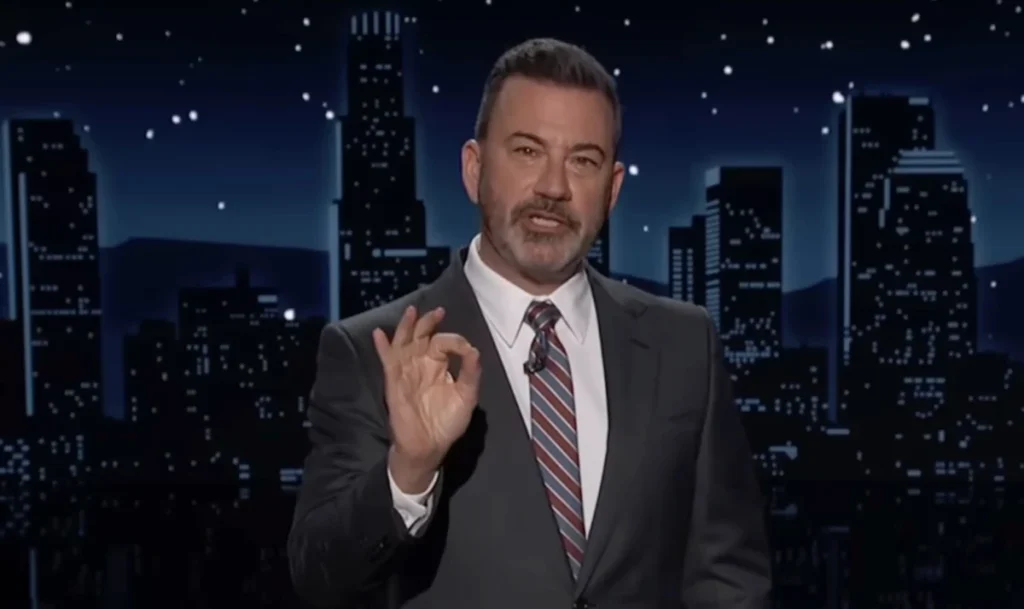

Jimmy Kimmel, the veteran host of ABC’s Jimmy Kimmel Live!, has humorously claimed responsibility for a perceived recent strengthening of the marital bond between former President Donald Trump and former First Lady Melania Trump. During the April 29th broadcast of his late-night program, Kimmel quipped that the couple had appeared "closer than ever" in recent days, and he attributed this to his own actions, albeit sarcastically. This assertion stems from a series of events that unfolded following a controversial joke Kimmel made during a mock White House Correspondents’ Dinner speech, which drew sharp criticism from both Donald and Melania Trump.
The genesis of this comedic claim lies in a jest Kimmel delivered during a simulated address, where he alluded to Melania Trump having "the glow of an expectant widow." This remark, intended by Kimmel as a jab at the age difference between the Trumps, was made just days before a real-life assassination attempt occurred during a public event, a detail that added an unforeseen layer of gravity to his words. The timing of the joke, coupled with its sensitive nature, triggered a strong reaction from the former First Lady, who publicly condemned Kimmel’s commentary, and the former President, who reportedly called for Kimmel’s termination from his hosting duties.
A Week of Retaliation and Repercussions
The controversy began to unfold in the week preceding Kimmel’s monologue. On April 22nd, during a mock White House Correspondents’ Dinner segment on Jimmy Kimmel Live!, the host delivered the now-infamous line about Melania Trump. This joke was made in the context of a broader satirical commentary on political figures and events. However, the statement quickly garnered attention for its perceived insensitivity, particularly in light of a subsequent assassination attempt on a prominent political figure.
The backlash was swift and significant. Melania Trump issued a rare public statement via Twitter, denouncing Kimmel’s joke as "irresponsible and shameful." She criticized the timing and nature of his remarks, stating that they were "beyond the pale" and that such humor was inappropriate, especially given the current climate of political division and the recent threat of violence. Donald Trump, for his part, was reported to have expressed his displeasure privately and, according to some accounts, had urged ABC to fire Kimmel. This public and private pressure marked a notable instance of the former President and First Lady publicly aligning against a media personality.
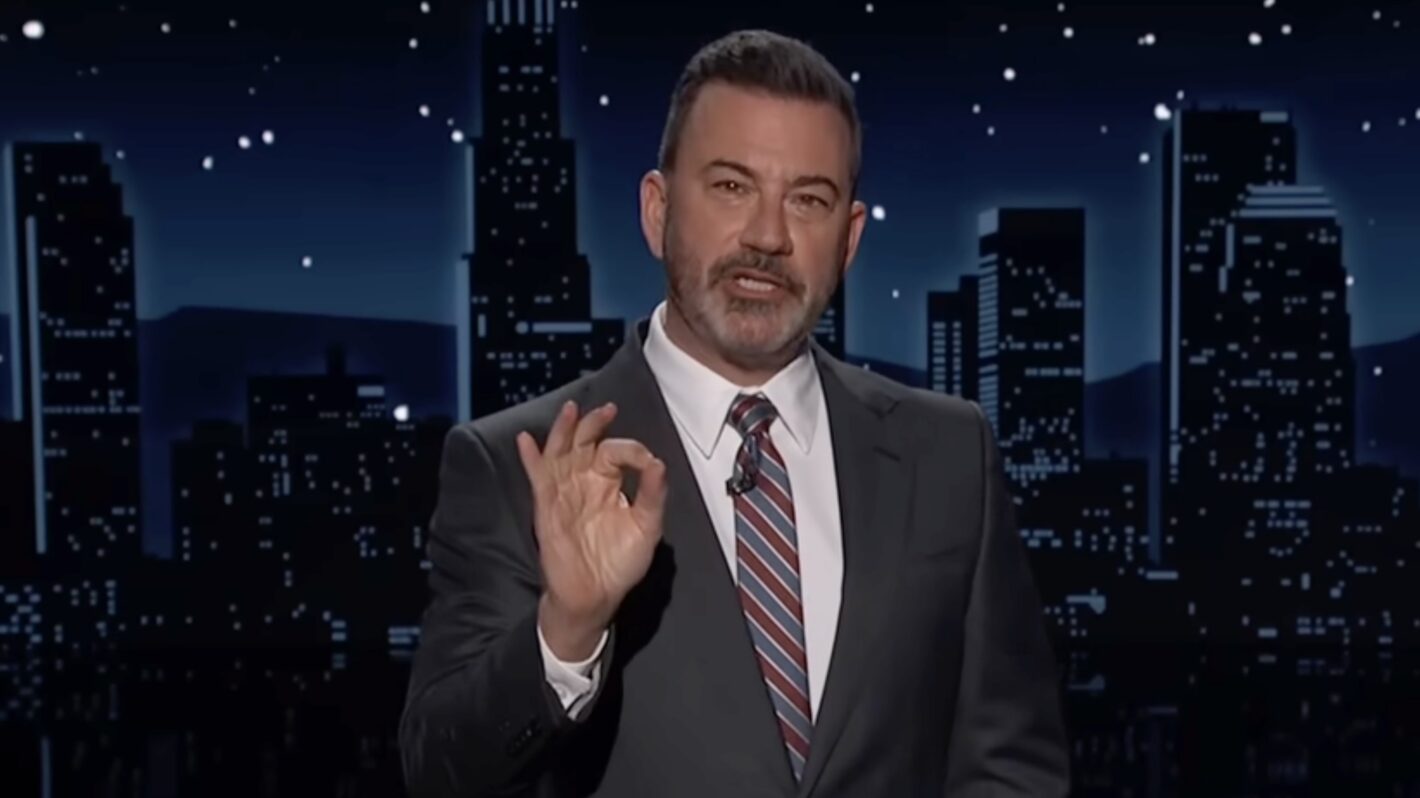
Kimmel, in his April 29th monologue, addressed the fallout directly. He presented clips of the Trumps interacting with other world leaders, including King Charles III and Queen Camilla, during their state visit to the United States. He directed his audience to observe the body language of Donald and Melania Trump, particularly focusing on their hands. A moment captured on video showed the couple briefly holding hands before Melania Trump appeared to withdraw her hand. Kimmel seized upon this visual cue, interpreting it with his characteristic dry wit.
"The hands say so much," Kimmel remarked as the footage played. He then sarcastically suggested that this seemingly detached interaction was a sign of their strengthened bond, directly linking it to the recent criticism he had faced. "You know what? Considering the week I’ve had with the first couple, I’m just gonna say that is a completely normal way to interact for two people who are very much in love," he stated. He further elaborated with a jab, suggesting, "Maybe that’s why his hands are all bruised, from Melania swatting them away." This commentary was designed to mock the perceived notion that he had somehow unified the Trumps through their shared disapproval of his actions.
Trump’s Early Morning Social Media Post and Kimmel’s Response
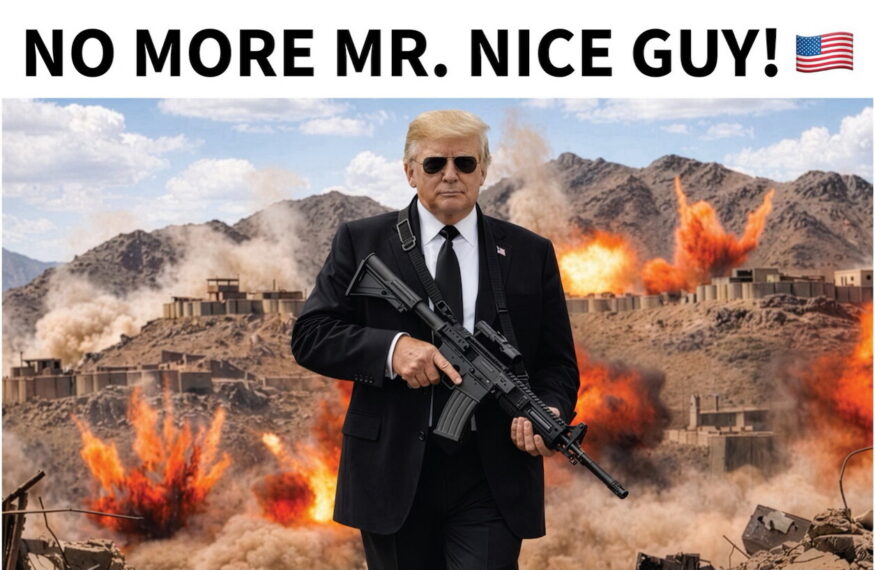
Adding another layer to the week’s events, Kimmel also addressed a peculiar social media post made by Donald Trump in the early hours of Wednesday, April 29th. Trump took to his Truth Social platform at approximately 4:00 AM to share a provocative message directed at Iran. The post read, "Iran can’t get their act together. They don’t know how to sign a nonnuclear deal. They better get smart soon!" Accompanying this text was an AI-generated image depicting Trump in a dark suit and sunglasses, brandishing a machine gun.
Kimmel, ever the observer of political absurdities, found the timing and content of this post ripe for commentary. "He posted this at 4:05 am. So much for toning down the rhetoric, I guess!" Kimmel quipped. He then proposed a humorous solution to curb such late-night outbursts, suggesting, "Can we maybe get him one of those bricks that locks him out of his phone between the hours of midnight and six? Maybe one of those Yondr pouches they have at concerts?" This reference to Yondr pouches, often used at events to prevent phone usage, highlighted Kimmel’s view that Trump’s early morning post was an impulsive and attention-seeking act.
The late-night host further dissected the potential impact of Trump’s AI-generated image and his message on international relations. Kimmel questioned the strategic value of such a post, particularly its intended effect on Iranian leadership. He speculated about how the Iranian government might interpret the image, suggesting a dismissive reaction: "Best-case scenario, they go, ‘Okay, you know what? The old man has lost his marbles. He can’t sleep. He’s cosplaying as fat John Wick. I think we need to call his kids to make sure he’s okay.’"
Kimmel’s analysis extended to the effectiveness of Trump’s aggressive posturing. He questioned whether the image, which he described as resembling a blend of "Rambo and Dumbo," would genuinely instill fear in the Iranian regime. He posed a rhetorical question, "Does he really think this image will strike fear into the beards of those hardcore religious zealots running around?" He envisioned a scenario where Iranian leaders, after enduring significant geopolitical pressures, would view the image not as a threat, but as a sign of Trump’s erratic behavior. This comedic critique underscored Kimmel’s view that Trump’s online pronouncements often lacked strategic depth and were more performative than substantive.
Background and Context of the Controversy
The incident involving Jimmy Kimmel’s joke and the subsequent Trump family reaction occurred within a broader context of intense political polarization in the United States. Late-night comedy has long served as a platform for political satire, with hosts frequently targeting figures from across the political spectrum. However, the nature of the Trump presidency and the media landscape of the era often amplified such exchanges.
Donald Trump was known for his direct and often combative engagement with media personalities and news organizations he perceived as critical. His presidency was marked by frequent use of social media, particularly Twitter, to communicate directly with his supporters and to attack his opponents. Melania Trump, while generally maintaining a more reserved public persona, did occasionally break her silence to address specific criticisms or perceived slights, as she did in response to Kimmel’s joke.
The White House Correspondents’ Dinner, a traditional event where the President and members of the White House press corps gather, has historically been a venue for lighthearted roasting and self-deprecating humor. However, the tone of these events has evolved over time, and the joke made by Kimmel, while intended as satire, touched upon sensitive themes, particularly given the recent assassination attempt that had occurred. This confluence of factors—political division, the nature of late-night satire, and the heightened sensitivity surrounding political discourse—contributed to the significant reaction generated by Kimmel’s remark.
Broader Impact and Implications
The exchange between Jimmy Kimmel and the Trumps highlights several ongoing dynamics in contemporary American politics and media. Firstly, it underscores the enduring power of late-night comedy as a platform for political commentary and critique. Hosts like Kimmel utilize humor to engage audiences with political issues, often offering a counter-narrative to official statements or mainstream media coverage.
Secondly, the incident illustrates the intensified media scrutiny and public reaction that political figures, especially those as prominent as a former President and First Lady, attract. Every public appearance, every statement, and even every joke can become a subject of widespread discussion and analysis. The speed at which information and reactions travel through social media further amplifies these exchanges, often blurring the lines between genuine news and public commentary.
Thirdly, the use of AI-generated imagery in political communication, as demonstrated by Trump’s Truth Social post, represents a growing trend that raises questions about authenticity, intent, and the potential for misinformation. While Trump presented the image as a humorous or provocative statement, the use of AI in political messaging is an evolving area with potential implications for how political narratives are constructed and consumed.
Finally, the perceived “strengthening” of the Trump marital relationship, as humorously posited by Kimmel, speaks to the public’s fascination with the private lives of prominent figures. While Kimmel’s comment was clearly satirical, it touches upon the public’s ongoing interest in the dynamics of high-profile relationships, often analyzed through the lens of public appearances and media portrayals.
The continuous interplay between political figures, media personalities, and the public discourse remains a defining characteristic of the modern media landscape. The events of this past week, as recounted and satirized by Jimmy Kimmel, serve as a microcosm of these complex and often intertwined dynamics.
Jimmy Kimmel Live! airs weeknights at 11:35/10:35c on ABC.