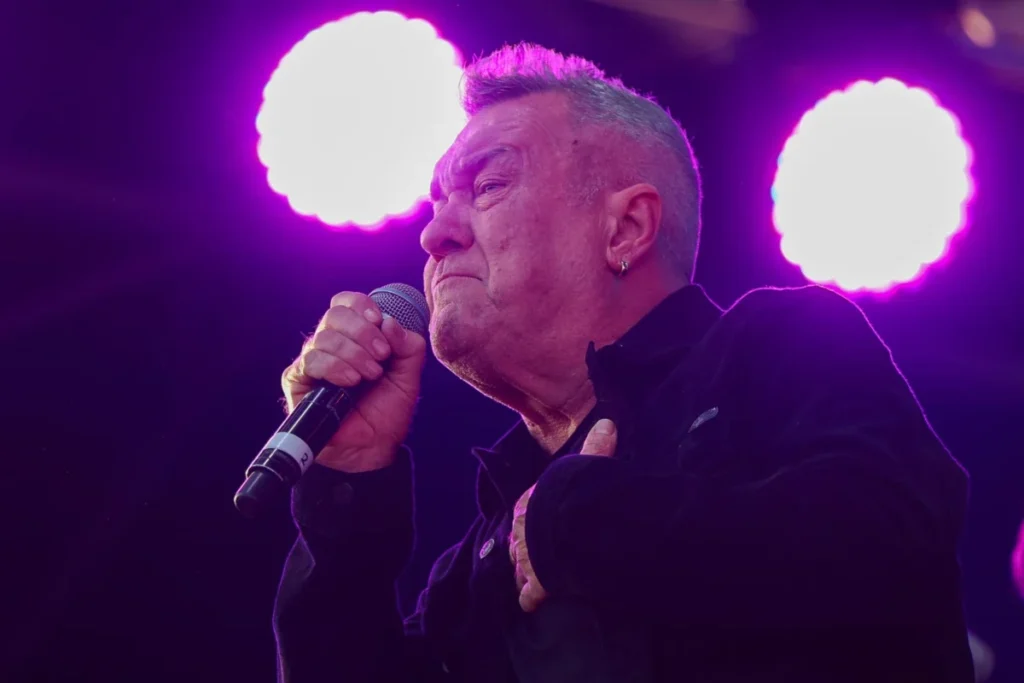

Australian rock icon Jimmy Barnes has released a poignant rendition of the classic Rose Tattoo track "Rock ‘n’ Roll Is King" as a heartfelt tribute to his late friend and peer, Gary "Angry" Anderson. The cover, originally recorded by Barnes with the intention of featuring it on his most recent studio album, has now been repurposed as a charitable release. All proceeds generated from the track will be directly donated to Support Act, a prominent Australian music-industry charity that provides crisis relief, mental health support, and wellbeing services to artists, crew members, and music workers facing hardship.
The release follows the death of Anderson, the iconic frontman and enduring driving force behind the hard rock outfit Rose Tattoo, who passed away on September 21 at the age of 79. Anderson’s death came just weeks after he suffered a severe heart attack, prompting an outpouring of grief, condolences, and tributes from across the global rock community.
A Lifetime of Shared Stages and Mutual Respect
The bond between Barnes and Anderson dates back to the formative years of Australia’s vibrant late-1970s and 1980s rock circuit. During this era, Barnes was carving out his legendary status as the frontman of Cold Chisel, while Anderson was spearheading the ferocious, blues-infused hard rock sound of Rose Tattoo. The two bands frequently crossed paths, touring the country, sharing festival bills, and occasionally exchanging crew members and equipment as they navigated the grueling demands of the nascent Australian pub rock scene.
In an extensive and deeply personal statement released alongside the charity single, Barnes reflected on those foundational years. He characterized their shared history not merely as professional acquaintanceship, but as a brotherhood forged in the crucible of high-energy live performances.
"We shared stages, we shared crew members, we even shared equipment at times," Barnes wrote in his tribute. "Rock ’n’ roll was king and we were all young, taking on the world together."
Barnes went on to praise Rose Tattoo’s uncompromising musical ethos, describing them as the ultimate rock band. He noted that their gritty, unapologetic approach set a standard that routinely overshadowed many of the international hard rock acts of the period, demonstrating how heavy, blues-driven rock music should be performed.
From Studio Concept to Memorial Tribute
The genesis of Barnes’s cover of "Rock ‘n’ Roll Is King"—a standout track originally featured on Rose Tattoo’s 1981 sophomore studio album, Assault & Battery—predates Anderson’s hospitalization and subsequent passing. Barnes had tracked the song during recent recording sessions, initially planning to include it on his latest musical project. However, following discussions with Anderson prior to the frontman’s health decline, the song’s context shifted dramatically for Barnes.
"I spoke to Angry about covering that song for my last album and he was excited," Barnes shared. "I couldn’t wait to sit down with Angry and play it to him because the song takes on a whole new meaning for me now, looking back through all those years and all those gigs."
Upon deciding to release the track as a standalone memorial tribute, Barnes made it clear that commercial gain played no part in the initiative. By channeling all financial proceeds to Support Act, Barnes ensured that the release would actively benefit the community of musicians and road crew workers that both artists dedicated their lives to supporting.
"I won’t keep any money it makes, I just want to tip my hat to my mate," Barnes stated, concluding with a characteristically spirited farewell: "Turn it up f—ing LOUD. Angry’s gone to the Big Gig upstairs but I bet he’ll be listening."
The Legacy of Gary "Angry" Anderson and Rose Tattoo
Gary Anderson was born in Melbourne, Victoria, before relocating to Sydney, where he co-founded Rose Tattoo in 1976. Distinguished by his unmistakable gravel-throated delivery, shaved head, and extensive body tattoos—which were pioneering within mainstream Australian music at the time—Anderson gave Rose Tattoo an aggressive, authentic edge that separated them from their contemporaries.
The band’s 1978 self-titled debut album, featuring enduring anthems such as "Bad Boy for Love" and "Rock ‘n’ Roll Outlaw," established them as pioneers of slide-guitar-driven heavy rock. Their subsequent 1981 album Assault & Battery further cemented their reputation. Although Rose Tattoo achieved only modest commercial penetration on mainstream U.S. charts during their initial run, their influence on the development of American hard rock and heavy metal was profound.
Most notably, Guns N’ Roses recorded a high-profile cover of Rose Tattoo’s "Nice Boys" on their 1986 EP Live ?!@ Like a Suicide, later reissued on the multi-platinum 1988 release G N’ R Lies*. Members of Guns N’ Roses, alongside other international rock artists, frequently cited Rose Tattoo as a crucial blueprint for their own raw, unpolished aesthetic.
Beyond his musical contributions, Anderson achieved crossover recognition as an actor. In 1985, he appeared alongside Mel Gibson and Tina Turner in the blockbuster post-apocalyptic film Mad Max Beyond Thunderdome, portraying the formidable character Ironbar, the enforcer to Turner’s Aunty Entity.
Over subsequent decades, Anderson continued to lead various iterations of Rose Tattoo, maintaining an active touring schedule well into his later years. In recognition of their enduring cultural and artistic impact, Rose Tattoo was officially inducted into the ARIA Hall of Fame in 2006. The band’s lineage also maintained a personal connection to the Barnes family; Jimmy Barnes’s son, Jackie Barnes, joined Rose Tattoo as their drummer in 2018, playing alongside Anderson.
Implications for the Australian Music Community
The release of Barnes’s cover highlights the tight-knit solidarity characterizing Australia’s veteran rock community, a demographic that has faced significant losses in recent years as its foundational figures age. By directing proceeds to Support Act, Barnes and his collaborators are offering tangible assistance to contemporary music workers navigating economic instability, health crises, and career transitions.
Support Act, established in 1997, has become an increasingly vital safety net for the Australian music industry, particularly in the wake of disruptions caused by the COVID-19 pandemic and rising operational costs for independent artists and crew. The endorsement and financial injection from a high-profile release by an artist of Barnes’s stature—who holds the record for the most number-one albums on the ARIA Charts by a domestic artist—serve to amplify awareness of the charity’s ongoing mission.
As fans and industry figures continue to mourn the loss of Angry Anderson, projects like Barnes’s rendition of "Rock ‘n’ Roll Is King" ensure that the aggressive spirit, cultural weight, and communal ethos of classic Australian rock will continue to resonate for new generations of listeners.