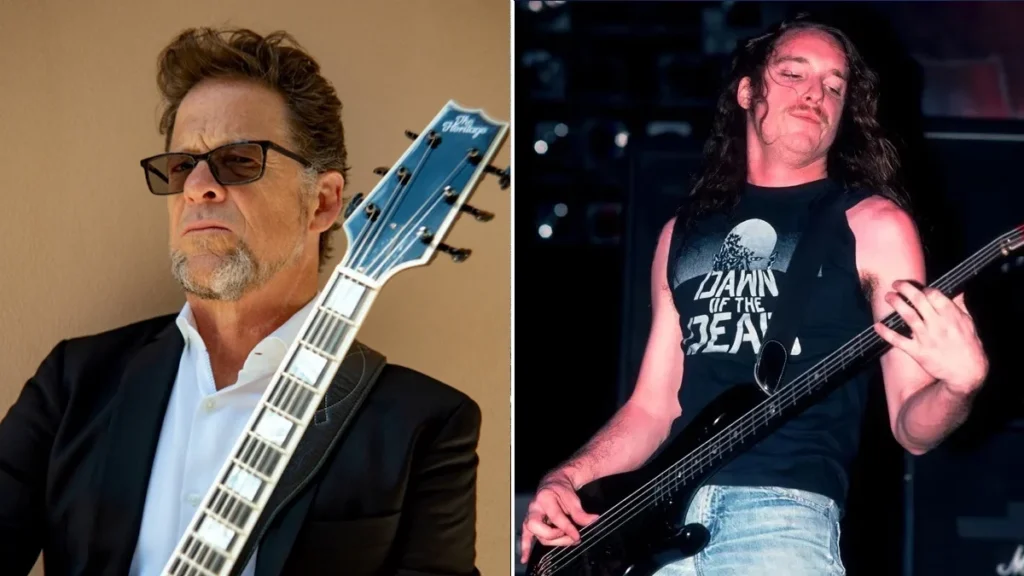

September 27, 2026, marks the somber 40th anniversary of the tragic accident that claimed the life of Cliff Burton, the visionary bassist who served as a primary architect of the thrash metal sound that propelled Metallica to international superstardom. Burton, only 24 years old at the time, died when the band’s tour bus skidded off a road and overturned in rural Sweden during the European leg of the Damage, Inc. tour. Four decades later, the music industry continues to re-evaluate the seismic shift his absence caused in the trajectory of heavy metal. Jason Newsted, the bassist who faced the unenviable task of stepping into Burton’s shoes in 1986, recently offered a reflective look at the immense legacy and unparalleled musicianship left behind by his predecessor.
The Architect of a Genre
Cliff Burton’s tenure with Metallica was relatively brief, spanning only from 1982 to 1986, yet it was during this period that the band transformed from a raw, underground garage act into a polished, technically proficient force. Burton’s influence on the band’s songwriting—specifically on the seminal albums Kill ‘Em All, Ride the Lightning, and Master of Puppets—remains a subject of intense academic and musicological study.
His approach to the bass guitar was unorthodox. Rather than serving as a mere rhythmic tether for the guitar riffs, Burton treated the instrument as a lead voice, incorporating heavy distortion, wah-wah pedals, and classical music theory. His composition "Anesthesia (Pulling Teeth)" remains a benchmark for heavy metal bass performance, demonstrating a melodic complexity rarely seen in the genre at the time.
Jason Newsted on Burton’s Natural Brilliance
In a recent interview with Heavy Consequence, Jason Newsted discussed the daunting reality of inheriting a role defined by a musician he considered a peerless prodigy. Newsted noted that Burton’s ability to perform at a world-class level appeared to be innate, requiring little to no warm-up.
"Cliff could wake up and do it," Newsted remarked. "James Hetfield could wake up after how many ever beers and do it. Just wake up 10 minutes out of bed and play as good as I could after working for five hours to get to that spot."
Newsted further drew parallels between Burton and his longtime friend and contemporary, Les Claypool of Primus. According to Newsted, both musicians exhibited a level of mastery by age 17 that most professionals do not achieve in a lifetime of practice. This observation underscores the deliberate choice made by James Hetfield and Lars Ulrich in the early 1980s to prioritize Burton’s integration into the band above all else.
The founders of Metallica famously relocated from Los Angeles to the San Francisco Bay Area specifically to recruit Burton. Newsted pointed out the foresight in this decision, stating, "James and Lars, who are also very exceptionally talented people, recognized it so strongly that they moved their lives to be just in a band with the guy before they even made a record. He was that good."
Chronology of a Legacy
The timeline of the tragedy remains etched in the collective memory of the heavy metal community:
- 1982: Cliff Burton joins Metallica after the band witnesses him performing with the group Trauma. He insists they move from Los Angeles to San Francisco.
- 1983: The release of Kill ‘Em All introduces the world to Burton’s unique, melodic bass style.
- 1984: Ride the Lightning showcases the band’s rapid maturation, heavily influenced by Burton’s interest in classical structures and harmonies.
- 1986: Master of Puppets is released in March, widely considered the greatest thrash metal album of all time.
- September 27, 1986: The fatal bus accident occurs near Ljungby, Sweden.
- October 1986: Jason Newsted auditions for the band, officially joining shortly thereafter to fill the vacancy.
- 2009: Cliff Burton is posthumously inducted into the Rock and Roll Hall of Fame as a member of Metallica.
The Intimidation Factor
For Newsted, joining the band in the wake of such a tragedy was not merely a professional challenge but a psychological one. He described seeing Burton perform live in 1985 as a pivotal moment of realization regarding his own limitations.
"I saw him play in 1985—a year and a little bit before he died. It was like, ‘Why do you even bother?’ Here’s the firewood. Let me get that for you," Newsted said, illustrating the humility he felt when confronting Burton’s technical skill. "Maybe if I try really hard, I could be a tenth as good as that. I think ultimately it was inspiring, and made me want to try harder, but it was intimidating as fuck the whole time."
This sentiment reflects the broader impact Burton had on the bassist community. His use of the instrument challenged the status quo, effectively forcing a generation of metal musicians to rethink the role of the rhythm section.
Institutional Respect and Modern Context
Four decades later, the respect for Burton’s contribution to the arts remains unwavering. Newsted expressed appreciation for the endurance of Burton’s reputation, noting that the metal community continues to treat his memory with a reverence usually reserved for classical composers.
"What I really appreciate is how everyone continues to show such respect for his efforts, because they were so fantastical in his brief span," Newsted observed.
This enduring popularity is evidenced by the band’s continued reliance on the sonic foundation Burton helped establish. Even as Metallica prepares for its high-tech residency at the Las Vegas Sphere—titled "Life Burns Faster"—and an expansive 2027 North American tour, the spirit of the early era remains a central part of their identity. Current bassist Robert Trujillo, who has held the position since 2003, has frequently cited Burton as a primary influence, often incorporating Burton’s classic bass solos into his own live performances as a tribute.
Economic and Cultural Implications
The tragedy in 1986 served as a catalyst for a significant pivot in the band’s management and lifestyle. In the years following the crash, Metallica became increasingly disciplined regarding their touring logistics, a shift that contributed to their long-term survival in an industry notorious for burnout and mismanagement.
From an economic perspective, the "Cliff Burton factor" remains a significant revenue driver for the band’s brand. Reissues of the early catalog, merchandise featuring his likeness, and the inclusion of his bass tracks on archival releases continue to perform well in the marketplace. However, the true value of his tenure lies in the artistic validation he provided. By bringing a level of sophistication to the genre, Burton ensured that Metallica would not be viewed as a transient trend but as a foundational pillar of modern rock history.
As the music industry observes this 40-year milestone, the conversation remains focused on the "what-ifs." Had Burton lived, the trajectory of the band’s sound—specifically the shift toward the more commercial, blues-based rock of the early 1990s—might have taken a radically different path. Yet, the consensus among musicians and critics remains that Burton achieved in four years what most artists strive to achieve in forty. His legacy is not merely one of loss, but of a brief, intense, and permanent transformation of what heavy music is capable of achieving.
In the eyes of his peers and the fans who continue to carry his memory, Cliff Burton remains the North Star of heavy metal bassists, a reminder that genius is often measured not by the length of a career, but by the weight of its impact.