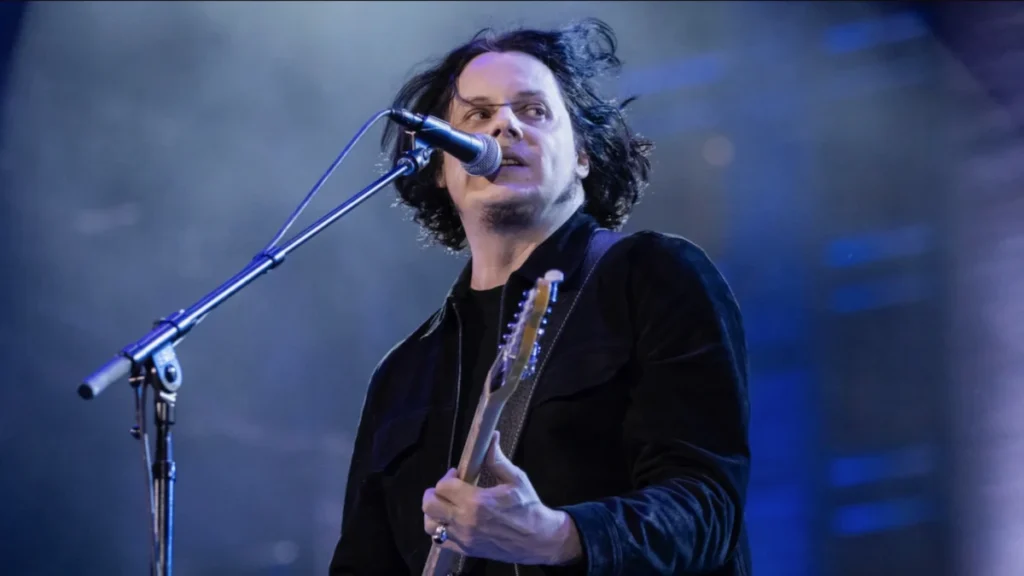

Jack White, the iconic frontman known for his work with The White Stripes, The Raconteurs, and his extensive solo career, has recently ignited a significant public dialogue regarding artistic freedom, personal faith, and religious tolerance within the music industry. The controversy stems from his decision to invite the self-described "Satanic doo-wop" duo, Twin Temple, to open for him at two highly anticipated shows at the Hollywood Palladium in Los Angeles this September, a move that has drawn both praise and criticism, particularly from individuals questioning White’s own religious convictions. White, never one to shy away from outspoken declarations, responded to these criticisms with characteristic bluntness, clarifying his personal philosophy on faith and dismissing fear-based religious dogma.
Contextualizing the Controversy: Jack White’s Stance
The latest chapter in this unfolding story began when Jack White took to social media to address direct inquiries about his religious beliefs following the announcement of Twin Temple as his support act. A social media user, identifying as a "practicing Catholic," specifically questioned how White reconciled promoting a band associated with Satanic imagery with his presumed faith, stating, "It seems at odds with values Catholicism teaches." This query tapped into a long-standing public fascination with White’s spiritual leanings, particularly given his well-documented Catholic upbringing and past musical references that often touch upon biblical themes.
White’s response was unequivocal and deeply personal. "I’m not scared of Satan or any bullshit imagery man made up to live in fear of," he declared, directly challenging the notion that fear should be a guiding principle in one’s spiritual life. He further clarified his relationship with his Catholic roots, stating, "I never claimed to be a practicing catholic or christian, you assumed that." This statement served to delineate his present spiritual autonomy from his formative religious experiences, asserting a personal journey rather than adherence to institutional dogma. Expanding on his philosophical approach, White advised his followers, "Commune with god on your own terms and communicate with god and find your own path, not some path somebody made up to make you afraid and make money off of you." This sentiment underscores a rejection of organized religion’s perceived control and commercialization, advocating instead for individual spiritual exploration.
The selection of Twin Temple, a Los Angeles-based duo known for their distinctive blend of 1950s and early 1960s pop aesthetics with overtly Satanic lyrical themes and stage presence, was seen by many as a deliberate statement from White. The duo, consisting of Alexandra and Zachary James, has carved out a niche by subverting traditional religious imagery and exploring themes of empowerment and non-conformity through a lens often associated with rebellion against established norms. Their acceptance of White’s invitation was immediate and appreciative, providing them with a significant platform on a major tour.
The Genesis of the Debate: Twin Temple and Charley Crockett
The controversy surrounding Twin Temple’s touring opportunities did not originate with Jack White. Prior to White’s invitation, the duo had been scheduled to open for country musician Charley Crockett on several dates of his tour. However, Crockett subsequently removed Twin Temple from those opening slots, a decision that garnered considerable attention and, in many ways, set the stage for White’s later intervention.
Crockett, a rising star in the country and Americana music scene known for his distinctive blend of traditional country, blues, and Cajun influences, publicly explained his decision to Rolling Stone, stating, "I thought they were like Black Sabbath, but they ain’t. Not today, Satan." This comment indicated a misunderstanding of Twin Temple’s aesthetic and message, suggesting he initially perceived their "Satanic" imagery as a more generalized rock ‘n’ roll rebellion rather than a specific philosophical or theatrical stance. His subsequent social media post further cemented his position, reading, "FUCK TRUMP FUCK EPSTEIN BUT HAIL SATAN? NOT ME JACK." This statement, while perhaps intended to distance himself from specific controversies, inadvertently drew a clearer line in the sand regarding religious imagery and what he considered acceptable for his audience.
Crockett’s decision highlights a persistent tension within certain segments of the music industry, particularly genres with strong traditional or conservative fan bases, where overt "Satanic" themes can be perceived as genuinely transgressive or offensive rather than simply artistic expression. The country music landscape, while diverse, often retains a strong connection to Christian values and imagery, making such a booking particularly sensitive. His withdrawal from the arrangement left Twin Temple in need of new opening slots, creating the opportunity for Jack White to step in.
Jack White’s Personal History with Faith
To fully understand the context of White’s recent declarations, it is crucial to delve into his formative years and his long-standing engagement with religious themes in his art. Born John Anthony Gillis in Detroit, Michigan, Jack White was raised in a devout Catholic household. Both of his parents worked for the Archdiocese of Detroit, immersing him deeply in the traditions and teachings of the Catholic Church from a young age. This upbringing included significant personal experiences, such as meeting Pope John Paul II and receiving a hug from him as a child, a memory White has occasionally recounted.
Perhaps most tellingly, White has openly discussed his consideration of becoming a priest, revealing that he was on the verge of entering a seminary before ultimately choosing a different path. This vocational contemplation underscores a profound, albeit complex, relationship with faith that goes beyond mere cultural exposure. His deep immersion in Catholic doctrine and ritual during his youth undoubtedly informed his worldview and artistic output, even as he later distanced himself from institutional religion.
The White Stripes’ critically acclaimed 2005 album, Get Behind Me Satan, stands as a monumental example of White’s artistic engagement with these themes. The album title itself is a direct biblical reference, a phrase attributed to Jesus rebuking Peter in the Gospel of Matthew. At the time of its release, the title sparked curiosity and discussion about White’s spiritual orientation. In light of his recent social media statements, the album gains new layers of context. It can now be seen not necessarily as an embrace of literal Satanism, but rather as an assertion of agency and a rejection of temptation or fear, echoing his current stance that "Satan" is merely "bullshit imagery man made up to live in fear of." This suggests a consistent thread in White’s artistic and personal philosophy: a questioning of conventional authority and a pursuit of individual truth, whether spiritual or artistic.
Artistic Freedom vs. Religious Sensitivity: A Deeper Look
The controversy surrounding Twin Temple’s bookings, first with Charley Crockett and now with Jack White, highlights a persistent tension between artistic expression and religious sensitivities in the public sphere. For many artists, including Twin Temple, the use of "Satanic" imagery is a form of theatricality, satire, or philosophical commentary rather than a literal endorsement of evil. The Satanic Temple, for instance, often employs Satanic iconography to advocate for secularism, rationalism, and social justice, challenging religious privilege and advocating for individual liberty. Twin Temple’s blend of nostalgic doo-wop with dark, often tongue-in-cheek, lyrics falls into a similar vein of subversive artistry.
However, for individuals with deep religious convictions, particularly those from Christian backgrounds, such imagery can be genuinely disturbing or seen as blasphemous. The historical and theological weight of "Satan" as the embodiment of evil is profound, and for many, its artistic deployment cannot be easily separated from its perceived spiritual implications. Charley Crockett’s reaction exemplifies this perspective; his "Not today, Satan" reflects a genuine discomfort and an unwillingness to be associated with what he interprets as an endorsement of harmful spiritual forces.
Jack White’s intervention, therefore, represents a strong endorsement of artistic freedom and a challenge to the notion that religious sensitivities should dictate artistic choices. By openly supporting Twin Temple and clarifying his own non-dogmatic spiritual stance, White positions himself as an advocate for unbridled creative expression, even when it pushes against societal or religious norms. His philosophy suggests that true spirituality lies in personal exploration and genuine connection, rather than adherence to fear-based doctrines or predefined paths. This stance resonates with a long tradition in rock and roll of challenging authority and embracing the counter-culture, a tradition White has consistently embodied throughout his career.
Jack White’s Ongoing Musical Exploration of Belief
White’s recent social media commentary is not an isolated incident but rather a public articulation of themes he has consistently explored throughout his musical career. His songs frequently grapple with morality, redemption, temptation, and the complexities of human faith. His solo repertoire, as well as his work with The White Stripes and The Raconteurs, is replete with narratives and metaphors drawn from religious and spiritual iconography, often recontextualized or subverted.
His current 2026 North American tour, launched on Friday night with an almost two-hour concert at The Anthem in Washington, D.C., continues this tradition. The setlist for the tour opener included solo favorites like "Old Scratch Blues" (with "Old Scratch" being a colloquial term for the Devil) and "Lazaretto," alongside new tunes from his recently released album, Frozen Charlotte, such as "All Alone Again" and "Nobody Knows." The performances also feature beloved tracks from The Raconteurs and, of course, The White Stripes, concluding with the iconic "Seven Nation Army."
Significantly, the tour also features songs like "G.O.D And the Broken Ribs" and "Archbishop Harold Holmes." The latter, a 2024 track, specifically tells the story of a traveling religious figure who promises to cure ailments in exchange for "a special financial blessing." This song, released well before the current controversy, directly critiques the commercialization and potential exploitation within religious practices, echoing White’s social media admonition to "not some path somebody made up to make you afraid and make money off of you." These lyrical explorations demonstrate that White’s current outspokenness on religious matters is not a sudden shift but a consistent thread woven through his artistic and personal evolution. His music serves as a testament to his long-standing engagement with these profound questions, solidifying his reputation as an artist who uses his platform not just for entertainment, but for intellectual and philosophical inquiry.
The 2026 North American Tour: Dates and Details
Jack White’s 2026 North American tour supports his new album, Frozen Charlotte, and is a comprehensive journey across the continent, offering fans numerous opportunities to experience his dynamic live performances. Tickets for all dates are available via Ticketmaster and other ticketing platforms. The tour schedule is as follows:
- 07/11 – Brooklyn, NY @ Brooklyn Paramount
- 07/12 – Brooklyn, NY @ Brooklyn Paramount
- 07/14 – Toronto, ON @ RBC Amphitheatre (w/ support from Angine de Poitrine)
- 07/15 – Essex Junction, VT @ Champlain Valley Exposition
- 07/17 – Boston, MA @ MGM Music Hall at Fenway
- 07/19 – Port Chester, NY @ The Capitol Theatre
- 07/21 – Indianapolis, IN @ Everwise Amphitheater at White River State Park
- 07/23 – Chicago, IL @ Radius
- 07/24 – Chicago, IL @ The Salt Shed (Outdoors)
- 07/25 – Clarkston, MI @ Pine Knob Music Theatre
- 09/19 – East Aurora, NY @ Borderland Festival
- 09/20 – Richmond, VA @ Iron Blossom Music Festival
- 09/24 – San Francisco, CA @ Bill Graham Civic Auditorium
- 09/25 – Pomona, CA @ Fox Theater
- 09/28 – Los Angeles, CA @ Hollywood Palladium (w/ support from Twin Temple)
- 09/29 – Los Angeles, CA @ Hollywood Palladium (w/ support from Twin Temple)
- 09/30 – Del Mar, CA @ The Sound
- 10/02 – Las Vegas, NV @ Fontainebleau Las Vegas
- 10/03 – Phoenix, AZ @ Arizona Financial Theatre
- 10/04 – Albuquerque, NM @ Revel
- 10/06 – Austin, TX @ Moody Amphitheater
- 10/07 – Dallas, TX @ The Bomb Factory
- 10/09 – Nashville, TN @ The Truth
- 11/08 – Minneapolis, MN @ The Armory
- 11/09 – Madison, WI @ The Sylvee
- 11/10 – Milwaukee, WI @ Landmark Credit Union Live
- 11/12 – Pittsburgh, PA @ Citizens Live at The Wylie
- 11/13 – Charlotte, NC @ The Fillmore Charlotte
- 11/14 – Charlotte, NC @ The Fillmore Charlotte
- 11/16 – Orlando, FL @ Hard Rock Live Orlando
- 11/17 – Miami Beach, FL @ The Fillmore
- 11/18 – Miami Beach, FL @ The Fillmore
- 11/20 – Atlanta, GA @ Coca-Cola Roxy
- 11/21 – Atlanta, GA @ Coca-Cola Roxy
Implications for Artists and Audiences
The recent exchange involving Jack White, Charley Crockett, and Twin Temple serves as a potent reminder of the complex interplay between artistic expression, personal belief, and public reception in contemporary culture. For Twin Temple, the controversy, while leading to some canceled dates, has also provided an unprecedented level of exposure, placing them squarely in the public eye and aligning them with a rock icon known for his commitment to artistic integrity. Jack White’s endorsement provides not just a platform, but a powerful validation of their artistic vision, regardless of its provocative nature.
For Jack White, this incident further solidifies his persona as an artist unafraid to challenge conventions and speak his mind. His statements reinforce his long-held commitment to authenticity and individual thought, distinguishing him from artists who might shy away from controversial associations. This stance is likely to resonate deeply with his existing fanbase, many of whom appreciate his intellectual curiosity and rebellious spirit.
The differing reactions of Crockett and White also highlight a broader cultural dialogue about what is acceptable in mainstream entertainment. While some genres and audiences may be more tolerant of provocative or counter-religious themes, others remain deeply rooted in traditional values, leading to inevitable clashes. This ongoing negotiation between artistic freedom and community standards will continue to shape the landscape of the music industry, pushing artists and audiences alike to consider the boundaries of expression and the nature of belief in an increasingly diverse and interconnected world. White’s decision, in this context, is not just about a concert booking; it’s a statement about the enduring power of art to provoke, question, and ultimately, to define individual paths.