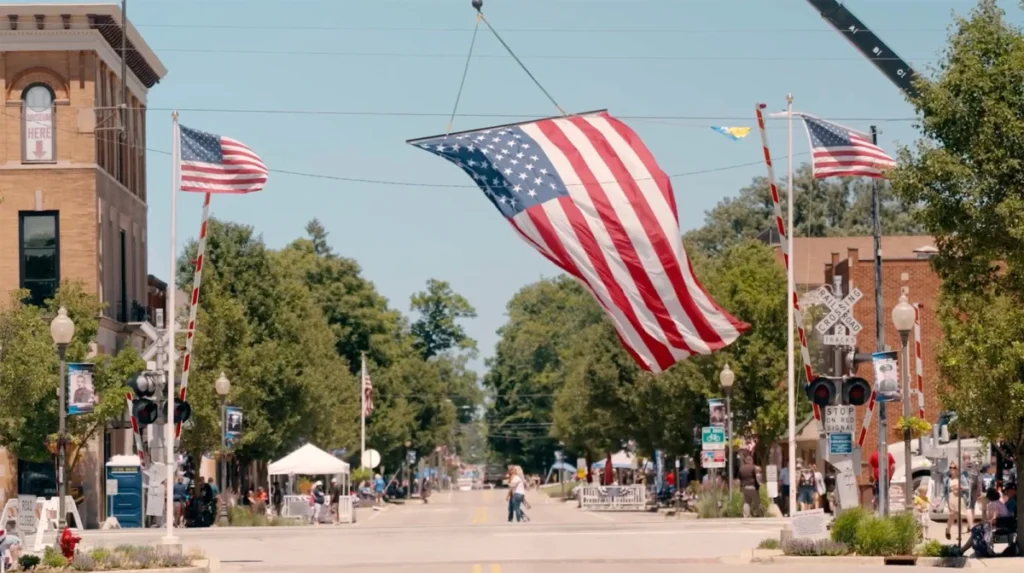

Abramorama has unveiled the official trailer for Flag Day, a compelling documentary film that offers a nuanced and deeply human portrait of community, identity, and tradition in contemporary America. Directed by the acclaimed filmmaking duo Andrew and Melissa Shea, known collectively as Shea & Shea, the film is slated for a theatrical release in June 2026, strategically timed to coincide with the upcoming US Flag Day on June 14th. The documentary is set in the small farming community of Three Oaks, Michigan, a locale renowned for hosting the nation’s largest Flag Day parade. This observational verité documentary promises to be a timely exploration of civic life, ritual, and belonging in an era marked by significant political division, offering a ground-level perspective on the complexities of being American.
The Heart of American Tradition: Three Oaks and its Flag Day Legacy
Three Oaks, Michigan, a community nestled near the Indiana border and within commuting distance of Chicago, serves as the vibrant backdrop for Flag Day. This unassuming town has cultivated a unique tradition: its annual Flag Day parade, which has grown to become the largest of its kind in the United States. This enduring event is more than just a patriotic display; it has evolved into a complex pageant that reflects American aspirations, memories, and the very fabric of a small town’s identity. The film immerses viewers in the lives of a diverse cross-section of Three Oaks’ residents during the bustling Flag Day weekend. From veterans who have witnessed decades of national change to local business owners, energetic marching bands, and dedicated volunteers, the documentary captures the collective effort that transforms a single weekend each June into an event that is both steeped in nostalgia and acutely aware of contemporary societal tensions.
The filmmakers, Andrew and Melissa Shea, articulate their motivation behind the project: "Flag Day began as an effort to listen closely to a community coming together around a shared tradition, and to better understand what that ritual reveals about who we are." Their approach, characterized by observational verité filmmaking, allows for an unfiltered look at the preparations for this defining ritual. The documentary captures moments of genuine humor, inevitable conflict, and profound grace, presenting a portrait of civic life that acknowledges both the positive aspects and the inherent challenges of the American experience. The film’s narrative explores what binds communities together in the present day and whether those bonds remain resilient enough to be renewed.

A Verité Lens on Community and Division
Flag Day distinguishes itself through its commitment to an observational, verité filmmaking style. This approach eschews overt narration or staged interventions, instead focusing on capturing authentic moments as they unfold. The result is a deeply intimate and immersive experience for the audience, allowing them to witness the community’s dynamics firsthand. The film delves into the personal stories of individuals and groups within Three Oaks, revealing the beauty and fragility inherent in community life, especially in a period of heightened political polarization.
The documentary’s exploration of identity and belonging is particularly relevant in the current socio-political climate. By focusing on a shared tradition like the Flag Day parade, the film probes how collective rituals can both unite and expose divisions within a community. The juxtaposition of nostalgic elements with contemporary realities creates a powerful commentary on the evolving nature of American identity. The filmmakers aim to present a ground-level perspective that is both vivid and honest, holding up a mirror to the multifaceted truths of being American. The film’s success hinges on its ability to elicit empathy and understanding, reminding viewers of their shared humanity despite differing viewpoints.
The Filmmakers and Their Vision
Andrew and Melissa Shea, operating under the banner of Shea & Shea, bring a wealth of experience to Flag Day. Their previous directorial and editing credits include a diverse range of films such as Santa Fe, Forfeit, Portrait of Wally, Wrestling Alligators, Buzz, and I’ll Be There. This varied filmography suggests a consistent interest in exploring human stories and complex narratives. Their work on Flag Day is further supported by Margaret Byrne, who served as the cinematographer, lending her visual storytelling expertise to the project.
The production team, also helmed by Shea & Shea, has meticulously crafted a film that respects its subjects and their community. The choice of Three Oaks, Michigan, as the setting is deliberate, highlighting a specific American microcosm that can resonate with broader national themes. The town’s long-standing tradition of a large-scale Flag Day parade provides a natural narrative arc for the documentary, allowing the filmmakers to observe the community’s dedication, planning, and the eventual execution of this significant event.

Release and Cultural Significance
Abramorama, a distributor known for its commitment to thought-provoking independent films, is set to release Flag Day in select U.S. theaters on June 12th, 2026, with plans for wider distribution across the country to follow. This release date is deliberately positioned to build anticipation in the lead-up to the national observance of Flag Day on June 14th. This strategic timing underscores the film’s contemporary relevance and its direct engagement with a significant American holiday.
The cultural significance of Flag Day extends beyond its release date. In an era where political discourse often highlights division and discord, a documentary that focuses on the unifying power of tradition and community is particularly resonant. The film offers a counter-narrative to the often-divisive headlines, presenting a more nuanced and hopeful perspective on civic life. It prompts viewers to consider what truly binds a nation together and whether shared experiences and traditions can serve as bridges across ideological divides.
Supporting Data and Context: The Evolution of Flag Day and Community Traditions
To fully appreciate the context of Flag Day, it’s important to understand the history and significance of Flag Day itself. Flag Day, celebrated annually on June 14th, commemorates the adoption of the Stars and Stripes by the Second Continental Congress on June 14, 1777. While the holiday was proclaimed by President Woodrow Wilson in 1916 and later made permanent by an Act of Congress in 1949, it remains a relatively unobserved federal holiday compared to others. However, for many communities, particularly those with strong patriotic traditions, Flag Day remains a focal point for civic pride and celebration.
The growth of the Three Oaks Flag Day parade to become the largest in the nation is a testament to the enduring power of local traditions to foster a sense of shared identity and collective purpose. While specific data on the parade’s attendance or economic impact is not detailed in the initial announcement, its scale suggests a significant community undertaking that involves considerable organization, volunteer effort, and local business participation. Such parades often serve as vital economic engines for small towns, attracting visitors and boosting local commerce. Furthermore, the planning and execution of such an event can foster intergenerational connections and provide opportunities for civic engagement for residents of all ages. The film’s focus on this particular parade allows for an examination of how these traditions are sustained and how they adapt to changing times and societal pressures.

Potential Implications and Broader Impact
The release of Flag Day arrives at a moment when discussions about national unity, identity, and polarization are at the forefront of public discourse. The film’s observational approach and its focus on a specific, yet symbolically potent, American tradition offer a unique lens through which to examine these complex issues. By presenting an unfiltered look at the lives of individuals within a community, the documentary has the potential to:
- Foster Empathy and Understanding: By humanizing residents of Three Oaks and showcasing their shared experiences, the film can encourage empathy among viewers who may hold different political or social viewpoints.
- Spark Dialogue on Civic Engagement: The film’s exploration of how a community comes together to organize and execute a major event can serve as an inspiration for civic engagement and volunteerism in other communities.
- Reframe National Identity: In an era often defined by division, Flag Day offers a counter-narrative that emphasizes shared traditions, community bonds, and the enduring aspects of American identity that transcend political differences.
- Highlight the Importance of Local Traditions: The film underscores the vital role that local traditions play in shaping community identity and fostering a sense of belonging, even amidst broader national trends of individualism and digital connectivity.
- Promote Critical Reflection on American Values: By presenting both the positive and challenging aspects of community life, the documentary invites viewers to critically reflect on core American values such as unity, diversity, patriotism, and the ongoing pursuit of a more perfect union.
The filmmakers’ stated goal of understanding "what that ritual reveals about who we are" suggests a desire to delve beyond superficial patriotism and explore the deeper meaning of national symbols and traditions in contemporary society. The film’s commitment to a verité style further enhances its potential to offer authentic insights, avoiding didacticism in favor of allowing the audience to draw their own conclusions from the observed realities. As Flag Day makes its debut, it is poised to be a significant contribution to the ongoing conversation about the state of American community and identity, offering a timely and poignant reminder of what can be achieved when people come together around shared values and traditions. The film’s emphasis on the human element within a quintessential American celebration promises a viewing experience that is both reflective and deeply resonant.