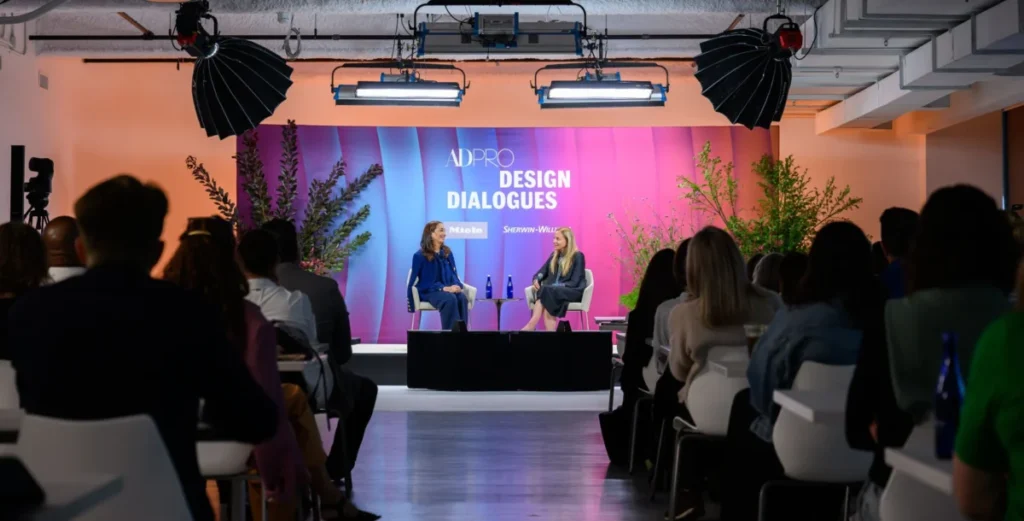

The interior design industry is currently navigating a period of rapid transformation, driven by digital accessibility, the rise of remote professional collaboration, and a shifting consumer demand for highly personalized, artisanal spaces. At the inaugural AD PRO Design Dialogues summit held on September 16, San Francisco-based designer Heidi Caillier provided a masterclass on navigating these shifts. During a candid conversation with Alison Levasseur, the Global Interiors and Gardens Director for Architectural Digest, Caillier detailed the operational philosophies that have propelled her from a burgeoning blogger to an AD100-listed talent in just over a decade. Her insights underscore a critical pivot in the design profession: the transition from traditional, studio-centric workflows to agile, digitally integrated business models.
A Decade of Rapid Professional Growth
Heidi Caillier’s trajectory into the upper echelons of the design world is unconventional. Holding a master’s degree in public health, she entered the interior design sector without formal academic training in architecture or design. She leveraged the nascent power of digital platforms, specifically interior design blogging, to build a brand identity centered on high-texture, soulful, and eclectic residential projects. This foundation allowed her to transition into professional practice, eventually catching the attention of high-profile clients such as Kendall Jenner, for whom she designed a notable mountain retreat.
The summit served as a platform to dissect how designers can maintain creative integrity while scaling. For Caillier, the secret lies in a refusal to be pigeonholed. She explicitly rejects the concept of a signature "Heidi house," noting that repetitive design iterations lead to stagnation. By treating each project as a distinct creative inquiry, she ensures that her portfolio remains dynamic, a strategy that has resonated with a demographic of clients who prioritize authenticity over trend-following.
Operational Agility: The Remote-First Model
One of the most significant takeaways from the summit was Caillier’s endorsement of the remote-work model, which her firm adopted well before the global COVID-19 pandemic necessitated the shift. Her firm, which now employs a staff of six, relies on a distributed workforce. This structural decision was born out of a localized talent shortage in Seattle, where she was based at the time of her first hire.
Data from the American Society of Interior Designers (ASID) suggests that the design industry has been increasingly gravitating toward flexible work arrangements, but few firms have integrated remote operations as successfully as Caillier. By removing geographic constraints on recruitment, she has accessed a broader pool of specialized talent. Furthermore, this model has proven to be a logistical asset for her firm, which manages projects across the United States. With team members distributed across various regions, site visits and local coordination have become more efficient, providing a competitive edge in a service-based market that is traditionally tethered to physical studio locations.

The Psychology of Client Management
A recurring theme in the AD PRO Design Dialogues was the necessity of establishing firm professional boundaries to ensure the sustainability of a design practice. Caillier’s "limited options program" is a structured methodology designed to minimize decision fatigue—a common pitfall in high-end residential design.
In this workflow, the first three months of a project are dedicated to an intensive discovery phase where the firm audits the client’s lifestyle, stylistic inspirations, and functional requirements. Following this, Caillier presents a comprehensive, holistic vision for the entire residence in a single, high-stakes meeting. This presentation encompasses budget, construction timelines, and material selections. By limiting the number of choices offered to the client, Caillier maintains creative control while providing a clear, decisive path forward.
This approach also functions as a risk-mitigation strategy. By avoiding the "marinating" period—where clients often second-guess design decisions regarding textiles or furniture—Caillier ensures that the project timeline remains intact. Her strict policy against text-messaging clients serves as an extension of this boundary-setting, preserving professional headspace and ensuring that all communication is documented and intentional.
The Digital Paradox: Social Media as a Business Tool
While many designers view social media as a supplementary marketing tool, Caillier treats it as a core business function. With a following nearing half a million on Instagram, her digital presence is a primary engine for client acquisition. Her success with the Kendall Jenner commission, which originated from an organic discovery on the platform, highlights the shift in luxury real estate and interior design: high-net-worth individuals increasingly look to curated digital portfolios to identify talent.
Caillier’s strategy for social media is disciplined. She emphasizes the importance of consistency, maintaining a schedule of four to five posts per week, and prioritizing real-time engagement with her audience through comments and direct messages. This represents a full-time commitment, but one that yields measurable returns. The implication for the broader industry is clear: in the digital age, a designer’s social media presence is their virtual storefront, and the level of engagement provided there is often a proxy for the level of service provided in the physical project.
Scaling Through Intentional Collaboration
As her practice grows, Caillier has sought ways to scale her impact without compromising the quality of her bespoke interior design services. Her recent 63-piece collection with Lulu & Georgia, which includes lighting, furniture, and wallpapers, serves as a case study in brand expansion. By entering the product design space, Caillier has found a way to reach a wider audience and monetize her aesthetic vision without taking on more interior design projects than her capacity allows.

Looking ahead, the designer is preparing for further expansion, including a partnership with Elizabeth Eakins for a textile and wallpaper line, slated for launch at Deco Off in January 2027. Her philosophy on growth is rooted in intentionality: she advises that designers should focus on collaborations that allow them to reinvent their creative identity while staying true to the principles that defined their early work.
Broader Industry Implications
The success of the AD PRO Design Dialogues summit highlights a burgeoning need for professional development that addresses the realities of the modern design economy. Industry observers note that designers are increasingly acting as creative directors, business strategists, and digital content creators simultaneously.
The primary lesson from Caillier’s career trajectory is that the traditional "atelier" model of interior design is no longer the sole path to success. The integration of remote teams, the rigorous management of client expectations through structured presentations, and the strategic use of social media are now essential pillars for firms aiming to survive and thrive.
Furthermore, the emphasis on staying power—the ability to evolve while maintaining a recognizable, albeit non-repetitive, aesthetic—is critical for long-term relevance. As the market for interior design continues to fluctuate with broader economic conditions, the firms that will likely succeed are those that view their business operations with the same level of creativity and rigor as their design work.
In conclusion, Heidi Caillier’s approach offers a blueprint for the next generation of designers. By treating the business of design with a level of structure and intentionality that mirrors the artistic process, she has managed to sustain a high level of growth while maintaining the passion that initially launched her career. The inaugural AD PRO Design Dialogues summit provided a timely look into these strategies, signaling a shift toward a more professionalized, agile, and digitally-savvy interior design landscape. Whether through the lens of remote team management or the calculated expansion into product lines, the industry is clearly moving toward a model where versatility and boundary-setting are the most valuable tools in a designer’s kit.