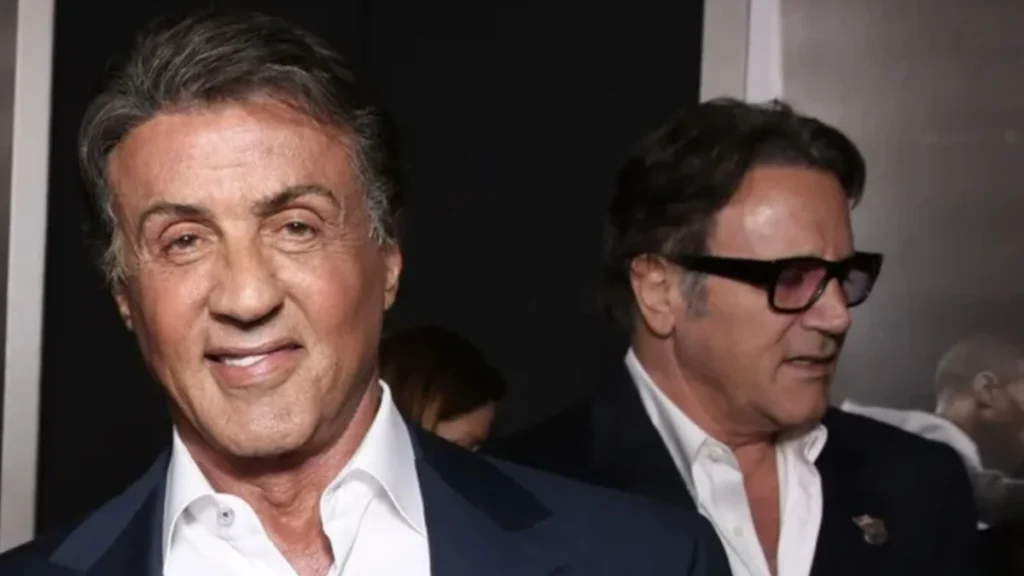

The landscape of American cultural politics shifted in early 2025 when President Donald Trump announced a unconventional initiative aimed at bridging the divide between the White House and the entertainment industry. Central to this strategy was the appointment of three high-profile Hollywood figures—Sylvester Stallone, Mel Gibson, and Jon Voight—as "special ambassadors" tasked with facilitating a new dialogue between the federal government and the film industry. However, the initiative hit a significant public relations hurdle this week as screen legend Sylvester Stallone clarified that he never accepted the position, despite the administration’s public assertions to the contrary.
The Origin of the Ambassadorship
The concept of a Hollywood ambassadorship emerged from the Trump administration’s desire to leverage the star power of conservative-leaning actors to negotiate policy changes, specifically regarding federal tax incentives for domestic film production. The goal, as articulated by the White House, was to stem the tide of "runaway production," a phenomenon where studios move film and television projects to international jurisdictions—such as Canada, the United Kingdom, and Australia—to take advantage of more aggressive tax credits and lower labor costs.
In January 2025, the administration publicly named Stallone, Gibson, and Voight as the trio intended to lead these discussions. The move was widely interpreted as an attempt to bypass traditional lobbying firms and engage directly with the creative class. Yet, according to Stallone’s recent interview with The Sunday Times, the appointment caught him entirely off guard. The Rocky creator revealed that he had met with the President to discuss the role, but had explicitly declined the offer, concluding that the political and corporate complexities of Hollywood rendered such a position untenable.
Stallone’s Rejection and the "Feudal" Nature of Hollywood
Stallone’s refusal to participate was rooted in his understanding of how the industry operates. In his comments, he described the current state of Hollywood as a collection of "feudal states," noting that individual studios and production houses guard their interests with extreme scrutiny. He argued that the suggestion that an actor—even one with his level of influence—could walk into a boardroom and dictate financial strategy to studio executives was fundamentally misguided.
"I said, ‘Thank you and ciao,’ because it’s impossible," Stallone remarked during his interview. "Hollywood works, and it will evolve. It’s corporate, and corporate people won’t want to hear me tell them about finance."
The actor expressed a clear sense of disbelief when he saw the announcement on television. He recounted watching the news broadcast that identified him as a special envoy, prompting him to wonder aloud, "What? Excuse me? Really?" Stallone emphasized that his skepticism was not a reflection of his political alignment, but rather a pragmatic assessment of the industry’s resistance to external interference. He noted that he, Gibson, and Voight are inherently "do-our-own-thing" individuals, making them poor candidates for bureaucratic roles that require navigating the complex, often opaque, power structures of modern entertainment conglomerates.
The Jon Voight Factor: A Different Approach
While Stallone effectively distanced himself from the ambassadorship, fellow actor Jon Voight has taken a markedly different path. Voight, a staunch and vocal supporter of the former President, has leaned into the role, viewing the ambassadorship as a legitimate vehicle for policy advocacy.
Voight has focused his efforts on a single, high-stakes objective: the creation of a federal tax credit for American-made productions. Speaking with The Hollywood Reporter, Voight articulated the urgency of his mission. "If we get on an even keel with the rest of the world’s tax benefits, if we get that break, there’s going to be an explosion of energy," he stated. Voight’s argument is that the United States has lost its competitive edge, forcing production companies to seek better fiscal environments abroad, which in turn leads to a net loss of high-paying technical and creative jobs in states like California, Georgia, and New York.
President Trump appears to have found an enthusiastic partner in Voight. In late August, the President utilized his social media platform, Truth Social, to praise the progress of the discussions. He publicly called for a bipartisan effort in Congress to craft legislation that would provide the necessary federal incentives to keep the entertainment business within the United States. "I am going to suggest that Republicans and Democrats get together, and immediately craft legislation to save the Movie, Television, and Entertainment Business in America," Trump wrote. "Congress should approve, immediately, a Federal Production Incentive to create Entertainment Jobs in America."
Economic Context: The Battle for Film Production
The administration’s focus on film production incentives is not without precedent, though it is controversial. For decades, states have engaged in a "race to the bottom" regarding tax incentives, creating a fragmented landscape where states compete to offer the most generous rebates. Proponents argue these credits pay for themselves by generating secondary economic activity—from catering and construction to hotel bookings and local retail. Critics, however, often view these incentives as corporate welfare, arguing that they do not provide a sufficient return on investment for taxpayers and that the jobs created are often temporary or ephemeral.
By attempting to shift this dynamic to the federal level, the Trump administration is seeking to standardize the playing field. If successful, such a policy would represent a massive shift in how the federal government interacts with the private sector in the creative arts. However, the economic reality remains complex. According to recent data from the Motion Picture Association, the film and television industry supports over 2.4 million jobs in the United States, yet the industry has been grappling with a post-pandemic shift in content consumption, a volatile streaming market, and the rise of artificial intelligence, which has created further labor tensions.
Implications and Future Outlook
The divergence between Stallone’s pragmatism and Voight’s advocacy highlights the difficulty of leveraging celebrity in political governance. Stallone’s refusal underscores a fundamental truth about the entertainment industry: it is a highly decentralized, corporate-driven sector that operates with a degree of independence from Washington. Even those with the highest degree of industry clout often find that their ability to influence macro-economic policy is limited by the rigid demands of shareholders and studio bottom lines.
Conversely, the administration’s willingness to lean into the support of figures like Jon Voight suggests that the White House remains committed to its strategy of direct engagement, even if it lacks the consensus of the industry’s largest players. The success of the proposed federal production incentive will ultimately hinge on whether Voight can secure bipartisan support in a polarized Congress—a task that is arguably more difficult than managing the egos and interests of Hollywood studios.
As the situation develops, the "special ambassador" program will likely serve as a case study in the intersection of celebrity, policy, and corporate interests. While Stallone has effectively exited the stage, the broader debate over how the United States maintains its cultural and economic dominance in the global entertainment market continues to intensify. Whether the administration’s calls for a federal incentive will gain traction remains an open question, but the public split between the celebrity envoys serves as a reminder that even in the high-stakes world of Hollywood, the script rarely goes exactly as planned.