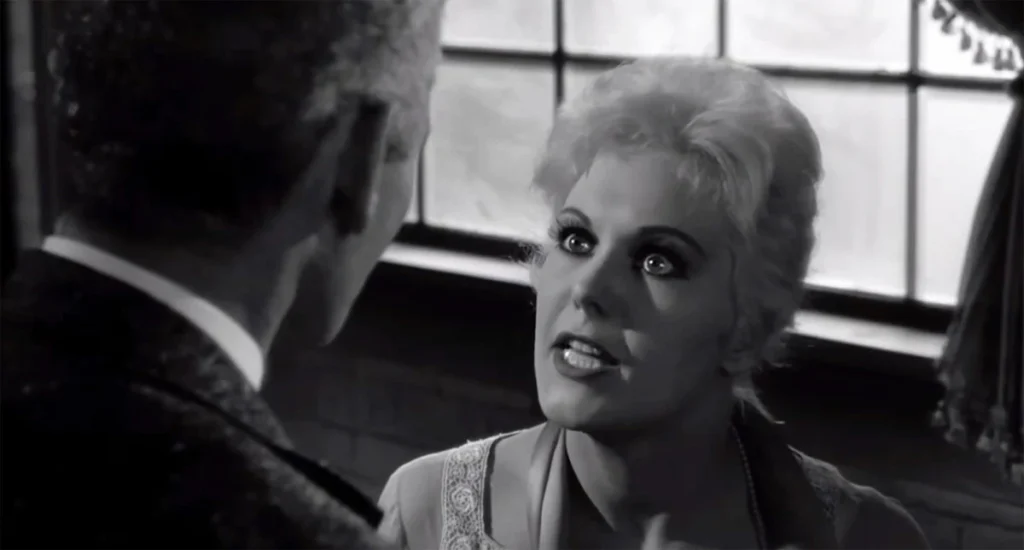

The official trailer and promotional poster for the highly anticipated documentary Kim Novak’s Vertigo have officially been released, signaling the impending October 2026 home media launch of the film. Directed by acclaimed cinema historian and documentarian Alexandre O. Philippe, the feature-length documentary offers an intimate, reflective exploration of the life, career, and enduring cultural legacy of legendary Hollywood actress Kim Novak. Following its critically acclaimed world premiere at the 2025 Venice Film Festival, the project has been acquired for distribution by Kino Lorber, which has scheduled the film for a direct-to-video-on-demand (VOD) and physical media release on October 13, 2026.
By bypassing a traditional theatrical run in favor of a home viewing premiere, Kino Lorber aims to make the deeply personal cinematic essay accessible to cinephiles, film historians, and fans worldwide. The documentary steps away from conventional biographical filmmaking, employing a reflective narrative structure that centers primarily on Novak’s own voice, recollections, and artistic perspective. At its core, the project examines not only her iconic role in Alfred Hitchcock’s 1958 masterpiece Vertigo—widely regarded as one of the greatest films ever made—but also the broader, often turbulent realities of navigating stardom during the Golden Age of Hollywood.
Main Facts and Production Overview
Kim Novak’s Vertigo is the latest addition to Alexandre O. Philippe’s extensive filmography dedicated to dissecting the anatomy of cinematic history and iconic filmmaking. Produced by Terri Piñón, the documentary is built around extensive, unprecedented interviews with Novak herself. In the film, the retired actress opens up with striking candor about her artistic journey, her experiences working under the rigid studio system, her complex working relationship with director Alfred Hitchcock, and her ultimate decision to walk away from Hollywood to live life on her own terms.
The newly released trailer, distributed via YouTube, opens with the evocative and poignant line, "You start to lose who you are," immediately establishing the documentary’s thematic exploration of identity, fame, and personal preservation. The preview showcases a mix of archival footage, classic film clips, and intimate, present-day conversations with Novak. Director Philippe has described the collaborative process of making the film as an exercise in "radical honesty," noting that Novak guides viewers through the metaphorical attic of her life—complete with vintage costumes, fire-scarred scripts, early personal traumas, and the lingering ghosts of her cinematic past.
Unlike standard retrospective documentaries that rely heavily on talking-head film critics and biographers, Kim Novak’s Vertigo relies heavily on the firsthand testimony of its subject. This approach reframes Novak’s historical narrative, challenging decades of media speculation and studio-manufactured public personas to present a portrait of a fiercely independent artist who reclaimed her narrative long after stepping away from the silver screen.

Chronology and Development History
The genesis of Kim Novak’s Vertigo can be traced back to Alexandre O. Philippe’s ongoing exploration of the psychological and cultural impact of landmark cinematic works. Over the past decade and a half, Philippe has established himself as a preeminent chronicler of film history, directing critically acclaimed documentaries that deeply examine specific cinematic touchstones.
His previous directorial credits include The People vs. George Lucas (2010), 78/52: Hitchcock’s Shower Scene (2017)—which meticulously dissected the iconic murder sequence in Psycho—Memory: Origins of Alien (2019), Leap of Faith: William Friedkin on the Exorcist (2019), Lynch/Oz (2022), The Taking (2023), You Can Call Me Bill (2024), and Chain Reactions (2025), which explored the enduring legacy of The Texas Chain Saw Massacre.
The production of Kim Novak’s Vertigo moved quietly through development before culminating in a high-profile world premiere at the 2025 Venice Film Festival. Exhibited within the festival circuit, the documentary drew significant critical praise for its respectful, probing examination of Novak’s career trajectory and its refusal to sensationalize Hollywood history. Following its festival run, boutique distributor Kino Lorber secured the home entertainment rights, positioning the film for an autumn release targeted squarely at the core cinephile demographic. The rollout on October 13, 2026, marks the final phase of a multi-year journey to bring Novak’s definitive retrospective to the public.
Supporting Data and Biographical Context
To fully understand the weight of Kim Novak’s Vertigo, one must contextualize the magnitude of Novak’s Hollywood career and her unique position within 20th-century American cinema. Born Marilyn Pauline Novak in Chicago in 1933, she was signed by Columbia Pictures in the mid-1950s as the studio actively sought to cultivate a new generation of glamour icons to rival Marilyn Monroe. Rising rapidly through films like Picnic (1955), The Man with the Golden Arm (1955), and Pal Joey (1957), Novak quickly became one of the box-office titans of the era, ranking among the top-earning movie stars in the world.
Her career-defining moment arrived when Alfred Hitchcock cast her as Madeleine Elster / Judy Barton in Vertigo (1958), replacing original lead Vera Miles. Operating opposite James Stewart, Novak delivered a mesmerizing, dual-layered performance that captured the tragic essence of an idealized, manipulated woman. Though the film received mixed reviews and underperformed at the box office upon its initial release, decades of critical re-evaluation have transformed Vertigo into a towering cinematic monument, frequently topping Sight & Sound’s prestigious decennial critics’ poll as the greatest film of all time.
Despite her immense commercial success, Novak experienced profound friction with the studio system. Discontented with the lack of creative control, the invasive nature of celebrity culture, and the constraints placed on her personal identity, she gradually withdrew from the industry in the 1960s and 1970s, eventually retiring from mainstream acting to focus on painting and raising horses in Oregon. Her departure was a definitive rejection of the Hollywood machine—a theme that Philippe’s documentary explores in granular detail.

Official Statements and Director’s Vision
Director Alexandre O. Philippe has been vocal about the unique collaborative dynamic that defined the making of Kim Novak’s Vertigo. In promotional materials accompanying the trailer’s release, Philippe emphasized the authenticity and unvarnished nature of Novak’s participation.
"Working with Kim meant stepping into a space of radical honesty," Philippe stated. "Her voice—unfiltered, wise, funny, defiant—guides us through the attic of her life: old costumes, fire-scarred scripts, early traumas, and enduring Hollywood ghosts. What I discovered, and what I hope audiences will realize, is that Kim is so much more than a movie star."
This sentiment is echoed throughout the documentary, which deliberately strips away the glamorous veneer traditionally associated with classic Hollywood biographies. By focusing on Novak’s resilience, artistic endeavors, and intellectual independence, the filmmakers sought to correct historical imbalances that often reduced 1950s actresses to passive screen sirens rather than active, cognitive participants in their own artistic creations.
Broader Impact, Cultural Implications, and Industry Reception
The release of Kim Novak’s Vertigo arrives at a time of significant cultural reassessment regarding how female performers of Hollywood’s Golden Age were treated by the media, studio executives, and directors. In recent years, cultural discourse has increasingly turned toward deconstructing the pressures, exploitation, and psychological toll experienced by actresses who operated under restrictive studio contracts.
By granting Novak an uninterrupted platform to tell her own story, Philippe’s documentary contributes valuable primary-source testimony to feminist film history and cinematic scholarship. The film moves beyond mere nostalgia, offering a cautionary yet empowering study of identity preservation under the intense spotlight of international fame. For film historians, the documentary provides rare archival insights and first-hand commentary on the production methods of Alfred Hitchcock, whose notoriously exacting treatment of his leading ladies has been the subject of extensive academic debate.
Kino Lorber’s decision to distribute the film via VOD and DVD on October 13, 2026, ensures that this historical document will find an immediate and engaged audience among film students, researchers, and classic cinema enthusiasts. As institutional interest in the mechanics of Hollywood history continues to grow, Kim Novak’s Vertigo stands out as a definitive corrective text—one that honors a legendary actress not simply for the characters she played on screen, but for the strength of character she demonstrated off it.