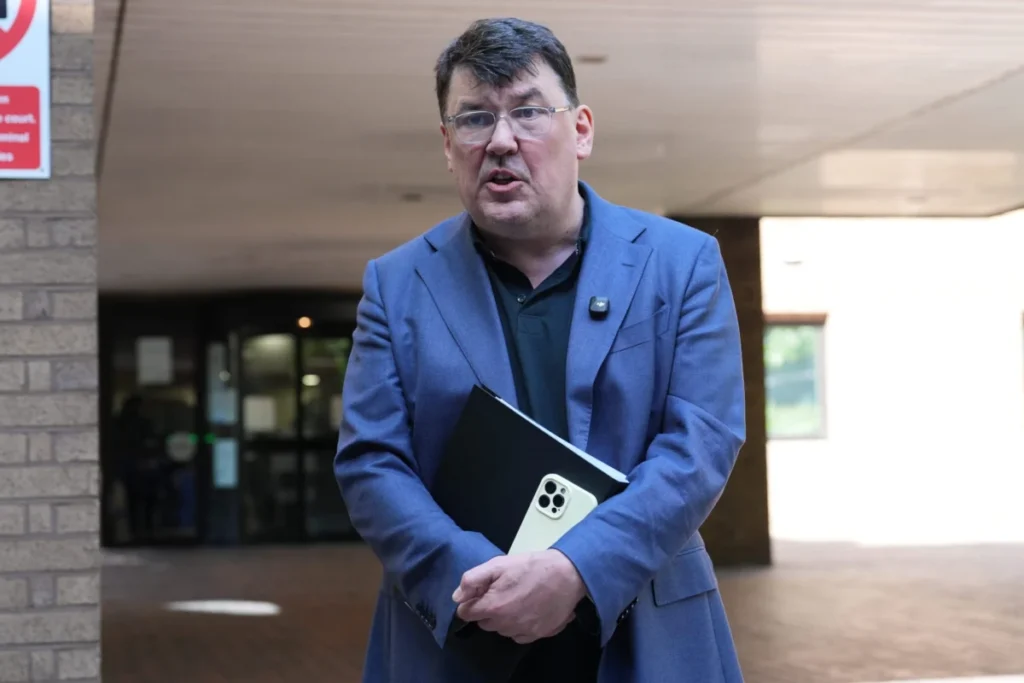

Graham Linehan, the acclaimed Irish comedy writer known for his work on "Father Ted" and "The IT Crowd," has been awarded a £25,000 settlement from the Metropolitan Police following a civil claim against the force. The settlement stems from his arrest in September [2023] at Heathrow Airport on suspicion of inciting violence over social media posts concerning transgender issues, an investigation that was subsequently dropped. This resolution marks a significant moment, not only for Linehan but also for the broader debate surrounding free speech, police powers, and the controversial policy of investigating "non-crime hate incidents." The Metropolitan Police has issued an apology to Mr. Linehan and announced a fundamental shift in its approach, confirming it will no longer investigate such non-criminal incidents, a move that civil liberties advocates have long campaigned for.
A Turning Point in Police Policy: The End of Non-Crime Hate Incident Investigations
The Metropolitan Police’s decision to cease investigating "non-crime hate incidents" represents a substantial policy reversal with far-reaching implications. In their statement on Thursday, a spokesperson for the Met said: "We recognise the considerable distress caused to Mr Linehan, and have offered our sincere apologies. This case prompted a significant change, which means the Met no longer investigates non-crime hate incidents. We believe this will provide clearer direction for officers, reduce ambiguity and enable them to focus on matters that meet the threshold for criminal investigations." This public acknowledgement and policy shift underscore the gravity of the issues raised by Linehan’s case and the broader scrutiny faced by police forces regarding their handling of speech that, while potentially offensive to some, does not cross the threshold of criminal activity.
"Non-crime hate incidents" (NCHIs) were defined by the National Police Chiefs’ Council (NPCC) as "any non-crime incident which is perceived by the victim or any other person to be motivated by a hostility or prejudice against a person based on their actual or perceived disability, race, religion, sexual orientation or transgender status." These incidents, despite not constituting a criminal offence, were recorded by police forces across the UK. The rationale behind recording NCHIs was often cited as a means to monitor community tensions, provide support to perceived victims, and gather intelligence that might prevent future crimes. However, the policy faced persistent criticism from free speech advocates, legal experts, and politicians who argued it led to the unwarranted recording of individuals’ lawful opinions, created a "chilling effect" on legitimate public discourse, and diverted police resources from actual criminal investigations. Critics also highlighted the subjective nature of "perception" as a criterion, suggesting it opened the door to politically motivated complaints and the policing of thought rather than action.
Graham Linehan: From Comedy Writer to Gender-Critical Activist
Graham Linehan, 58, first rose to prominence as a highly successful comedy writer, co-creating iconic television shows such as "Father Ted" and "The IT Crowd," which garnered critical acclaim and a dedicated fanbase. His creative work established him as a significant figure in British and Irish television. However, in recent years, Linehan has become equally, if not more, known for his outspoken views on gender identity and transgender issues. He identifies as "gender-critical," a position that asserts the material reality of biological sex as immutable and distinct from gender identity, often arguing that policies based on self-declared gender identity erode women’s sex-based rights and protections.
Linehan’s transition from comedy writer to prominent gender-critical activist has been marked by significant controversy. He has been a vocal critic of what he perceives as the unchecked advance of gender identity ideology, particularly its impact on women and children. His views have made him a polarising figure, attracting both strong support from fellow gender-critical feminists and intense criticism from transgender rights advocates, who accuse him of transphobia and contributing to a hostile environment for transgender individuals. This public stance has led to him being deplatformed from various online platforms and facing considerable backlash, but it has also cemented his status as a leading voice within the gender-critical movement. His legal battles and encounters with law enforcement have increasingly become a focal point in the broader culture wars surrounding sex, gender, and free expression.
Chronology of Events: Linehan’s Arrest and Legal Challenge
The sequence of events leading to the Met Police settlement for Graham Linehan underscores the complexities and controversies inherent in policing social media discourse.
September [2023]: The Heathrow Arrest
The incident that triggered the civil claim occurred in September [2023] when Mr. Linehan was arrested by the Met at Heathrow Airport upon his arrival from Arizona. He was apprehended on suspicion of inciting violence over three specific posts he had made on the social media platform X (formerly Twitter). The precise content of these posts was not fully disclosed publicly, but they were understood to relate to his ongoing commentary on transgender issues. The arrest immediately drew widespread attention and criticism, particularly from those who viewed it as an overreach of police powers and an infringement on freedom of expression. The images of a well-known public figure being arrested at an international airport for social media comments sparked outrage among free speech advocates.
October [2023]: Investigation Dropped and Vow for Accountability
Following his arrest, Mr. Linehan announced in October [2023] that the police investigation into his posts had been dropped. While this brought an end to the immediate criminal inquiry, Linehan made it clear he would not let the matter rest, stating his intention to "hold the police accountable." This declaration signaled his resolve to challenge the legality and appropriateness of his arrest and the subsequent investigation. His statement, often amplified by organisations like the Free Speech Union, framed his pursuit of accountability as part of a broader fight to protect gender-critical voices from what he described as attempts to "silence and suppress" them.
Previous Legal Encounters: A Pattern of Disputes
This was not Mr. Linehan’s first entanglement with legal and police matters related to his gender-critical views. Before his Heathrow arrest, he had faced other significant challenges. In a separate case, he was cleared of harassing transgender campaigner Sophia Brooks with a series of social media posts before and after an incident outside the Battle Of Ideas conference in Westminster on October 19, 2024 (this date appears to be a typo in the original source, likely intended as a past year, given the context of previous clearing). This acquittal was a key moment, as it demonstrated the legal system’s assessment that his actions, while controversial, did not meet the threshold for harassment. Furthermore, a conviction for damaging Sophia Brooks’ mobile phone was also overturned on appeal, further highlighting the complexities and challenges in prosecuting cases involving social media disputes and alleged harassment within the contentious gender debate. These prior legal victories likely emboldened Linehan in his resolve to challenge the Met Police over his arrest.
May [2024]: Initial Apology from the Met
The Metropolitan Police first offered an apology to Mr. Linehan in May [2024], months before the settlement was formally announced. This initial apology likely indicated an internal recognition of errors in their handling of the case and foreshadowed the eventual civil settlement and policy change. While the details of this initial apology were not widely publicised at the time, it set the stage for the formal resolution.
Recent Development: The Civil Settlement
The announcement on Thursday confirms that a settlement has been reached in Linehan’s civil claim against the force. Reports indicate Mr. Linehan received £25,000 as part of this settlement. Crucially, beyond the financial aspect, the Met also confirmed that four officers involved in the case have received "learning through reflection." This is described as a non-disciplinary process designed to resolve low-level performance issues, suggesting that while the officers were not formally disciplined, their conduct in this instance was deemed to require improvement and a review of procedures. This component of the settlement underscores the Met’s acknowledgement of shortcomings in their operational response.
The Broader Battle Over Free Speech and Police Powers
Graham Linehan’s case is not an isolated incident but rather a high-profile example within a larger, ongoing battle over free speech and the extent of police powers in the digital age. The concept of "non-crime hate incidents" has been a flashpoint for years, with civil liberties groups arguing it has a "chilling effect" on legitimate expression. This "chilling effect" refers to the phenomenon where individuals self-censor or refrain from expressing certain views for fear of police intervention, even if their speech is not criminal.
A seminal case in this area involved former police officer Harry Miller, who successfully challenged the College of Policing’s guidance on NCHIs in the High Court. Miller was investigated by Humberside Police for alleged "transphobic" tweets in 2019. The Court of Appeal later ruled that the guidance on NCHIs was unlawful, finding that it interfered disproportionately with free speech rights under Article 10 of the European Convention on Human Rights. This legal precedent, alongside advocacy from organisations like the Free Speech Union (which supported Linehan), has put immense pressure on police forces to reconsider their approach. The Free Speech Union, founded by Toby Young, has consistently argued that police should focus on preventing and investigating actual crimes, not on monitoring and recording lawful but unpopular opinions. They contend that the NCHI policy created a two-tiered system where certain viewpoints, particularly those challenging prevailing progressive orthodoxies, were effectively criminalised by proxy through police records, even without charges.

Public and political criticism of NCHIs has also been robust. Conservative politicians, including former Home Secretaries and Ministers, have frequently voiced concerns about police overreach and the erosion of free speech. They argue that police resources are better spent on tackling violent crime and anti-social behaviour rather than engaging in what they perceive as ideological policing.
Reactions and Statements: A Chorus of Voices
The settlement and the Met’s policy change have elicited strong reactions from various stakeholders, reflecting the deep divisions surrounding these issues.
Graham Linehan’s Perspective:
For Graham Linehan, the settlement represents a significant vindication. His statements have consistently highlighted his resolve to "hold the police accountable for what is only the latest attempt to silence and suppress gender-critical voices on behalf of dangerous and disturbed men." This framing positions his legal victory as a crucial step in defending the rights of those who hold similar views. He is likely to interpret the £25,000 settlement and the Met’s policy change as an admission of wrongdoing by the authorities and a testament to the importance of challenging perceived injustices. His experience will likely be used as a rallying point for the gender-critical movement, encouraging others to resist what they view as ideological pressure.
Metropolitan Police’s Stance:
The Metropolitan Police’s apology and policy announcement are carefully worded. While acknowledging the "considerable distress caused" to Mr. Linehan, their primary emphasis is on achieving "clearer direction for officers, reduce ambiguity and enable them to focus on matters that meet the threshold for criminal investigations." This suggests an internal recognition that the previous NCHI policy was problematic operationally, leading to confusion among officers and a misallocation of resources. The "learning through reflection" for the four officers involved points to an internal review process aimed at improving judgment and adherence to legal thresholds for intervention, rather than an admission of malicious intent. This move aligns with a broader push for police forces to regain public trust and focus on core policing functions.
Political and Public Figures:
The initial arrest of Graham Linehan had already drawn criticism from prominent figures, including Conservative politicians and Harry Potter author JK Rowling. JK Rowling, a vocal proponent of gender-critical views herself, has been a consistent critic of perceived attempts to silence such perspectives and has often expressed solidarity with individuals like Linehan. Her public support for Linehan during his arrest amplified the scrutiny on the Met. Conservative politicians often champion free speech principles, particularly when they feel certain viewpoints are being suppressed. Figures like former Home Secretary Suella Braverman have previously expressed concerns about the "policing of thought" and advocated for a re-evaluation of NCHI policies. The Met’s policy change is likely to be welcomed by these figures as a victory for common sense and free expression.
Legal and Civil Liberties Experts:
Legal experts and civil liberties groups have largely welcomed the Met’s decision to cease investigating NCHIs. Toby Young of the Free Speech Union described the policy change as "a huge victory for free speech," arguing that it prevents the police from acting as arbiters of opinion. However, some groups representing transgender individuals and other minority communities may express concerns that a complete cessation of NCHI recording could leave vulnerable groups feeling less protected. The challenge for police moving forward will be to balance the protection of free speech with the duty to monitor genuine hate crimes and ensure community safety, without infringing on lawful expression.
Implications and Future Landscape
The Graham Linehan settlement and the Metropolitan Police’s policy shift have profound implications across several domains.
For Policing:
This case will undoubtedly lead to a significant re-evaluation of training, guidelines, and resource allocation within the Met and potentially other police forces. It reinforces the principle that police intervention should be reserved for actual criminal offences, rather than subjective perceptions of hostility. Officers will now require clearer direction on distinguishing between offensive but lawful speech and speech that genuinely incites violence or constitutes a criminal hate crime. This could lead to a more focused and effective approach to tackling serious crime, while simultaneously protecting fundamental rights. The "learning through reflection" process for officers also signals a move towards continuous professional development in complex areas of law and public order.
For Free Speech Advocates:
This settlement is a landmark victory for free speech advocates in the UK. It sets a powerful precedent that challenging police overreach in the realm of social media discourse can yield tangible results. It empowers individuals to speak more freely without the fear of being recorded or investigated for non-criminal incidents based on subjective perceptions. The case highlights the importance of robust legal challenges in safeguarding civil liberties and pushing back against what some perceive as an encroaching culture of censorship.
For the Gender-Critical Debate:
The resolution of Linehan’s case may create a slightly more open environment for the gender-critical debate in the UK. By reducing the threat of police intervention for non-criminal speech, it could encourage more individuals to express their views without fear of official repercussions. However, this does not mean the debate itself will become less contentious. Tensions between gender-critical feminists and transgender rights advocates are likely to remain high. The challenge will be to foster a space where robust, even uncomfortable, discussions can occur within the bounds of the law, without resorting to harassment or incitement to violence. There remains a delicate balance between protecting free speech and ensuring that vulnerable groups are not subjected to genuine hate speech or discrimination.
The Future of "Hate Incident" Recording:
The Met’s decision to cease NCHI investigations will inevitably prompt other police forces across the UK to review their own policies. While the NPCC guidance on NCHIs has been updated following legal challenges, individual forces still have discretion in their implementation. The Met, being the largest force, often sets a precedent. It is highly probable that other constabularies will follow suit, leading to a more consistent national approach that aligns with the principles of free speech. However, there will still be an ongoing debate about how to effectively monitor and address community tensions and provide support to victims of perceived hostility without resorting to the recording of non-criminal incidents.
Precedent for Civil Claims:
The £25,000 settlement could also encourage others who believe they have been unlawfully targeted by police for their lawful speech to pursue similar civil claims. This adds another layer of accountability for police forces, potentially leading to increased scrutiny of their actions and a greater emphasis on adhering strictly to the legal thresholds for intervention.
In conclusion, Graham Linehan’s settlement with the Metropolitan Police is more than just a financial payout; it signifies a pivotal moment in the ongoing national conversation about free speech, police powers, and the complexities of navigating highly contentious social issues in the public sphere. It underscores the critical importance of ensuring that law enforcement operates strictly within the confines of criminal law, protecting citizens’ right to express even unpopular or controversial opinions, provided they do not incite violence or constitute a genuine crime.