

The Origins of LumiUnion: A Symbol of Reconstruction
To understand the weight of LumiUnion’s disbandment, one must look back at the historical context of its formation. The group was originally established under the name Namie Joshihatsu Kumiai (Namie Women’s Development Union). Its inception was directly linked to the aftermath of the 2011 Tōhoku earthquake and tsunami, and the subsequent nuclear disaster at the Fukushima Daiichi Power Plant. Namie, a town located just miles from the plant, saw its entire population evacuated. For years, it remained a "ghost town" as decontamination efforts proceeded slowly.
In 2019, eight years after the disaster, the group was formed with a specific mission: to serve as a beacon of hope and a promotional tool for the reconstruction of Namie. Managed by STAR PLANET, a division of the massive talent agency Stardust Promotion, and signed to King Records, the group was designed to draw attention back to the town, encourage tourism, and provide a sense of community for returning residents. Their debut on November 24, 2019, at the Reconstruction of Namie Town Tokaichi Festival, was seen as a milestone in the town’s recovery efforts. By blending the high-energy appeal of J-pop with a localized, grassroots message, the group carved out a unique niche in the crowded Japanese idol market.
Chronology of the Group’s Evolution
The journey of LumiUnion was marked by several distinct phases. From 2019 to 2023, the group operated primarily under the Namie Joshihatsu Kumiai moniker. During this period, they released several singles that celebrated the culture and resilience of the Tōhoku region. Their music often incorporated themes of home, perseverance, and the beauty of the Fukushima landscape.
A pivotal figure in the group’s success was Ayaka Sasaki, a member of the legendary J-pop group Momoiro Clover Z. Sasaki took on a dual role as both a performing member and the group’s producer. Her involvement brought immediate national attention to the project, leveraging her massive fan base to shine a spotlight on Namie. Under her guidance, the group performed at major idol festivals across Japan, always returning to Namie for local events to ensure their primary mission remained at the forefront.

In recent years, the group underwent a rebranding process, transitioning to the name LumiUnion. This change was intended to signal a new chapter for the members, potentially broadening their appeal beyond regional borders while maintaining their core identity. However, as the group approached its seventh year of existence—a period often cited in the Asian entertainment industry as a critical "make or break" point—internal and external pressures began to mount.
Analyzing the "7-Year Curse" in the J-Pop Context
The "7-year curse" is a term popularized in the K-pop industry, referring to the standard length of talent contracts. Historically, many groups disband or lose members at the seven-year mark when contracts come up for renewal and individual members choose to pursue solo careers or exit the industry. While J-pop contract structures can vary more significantly than those in South Korea, the seven-year mark remains a psychological and professional hurdle.
For LumiUnion, reaching the seven-year milestone brought about a period of reflection on the group’s original goals. By 2026, the reconstruction of Namie had progressed significantly compared to the group’s debut in 2019. The "mission accomplished" sentiment may have played a role in the decision to disband. Furthermore, the members, many of whom started the project in their late teens or early twenties, have reached ages where career pivots are common in the idol world. Maintaining an eight-member lineup for nearly seven years is a logistical and financial feat, and the decision to end on a high note rather than fading into obscurity is a common strategy for reputable agencies like Stardust Promotion.
The Final Performance and Official Responses
The disbandment announcement was handled with a mix of professional efficiency and emotional gravity. On April 27, the official social media channels for LumiUnion and STAR PLANET released statements confirming that the group’s activities would cease following the April 29 concert. The decision to make the final show free for all attendees was a final gift to the town of Namie, ensuring that the residents who had supported the group from its inception could witness the finale without financial barriers.
During the announcement phase, the members expressed profound gratitude for their time in the group. Ayaka Sasaki, speaking as both producer and member, noted the enduring bond between the performers and the town. "Although our activities are ending, our feelings for it like a hometown will not change," she stated, emphasizing that the end of the musical group did not mean the end of their advocacy for the region.

Member Luna Naito echoed these sentiments, focusing on the educational impact the group had over the years. "I hope we can continue to help people across Japan learn about the town and the earthquake disaster," she said. Her statement highlights the group’s role as cultural ambassadors, a role that extended far beyond the charts or concert venues.
Industry Implications and the Future of Regional Idols
The disbandment of LumiUnion raises questions about the sustainability of regional "support" idols. In Japan, the "chihō" (regional) idol scene is vast, with hundreds of groups representing specific prefectures or towns. These groups often struggle with limited budgets and a lack of national exposure. LumiUnion was an outlier because it had the backing of Stardust Promotion and the star power of Ayaka Sasaki.
Their departure leaves a void in the regional revitalization landscape of Fukushima. While Namie has made strides in its recovery, the presence of a dedicated idol group provided a unique form of "soft power" that attracted younger demographics and media attention to the town. Industry analysts suggest that the model used by LumiUnion—combining high-level agency resources with a specific social mission—may become a blueprint for future regional projects, even if those projects are designed with a finite lifespan from the beginning.
The transition of the members will be closely watched by the industry. As part of the STAR PLANET roster, it is likely that several members will remain under the Stardust umbrella, transitioning into acting, variety television, or solo musical careers. The agency has a history of successfully pivoting former idols into long-term entertainment careers, which provides a safety net for the members of LumiUnion as they navigate life after the group.
Legacy of the "Namie Women’s Development Union"
As the curtain falls on LumiUnion, their legacy will be defined by their contribution to the post-2011 recovery narrative. They were not merely entertainers; they were symbols of a community’s refusal to be forgotten. In a town that was once a restricted zone, their voices provided a soundtrack to the return of daily life.
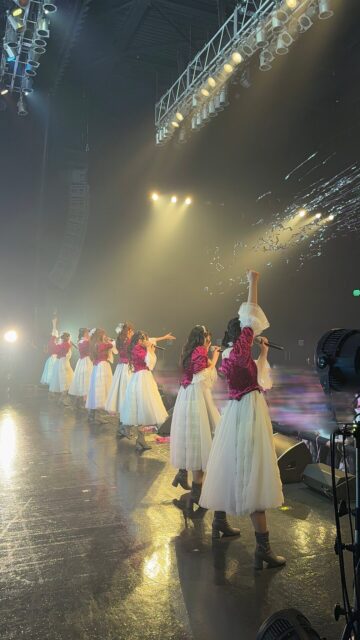
The group’s discography, characterized by its optimism and local pride, remains a digital archive of Namie’s journey from 2019 to 2026. For the fans, the "7-year curse" may feel like a premature end, but for the town of Namie, the group served its purpose during the most critical years of its rebirth. The final concert on April 29 served as both a goodbye to a beloved group and a celebration of how far the town has come since the dark days of 2011.
While the J-pop landscape is constantly shifting, the story of LumiUnion stands as a testament to the power of music as a tool for social cohesion and regional pride. As the members move on to new endeavors, the impact of their seven-year journey will likely resonate in the streets of Namie for years to come, proving that even when a group disbands, the message they carried can remain permanent.