
The Mining Metal column, a monthly feature from Heavy Consequence contributing writers Langdon Hickman and Colin Dempsey, consistently delves into the vibrant, often subterranean currents of the non-mainstream metal scene. Its core mission is to spotlight noteworthy new music emerging from small and independent labels, or even from entirely unsigned acts, offering a crucial platform for innovation and established quality outside the industry’s more commercialized avenues. This commitment to unearthing hidden gems and celebrating foundational acts within the genre provides a unique lens through which to examine the dynamics of artistic evolution versus steadfast consistency, a debate recently illuminated through discussions surrounding veteran death metal titans Immolation and the ascendant black metal outfit Stormkeep.
The Shifting Sands of Metal Innovation: Immolation and Stormkeep
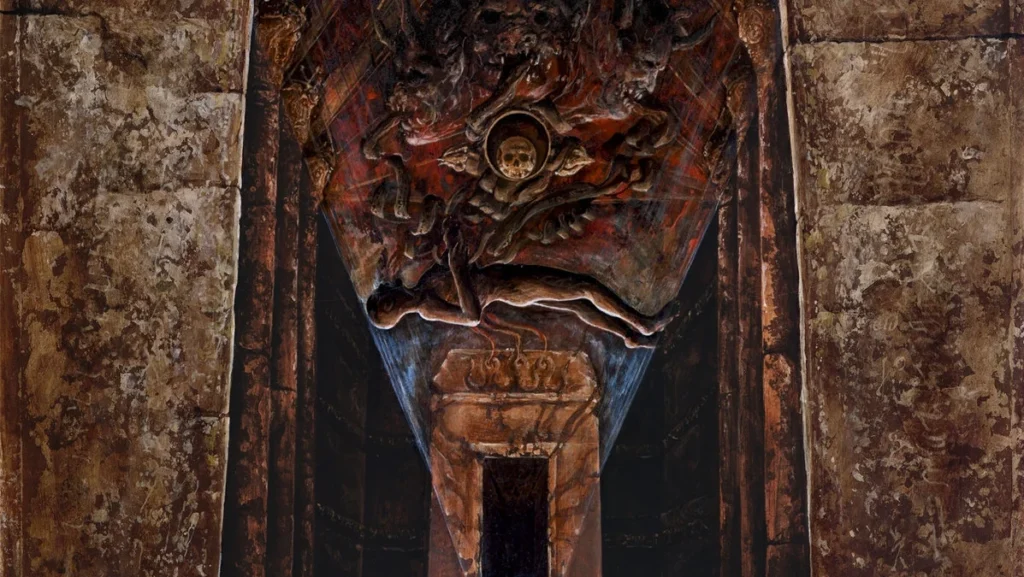
A recent professional discourse with Grandmaster Otheyn Vermithrax Poisontongue, a prominent figure known for his involvement with influential bands such as Stormkeep, Blood Incantation, and Wayfarer, brought into sharp focus the remarkable artistic trajectory of Immolation’s latest album, Descent. Released in April 2026, Descent arrived four years after their previous effort, Acts of God (2022). This interval, while substantial, is slightly shorter than the five-year gap separating Stormkeep’s acclaimed debut album, Tales of Othertime, from their highly anticipated sophomore record, The Nocturnes of Iswylm. This comparative timeline served as a catalyst for a deeper exploration into the creative imperatives that drive bands to either evolve demonstrably or to refine an established sonic identity.
Poisontongue articulated a perspective on Stormkeep’s impending release, suggesting that a second album could easily have fallen into the trap of being a mere rehash – a "reshuffling and glossing up of the hits" from Tales of Othertime. The debut, by many accounts, possessed an "effortless decadence," a quality that often makes replication difficult without succumbing to imitation. The Nocturnes of Iswylm, by contrast, is described as an album that "sweats to differentiate itself from its predecessor," a meticulous effort to evolve without abandoning the distinct molecular identity that defines Stormkeep. Such a profound artistic undertaking, he posited, necessitates a significant gestation period, making the five-year gap entirely justifiable, if not essential. This deliberate evolution, reportedly involving a thematic shift "from wizards to vampires," signals a deeper transformation than superficial changes might suggest.
The conversation underscored a fundamental truth about artistic output: a band at one point in time is not the same band years later. Tales of Othertime encapsulated a specific epoch in Stormkeep’s existence, a snapshot of their collective artistic consciousness. The intervening years between writing and recording inevitably transform artists, just as time and experience alter all individuals. The notion that an artist or band can perfectly replicate a past success is often a fallacy, as their very being has been reconfigured by lived experience. No single piece of art can truly encapsulate the entirety of an artist’s journey, but rather offers a fleeting glimpse, a single frame in a much longer film reel.
Immolation’s Enduring Legacy: The Art of Steadfast Conviction
In stark contrast to Stormkeep’s deliberate evolution, Immolation presents a fascinating study in artistic consistency. For decades, the New York death metal stalwarts have consistently cultivated a sound and thematic focus centered on profound blasphemy and anti-religious sentiment. While their lyrical scope has occasionally broadened to encompass socio-political critiques, as seen on albums like Kingdom of Conspiracy (2013), these explorations often remain intrinsically linked to a broader religious criticism. This unwavering thematic and sonic commitment has, over time, seen their blasphemy cycle through phases from "evocative to edgy to blaisse to evocative again."
The remarkable aspect of Immolation’s career is their ability to continually deliver material that, while adhering to their established framework, never feels stale. Industry observers and long-time fans often remark on how Immolation reviews, particularly for new albums like Descent, almost feel redundant. The expectation is that they will sound precisely as they "should," and this expectation is consistently met. Yet, critically, their sound retains a freshness, as if they have dipped their instruments into a "Lazarus pit of novelty," defying the aging process that often afflicts long-running bands. Minor criticisms of Descent are frequently characterized as "loving nitpicks," testifying to the high standard they maintain within their self-defined boundaries.
The lineup of Immolation has remained largely stable for decades, with only minor roster adjustments. This internal consistency likely contributes to their unwavering sound. Unlike bands that might feel compelled to chase trends or drastically alter their style, Immolation has opted for a different path: they have largely "not budged." Consequently, the world, with its shifting cultural landscapes and musical trends, has moved around them, placing their long-tenured convictions into new light.
One intriguing theory posited for Immolation’s continued relevance is the resurgence of "Christian cringe culture," a phenomenon largely dormant during the 2010s. During that period, adversarial reactions to religious themes sometimes felt anachronistic. However, with renewed visibility of certain cultural viewpoints, Immolation’s direct, confrontational stance against religious dogma once again resonates with a segment of the audience, akin to a fashion trend like JNCO jeans making an unexpected comeback. More profoundly, however, their longevity can be attributed to their distinct approach to artistic integrity: they strive to remain within the foundational "frame they defined for themselves."
Navigating the Album Cycle: Time, Identity, and Creative Imperatives
The contrasting approaches of Stormkeep and Immolation highlight a perennial challenge for artists in the music industry: how to manage the creative imperative across album cycles. For many bands, the period between album releases is a critical time for reflection, growth, and reinvention. The average album cycle in metal can vary significantly, often ranging from two to four years, but longer gaps are not uncommon, particularly for bands with extensive touring schedules, complex creative processes, or those operating independently.
Stormkeep’s five-year hiatus between Tales of Othertime and The Nocturnes of Iswylm is indicative of a deliberate creative process. This extended period allowed the band members to evolve individually and collectively, ensuring that their sophomore effort was not merely a repetition but a genuine progression. In the contemporary metal landscape, where fan expectations for new material can be high, such a measured pace signals a commitment to quality over quantity. This approach is often seen in bands that prioritize thematic depth, intricate compositions, or a significant conceptual leap, such as Blood Incantation or Wayfarer, both of which feature Otheyn Vermithrax Poisontongue, and are known for their meticulously crafted, often sprawling, releases. These bands understand that certain artistic statements require time to mature, defying the industry pressure for rapid output.
Immolation, conversely, demonstrates that a band can maintain critical and fan engagement while largely adhering to a well-established formula. Their consistent release schedule, typically every three to four years, delivers precisely what their fanbase expects: uncompromising, distinctive death metal. This steadfastness has allowed them to cultivate an incredibly loyal following who appreciate the refinement of a known quantity rather than a constant pursuit of novelty. Their approach exemplifies the idea that while Stormkeep could not, and perhaps should not, attempt to repeat Tales of Othertime, the world itself could not remain static as it was when Closer to a World Below was released. The enduring quality of Immolation’s art is not just about being consistently good; it’s about staying relevant and impactful for an extended period, suggesting they have "dug themselves into an evergreen gold mine" of artistic resonance.
Broader Implications for Non-Mainstream Metal
The divergent paths of Immolation and Stormkeep offer valuable insights for the broader non-mainstream metal scene, particularly for bands operating on small and independent labels or as unsigned acts. The Mining Metal column’s focus on this segment of the industry underscores the importance of diverse artistic strategies for long-term viability and impact.
For emerging bands, the question of whether to prioritize immediate impact through a distinctive, replicable sound (like early Immolation) or to embark on a more exploratory, evolving journey (like Stormkeep) is crucial. Both approaches carry risks and rewards. Consistency can build a devoted fanbase and a recognizable brand, but risks stagnation. Evolution can keep an artist creatively engaged and attract new listeners, but risks alienating existing fans or losing a defined identity.
The longevity of bands like Immolation speaks to an enduring appreciation for mastery within a specific genre framework. Their sustained quality demonstrates that depth and nuance can still be found within established conventions. This is particularly vital for death metal, a genre often characterized by its adherence to specific stylistic tenets. Immolation upholds this rule, yet somehow manages to transcend its potential limitations, proving that familiarity, when executed with unparalleled skill, can be its own form of innovation.
Conversely, the anticipation surrounding Stormkeep’s The Nocturnes of Iswylm highlights the excitement generated by artistic ambition and genuine growth. The willingness of a band to challenge its own established sound, even subtly, can reinvigorate its artistic output and capture the imagination of a discerning audience hungry for progression. This dynamic interplay between tradition and innovation is a cornerstone of metal’s enduring appeal and its continuous evolution.
Ultimately, the discussions facilitated by platforms like Mining Metal are essential for understanding the intricate ecosystem of non-mainstream music. By examining the trajectories of bands like Ain Sof Aur, Astral Spectre, Devoid of Thought, Lynx, Nagött, Ordh, Scimitar, and Ultha—alongside the specific cases of Immolation and Stormkeep—the column provides a crucial framework for appreciating the diverse strategies artists employ to carve out their unique spaces in an ever-expanding sonic universe. Whether through steadfast commitment to a signature sound or through daring leaps of artistic evolution, the metal scene continues to thrive on the creative impulses of its dedicated practitioners, ensuring a rich and dynamic future for the genre.