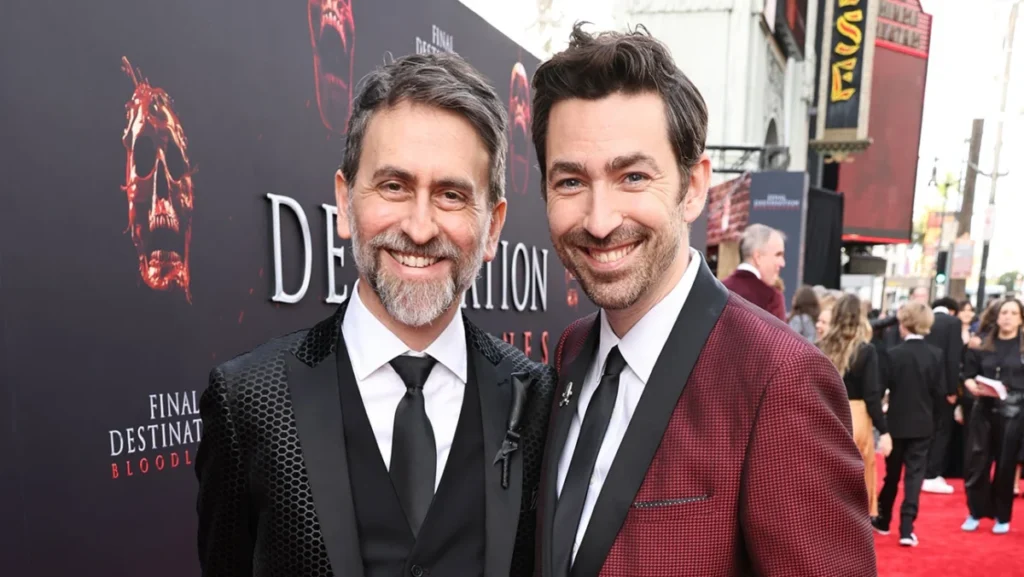

The journey from regional filmmaking contests to commanding a studio lot in Culver City represents a monumental trajectory for any creative partnership, yet for directors Zach Lipovsky and Adam B. Stein, the ascent has been defined by calculated risks, relentless perseverance, and a deep-seated reverence for genre storytelling. Speaking from the Sony Pictures studio lot, Lipovsky reflects on a career that has evolved from independent sci-fi experiments into major studio franchises. Today, the filmmaking duo stands as one of the most sought-after creative forces in Hollywood, balancing high-profile sequels with original intellectual property under a lucrative first-look deal.
The turning point for the collaborators arrived with the 2018 release of Freaks, an independent dark sci-fi thriller starring Emile Hirsch and Bruce Dern. Produced on a modest budget, the dystopian drama became an improbable box office phenomenon, grossing over $375 million globally following its world premiere at the Vancouver International Film Festival (VIFF). The film not only defied conventional distribution expectations for independent genre projects but also served as a critical gateway, transforming Lipovsky and Stein from regional B-movie practitioners into prominent industry commodities.
Chronology and Evolution: From On the Lot to the Sony Studio Lot
The partnership between Lipovsky and Stein traces its origins back nearly two decades to On the Lot, the 2007 Fox filmmaking reality competition series created by Steven Spielberg and Mark Burnett. Pitting aspiring directors against one another in grueling, fast-paced cinematic challenges, the program served as a high-stakes crucible.
"We didn’t win, and we were off the lot," Lipovsky recalls, noting the stark contrast between their early elimination and their current corporate standing. Two decades later, the narrative has completely inverted. The duo now commands an entire building of personnel on the Sony lot, collaborating on major studio slates that span live-action adaptations, legacy horror sequels, and animated features.
Following their breakout success with Freaks, Lipovsky and Stein secured assignments that cemented their versatility. Their current slate includes adapting the Long Lost short story for Amblin and Universal, contributing screenwriting duties to Chris Columbus’s Gremlins 3, and developing high-profile studio properties such as an animated Venom feature and a Metal Gear Solid adaptation for Sony Pictures. Furthermore, their mainstream viability was further reinforced by their direction of Final Destination Bloodlines, the sixth installment of the supernatural horror franchise, which amassed over $285 million at the worldwide box office.
Expanding the Universe: The Anticipated Arrival of Freaks 2
The thematic evolution of the directors’ work is perhaps best encapsulated by their return to the universe that launched their international profile. Freaks 2, which received its high-profile screening at the historic Rio Theatre during the Vancouver International Film Festival, shifts its narrative focus to match the maturation of its central characters.
"The first film was very much about a girl who can’t leave her house, and really wants a mom," Lipovsky explains, referencing the original dynamic wherein a protective, paranoid father (Hirsch) kept his young daughter Chloe (Lexy Kolker) locked within a dilapidated suburban home. "And in the second film, she’s now much older. So she doesn’t want a mom. What she wants is a friend. And how do you find a friend, and how do you build a relationship in a world where society wants you dead?"
Paramount Pictures quickly acquired the sequel, which features Amanda Crew as a mother alongside Lorelei Olivia Mote as her daughter. The narrative follows the pair as they navigate a hostile world determined to eradicate individuals possessing extraordinary abilities, blending themes of familial vengeance with systemic survival.
The Resurgence of Original Horror at the Box Office
The rapid ascent of Lipovsky and Stein aligns with a broader structural shift within the contemporary theatrical landscape. As major studios increasingly rely on established intellectual properties and cinematic universes, the horror genre continues to serve as a primary vehicle for original storytelling and robust financial returns. Lipovsky points to recent summer box office hits like Backrooms and Obsession as empirical proof of shifting audience appetites.
"Horror is one of the few genres where it’s normal for audiences to show up in theaters for original movies," Lipovsky asserts. "It’s the voice of the authors that are creating the work that audiences are becoming attracted to, and even more so when the work is original, and Hollywood is definitely starting to pay attention to that."
This commercial viability has afforded writer-directors unprecedented leverage within major studios. Rather than being confined to strictly service-level directing assignments, genre filmmakers are increasingly entrusted with shaping expansive cinematic frameworks, a privilege reflected in Lipovsky and Stein’s current administrative and creative autonomy at Sony.
Local Roots and Preservation of Cinema History
Despite operating at the highest echelons of the studio system, Lipovsky maintains strong personal and professional ties to his hometown of Vancouver. The VIFF screenings for Freaks 2 carry profound sentimental value, attended by his mother, a former television producer for the local Knowledge Network. Reflecting on her influence, Lipovsky notes the historical barriers faced by women in the industry during the 1980s, acknowledging her steadfast support throughout his career progression.
"Becoming a director back in the ’80s wasn’t really a career path for many women, and she’s always been there by my side," he shares. "And for her to see the kind of levels to which I’ve been able to create movies has been amazing."
In addition to celebrating their cinematic milestones in Vancouver, Lipovsky has actively invested in the city’s cultural infrastructure. He joined a coalition of prominent genre filmmakers—including Osgood Perkins, Mike Flanagan, Sean Baker, and Finn Wolfhard—as a private investor to rescue Vancouver’s historic Park Theatre from permanent closure. Preserving the art deco movie house provides a symbolic backdrop for the filmmakers, rooting their global success in the physical spaces that initially inspired their cinematic ambitions.
Industry Implications and Future Outlook
The trajectory of Zach Lipovsky and Adam B. Stein offers a compelling case study in modern career sustainability within the entertainment industry. By leveraging micro-budget independence into macro-budget viability, the duo has navigated the transition from television competition contestants to studio stakeholders without sacrificing their signature genre sensibilities.
As the industry continues to reevaluate its risk models in the post-pandemic box office era, the demand for adaptable, commercially proven directors remains high. With a robust slate that bridges blockbuster franchise maintenance—such as Final Destination—with idiosyncratic original narratives like the Freaks franchise, Lipovsky and Stein exemplify the archetype of the modern hyphenate filmmaker: equally comfortable managing multi-million-dollar studio slates and preserving independent theatrical heritage.
For Lipovsky, the reality of this sustained success still requires occasional adjustment. "Over 20 years of making movies, you get very used to things not happening, and very used to people saying something’s happening, and then it doesn’t happen," he admits. "So when things start to click into place, your brain has a very hard time trying to accept that it’s actually real."