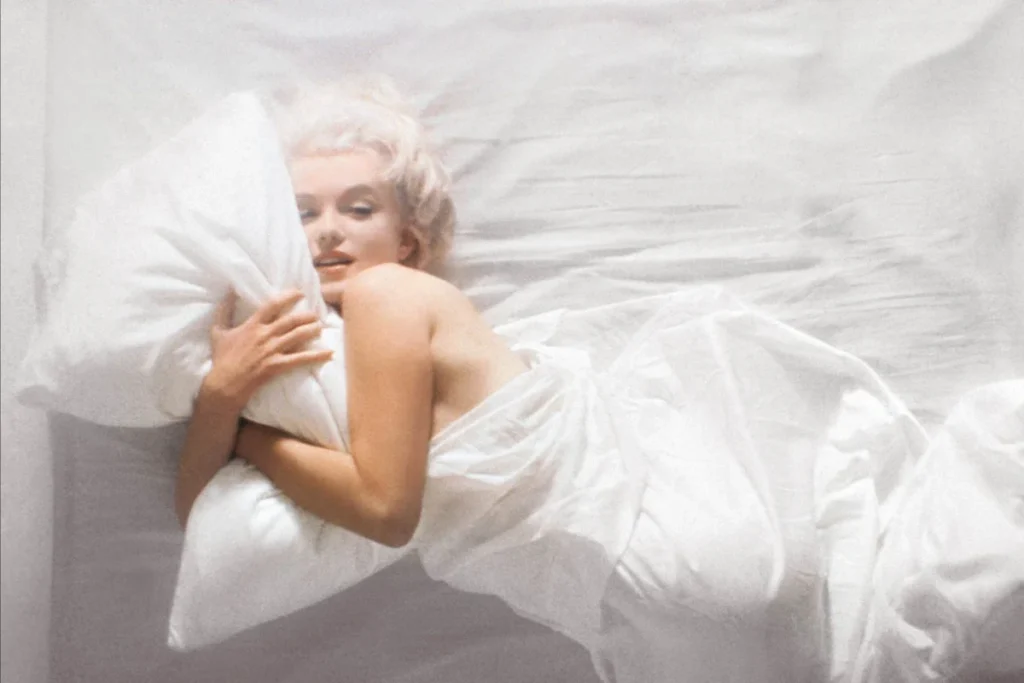

Francoise Kirkland, widow of the acclaimed photographer Douglas Kirkland, has offered a revealing insight into her initial, surprisingly unimpressed reaction upon discovering her husband’s legendary 1961 photographic session with Marilyn Monroe. This candid admission comes as she champions the release of a new collector’s edition book, Douglas Kirkland: Marilyn. A Magical Dance, designed to commemorate what would have been Monroe’s 100th birthday and reignite appreciation for these timeless images.

The original photoshoot, conducted for Look magazine, has long been etched into the annals of celebrity photography. In 1961, a then 27-year-old Douglas Kirkland, already an established photographer, was assigned to capture the essence of Marilyn Monroe, then 35 and at the zenith of her global fame. This particular session was part of a larger feature commemorating Look‘s 25th anniversary, spotlighting six prominent Hollywood stars. What transpired, however, transcended a mere assignment, evolving into one of the most intimate and iconic portrayals of the enigmatic actress. Monroe, known for her particularity, famously stipulated only three requirements for the shoot: champagne to set a relaxed mood, Frank Sinatra records to provide a soundtrack, and silk sheets to create an aura of sensual vulnerability. These elements coalesced to produce a series of images that captured Monroe in a state of unguarded allure, a delicate balance of innocence and raw magnetism, frequently referred to as the "Sleep Session" or "Silk Sheet Session." Tragically, Monroe would pass away just nine months after these photographs were taken, at the age of 36, lending an additional layer of poignancy and historical weight to Kirkland’s work.
Years after this groundbreaking session, Douglas Kirkland met his future wife, Francoise. Despite the widespread acclaim and cultural impact of the Monroe photographs, Francoise recounts her initial lack of enthusiasm. Speaking to the Press Association, she confessed, "I had heard that he’d photographed Marilyn, because he came with that reputation, but I wasn’t that impressed." She elaborated on her youthful perspective, stating, "I mean I was a 22-year-old French intellectual girl, well, supposedly intellectual, and at that time, if he had told me he’d photographed Picasso, I would have thought, ‘oh, okay’, but Marilyn, I mean…we’re all a little bit of a snob at times." This anecdote offers a unique and personal lens through which to view the cultural hierarchy of celebrity and art, highlighting how individual preferences and intellectual leanings can shape perceptions even of universally celebrated icons. For a young, intellectually inclined French woman, the allure of a cinematic sex symbol might have paled in comparison to the gravitas of a revolutionary artist like Picasso, reflecting a particular European intellectual disposition towards popular culture.

Douglas Kirkland’s illustrious career extended far beyond his legendary encounter with Marilyn Monroe. Throughout his decades-long journey as a photographer, he immortalized a constellation of Hollywood’s brightest stars and global personalities, leaving behind an unparalleled visual archive. His portfolio boasts portraits of luminaries such as Audrey Hepburn, capturing her timeless elegance; Brigitte Bardot, revealing her magnetic sensuality; Judy Garland, with her profound emotional depth; Elizabeth Taylor, in her majestic glamour; and Sophia Loren, exuding her powerful presence. His work, which graced the pages of prestigious publications like Look and Life magazines, was characterized by an ability to forge a genuine connection with his subjects, often drawing out their authentic selves. Francoise Kirkland attests that despite being surrounded by such iconic beauty, her true rival in their marriage was not any of these dazzling women, but rather, his camera itself. "I always said that the biggest rival in my marriage was not all the beautiful women, but it was a camera," she shared. She painted a vivid picture of his profound dedication: "It was his passion and he put his entire life and effort into it. The camera was really like a lover. He was photographing almost till he died, even when he was very weak." She even recalled humorous instances, like him bringing a new camera to bed with them, examining it intently with a flashlight in his mouth, a testament to his all-consuming devotion to his craft. Douglas Kirkland continued to capture images until his passing in 2022 at the age of 88, leaving behind an immense and invaluable legacy.
Despite her initial skepticism, Francoise Kirkland’s appreciation for the Marilyn Monroe photographs deepened over time, recognizing their profound artistic and historical significance. This evolution in perspective has culminated in her latest project: the publication of Douglas Kirkland: Marilyn. A Magical Dance. This collector’s edition, released by Damiani Books, is specifically timed to coincide with what would have been Marilyn Monroe’s 100th birthday in 2026. The book offers a fresh interpretation of the iconic session, presented as a hardcover leporello – an accordion-fold book – which not only showcases the stunning images but also features handwritten reflections from the late photographer himself, offering a direct, intimate glimpse into his thoughts and memories of that pivotal day.

Francoise explained her rationale for this unique format, expressing a desire to "reinvent Douglas’s session with Marilyn" in a novel way. "I’m a little bit tired of big books and wanted something that was tactile and that people could also display and put on a shelf," she stated. While acknowledging that the story of the famous photography session is "not new," she emphasized that the book offers a "different way of telling it," inviting readers to engage with the images in a more personal and interactive manner. This innovative approach reflects a contemporary sensibility for art presentation, moving beyond traditional coffee-table books to create a more intimate and collectible experience. The inclusion of Douglas Kirkland’s personal notes adds an invaluable layer of authenticity and emotional depth, allowing his voice to resonate from beyond the grave and offer his unique perspective on one of his most celebrated subjects.
Douglas Kirkland himself recounted details of the session to his wife. He noted that despite Monroe being three hours late, once she arrived, she quickly immersed herself in the moment, ensuring the capture of the now-famous shots with remarkable efficiency. More intimately, Kirkland shared with his wife how Monroe confided in him about her "unhappy childhood" during their time together. This personal disclosure speaks volumes about the trust and rapport Kirkland was able to build with his subjects, even in a relatively brief encounter. The photographer and the star had even made plans for another shoot, a testament to the connection they forged, but Monroe’s untimely death the following year tragically prevented its realization.

Reflecting on the enduring impact of the photographs, Francoise Kirkland articulated their unique power. She noted how they masterfully balanced Monroe’s "innocence and playfulness with sexiness," creating an image that was both alluring and profoundly human. "There’s a kind of a romance about, and Douglas’s pictures make her, I think, probably more accessible, because there’s a feeling that there’s a vulnerability in them," she explained. This analysis underscores the profound psychological depth Kirkland managed to extract, presenting Monroe not merely as a glamorous facade but as a complex individual capable of revealing her inner self. The images offer a glimpse into the star’s inner world, a quality that continues to resonate with audiences worldwide and contributes to the timelessness of her appeal.
Since Douglas Kirkland’s passing, Francoise has dedicated herself to preserving and promoting his extensive body of work through various projects and exhibitions. Her commitment is deeply personal and driven by a profound sense of legacy. She shared her philosophy with PA: "It’s always said when someone you love who you’ve spent your life with dies. But my mission is about the same as it was when Douglas was alive, and I really do think that as long as someone says your name, the last person that says it is when you die." Her efforts are a heartfelt tribute, a conscious endeavor to ensure that her husband’s artistic contributions continue to be recognized and celebrated by future generations. "So, my way of keeping Douglas alive, apart from personal feelings, is helping his work continue to be recognised," she concluded, embodying a powerful commitment to a shared artistic legacy.

Chronological Overview of Key Events:
- 1961: Douglas Kirkland, then 27, photographs Marilyn Monroe, 35, for Look magazine’s 25th-anniversary feature. Monroe requests champagne, Frank Sinatra records, and silk sheets for the session.
- 1962: Marilyn Monroe tragically dies at the age of 36, just nine months after the iconic photoshoot, solidifying the images as a crucial part of her enduring iconography.
- A Few Years After 1961: Douglas Kirkland meets Francoise, who initially expresses disinterest in his famed Monroe photographs due to her "intellectual" preferences.
- 2022: Douglas Kirkland passes away at the age of 88, having photographed extensively almost until his death.
- 2026 (Implied): Douglas Kirkland: Marilyn. A Magical Dance is published by Damiani Books, timed to coincide with Marilyn Monroe’s presumptive 100th birthday.
Broader Cultural Impact and Photographic Heritage:

The enduring fascination with Marilyn Monroe, more than six decades after her death, speaks volumes about her unique place in cultural history. Douglas Kirkland’s "Sleep Session" photographs are a cornerstone of her visual legacy, contributing significantly to the mythos surrounding her. These images capture a fragile beauty and an undeniable charisma that transcended the boundaries of mere celebrity. Francoise Kirkland’s current project not only reintroduces these seminal works to a new audience but also provides invaluable context through the photographer’s own words, offering a more holistic understanding of the creative process and the human connection forged during the shoot. Her dedication ensures that Kirkland’s vision and Monroe’s essence continue to inspire and resonate, reinforcing the power of photography to immortalize moments and individuals, shaping our collective memory and appreciation for the golden age of Hollywood. The unique format of the book itself represents an evolution in how photographic art is consumed, moving towards more interactive and aesthetically pleasing collector’s items, reflecting a growing appreciation for the tangible experience of art in an increasingly digital world.