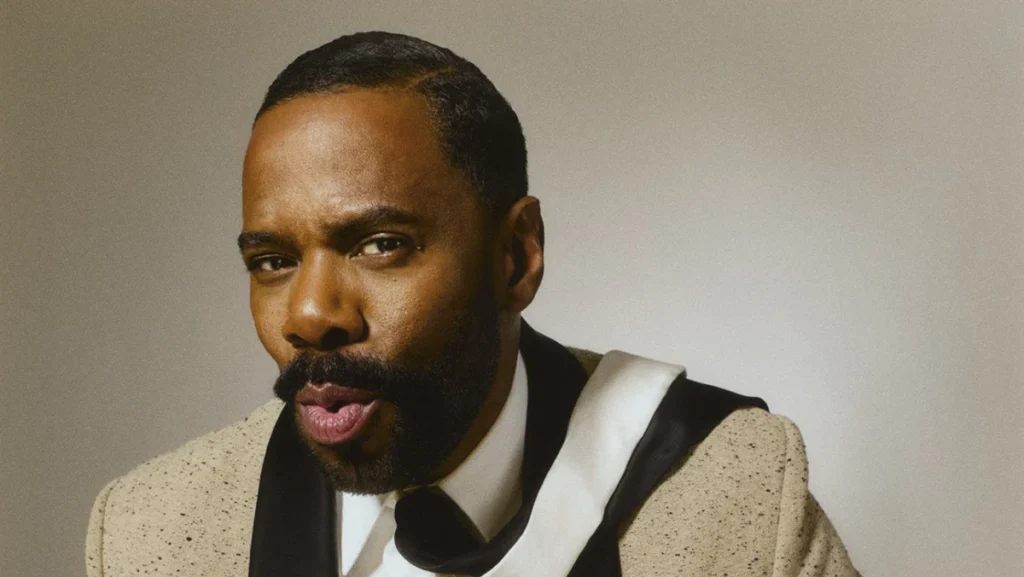

Colman Domingo, a formidable presence in contemporary entertainment, has recently showcased the breadth of his artistic versatility, seamlessly transitioning between the director’s chair for Netflix’s The Four Seasons and delivering a career-defining performance as Ali in the series finale of HBO’s critically acclaimed drama, Euphoria. This convergence of roles not only highlights Domingo’s expanding influence as a multi-hyphenate talent but also underscores his distinctive approach to storytelling, rooted in collaboration, trust, and a profound understanding of human experience. This period marks a significant inflection point in his career, cementing his status as a pivotal figure both in front of and behind the camera.
The Directorial Ethos: Trust and Collaboration
Domingo’s journey into directing is informed by an illustrious acting career spent under the tutelage of cinematic titans. He has collaborated with a pantheon of legends, including Steven Spielberg, renowned for his monumental blockbusters and intricate character development; Ava DuVernay, a trailblazer in socially conscious narratives and independent filmmaking; George C. Wolfe, a celebrated director and playwright known for his theatrical depth and historical storytelling; and Steven Soderbergh, an innovator celebrated for his independent spirit and experimental approach to film. From these diverse and formative experiences, Domingo has distilled a core philosophy: the paramount importance of trust. He advocates for empowering talented individuals to execute the roles they were hired for, fostering an environment where creativity flourishes organically and every voice feels valued.
"That’s what I want to do with my entire cast and crew," Domingo stated, reflecting on his directorial debut for the second season of The Four Seasons. "I want people to make choices and come with ideas and decisions." This ethos, deeply ingrained from his extensive background as a performer, positions him as a director who champions the collective artistic endeavor rather than a singular vision imposed from above. His leadership style, characterized by encouragement and openness, seeks to unlock the full potential of every team member, from the most seasoned veterans to the newest day players.
From Stage to Screen: A Director Born of Necessity
Domingo’s path to directing was not a linear ambition but rather a pragmatic necessity born from a decades-long career in theatre. In an industry often characterized by gatekeeping and limited access, he found himself compelled to create his own opportunities. "I had to figure out how to get into the room when I had no access to being in a room, when people wouldn’t allow me to be in the room," he recounted. This powerful drive led him to take on various key production roles beyond acting, including producing and directing his own stage productions. This hands-on experience, often behind the scenes, provided him with a comprehensive understanding of the entire creative process, from conceptualization and script development to staging and audience engagement.
This foundational work in theatre proved invaluable for his transition to onscreen directing. His early television credits include multiple episodes of the long-running AMC horror series Fear the Walking Dead, where he also starred as Victor Strand. This experience demonstrated an early aptitude for helming complex narratives, managing large-scale productions, and guiding fellow actors within a demanding genre. This foundation set the stage for his recent work on The Four Seasons, where he first directed an episode in its inaugural season, honing his skills in a different genre before taking the reins for the pivotal second-season premiere. His journey exemplifies a growing trend in Hollywood where actors, equipped with a deep understanding of performance and narrative, are increasingly stepping into directorial roles to shape stories from a holistic perspective.

Helming "The Four Seasons": Crafting Connection
The second-season premiere of The Four Seasons, titled "Hiking," marks Domingo’s return to the director’s chair for the Netflix comedy-drama. The episode reunites the show’s beloved ensemble of middle-aged friends: series creator Tina Fey, Will Forte, Marco Calvani, Kerri Kenney-Silver, and Domingo himself. The narrative picks up after the dramatic conclusion of season one, which revealed Erika Henningsen’s Ginny is pregnant by Steve Carell’s recently deceased character, Nick, who was also the estranged husband of Kenney-Silver’s Anne. This intricate web of relationships and circumstances provides fertile ground for both comedic exploration and poignant reflection, a balance that Domingo masterfully navigates. The episode’s central premise involves the friends attempting to spread Nick’s ashes in upstate New York, an inherently somber task imbued with the show’s characteristic wit and humor. This delicate blend of light and dark themes is a hallmark of the series, and Domingo’s direction ensures that the emotional stakes are always present, even amidst the laughter, grounding the comedy in relatable human experience.
A standout directorial choice in "Hiking" is an early scene where the friend group gathers for a meal at a rustic barbecue spot. Domingo employs a sweeping circular camera motion around the table, a technique designed to immerse the audience directly into the heart of their camaraderie. This fluid, encompassing shot captures the characters laughing, bonding, and sharing a communal experience, effectively reacquainting viewers with the cherished dynamics they embraced in season one. Domingo reveals that this staging was deeply purposeful, drawing inspiration from iconic television and film moments. He cited the instantly recognizable opening sequence of Roseanne, which famously depicted the Conner family gathered around their kitchen table, establishing a sense of authenticity and working-class family life. He also referenced the intimate and dialogue-rich dinner scenes in Woody Allen’s Hannah and Her Sisters, known for its insightful portrayal of complex familial bonds. For Domingo, the intention behind this visual choice was clear: to symbolize "family – and family is what you want to always get back to, no matter what complicated things may happen." This emphasizes his focus on the emotional core of the narrative, using cinematic language to reinforce thematic depth and invite audience identification.
A Masterclass in Set Leadership
Domingo’s directorial approach extends beyond the camera lens to the very atmosphere of the set. He places a strong emphasis on inclusivity, striving to integrate every member of the cast and crew into the creative process. This includes ensuring that day players, who might otherwise feel peripheral, are properly introduced to everyone each morning, fostering a sense of belonging and mutual respect. He makes himself available to all departments, demonstrating a hands-on yet empowering leadership style. Tina Fey, a seasoned veteran of television production and a co-star on The Four Seasons, lauded Domingo’s efficacy on set. "He’s wonderful with the crew in their entirety," Fey remarked, highlighting his deep understanding of the collaborative nature of filmmaking. "He really understands, having worked so long as an actor, how much everyone on set is doing." This acknowledgment of every individual’s contribution cultivates a positive and productive working environment.
Fey further observed that Domingo’s performance background profoundly influences his directing, particularly in his interactions with actors. In the fast-paced environment of television production, detailed discussions about acting choices are often sacrificed for efficiency. However, Domingo, "always, in that way, an actor first," prioritizes the performers, ensuring they feel they have had sufficient takes to explore their characters and deliver their best work. This actor-centric philosophy distinguishes him and contributes to the authentic, nuanced performances seen on screen. Domingo articulates his leadership philosophy with clarity: "You’ve got to be the captain of the ship. You’ve got to inspire everyone to bring the best ideas into play." He describes himself as a "yes, and…" kind of person, a principle borrowed from improvisational theater. This approach encourages building upon ideas rather than immediately shutting them down, fostering an environment of innovation and open dialogue. "I’m like that as an actor, but also as a director," he explains. While he acknowledges the practical constraints of production, particularly regarding budgets, scope, and scale, he firmly believes in initiating conversations with an affirmative mindset. "I don’t like to hear the word ‘no’ that often, because I feel like I’m very pragmatic when it comes to budgets and to scope and scale and the size of what’s achievable. I also want people to start with that spirit of ‘yes’ before we’re bogged down with ‘no’s and what we can’t do." This proactive, solution-oriented perspective aims to unlock creative potential and overcome challenges with an optimistic, collaborative spirit, ultimately leading to more innovative and successful outcomes.
Ali’s Unforgettable Arc in "Euphoria"
The directorial triumph on The Four Seasons arrived concurrently with the dramatic conclusion of Colman Domingo’s critically lauded run on HBO’s Euphoria. The series, which premiered in 2019, quickly became a cultural touchstone, garnering immense critical acclaim for its raw portrayal of teenage addiction, identity, and mental health issues. Starring Zendaya in an Emmy-winning role as Rue Bennett, Euphoria pushed boundaries with its unflinching narrative and distinctive visual style, resonating deeply with a generation grappling with complex contemporary issues. Within this complex universe, Domingo’s character, Ali, emerged as a beacon of wisdom and stability. For much of the series’ three-season run, Ali primarily existed within the confines of a diner booth, serving as Rue’s Narcotics Anonymous sponsor, her moral center, and a source of hard-won life lessons. His quiet, profound presence offered a stark contrast to the chaotic lives of the show’s younger protagonists, earning him accolades and solidifying his role as a pivotal, grounding figure in a narrative often spiraling into darkness.
However, the final two episodes of Euphoria dramatically uprooted Ali from his accustomed role, placing him squarely at the narrative’s forefront. While the character had previously alluded to a troubled past, the series finale finally delved deep into Ali’s history, revealing his previous life as an addict. Through poignant flashbacks, audiences witnessed Ali’s struggles with substance abuse, his infidelity, and the abusive tendencies that had fractured his relationships with loved ones. This revelation provided crucial background, transforming him from a philosophical mentor into a deeply human figure whose hard-won wisdom was forged in the crucible of personal suffering. In the present day, Ali is depicted navigating the treacherous landscape of rival drug lords, attempting to extricate Rue from an increasingly untenable and dangerous situation. Domingo had hinted at this expanded role earlier in the season, telling The Hollywood Reporter in April, "We wanted to unpack a little bit more about Ali and his survival mechanisms, and really see it put to work. Instead of him just being philosophical and talking about it, he’s actually going to be more actionable about it." This promise was delivered with stunning intensity in the series’ climactic moments.

Beyond the Diner: Action and Redemption
"More actionable" proved to be a profound understatement. In a surprising narrative turn that defied expectations for a character often confined to introspection, Ali transformed into an unlikely action hero. When Rue suffers a severe overdose from fentanyl-laced pills, Ali, the series’ long-standing mentor, father figure, listening ear, and voice of reason, takes decisive, vengeful action. He tracks down the man responsible for the deadly drugs, the season’s primary antagonist, Alamo (portrayed by Adewale Akinnuoye-Agbaje). What ensues is a tense, old-fashioned confrontation, culminating in Ali challenging Alamo with a sawed-off shotgun. This dramatic sequence, fraught with tension and moral ambiguity, marked a profound departure for the character and for the series itself, injecting a raw, visceral sense of justice into the show’s often bleak reality.
Ultimately, it is Colman Domingo’s Ali who delivers the final, decisive blow, bringing down the curtain on Euphoria with a powerful, if dark, sense of justice. This unexpected climax not only solidified Ali’s importance as a character who could transcend his mentor role but also showcased Domingo’s remarkable ability to embody vastly different facets of a single character, from quiet introspection and profound empathy to fierce, protective rage. His performance throughout the series, and particularly in its final moments, has been widely lauded by critics and audiences alike, cementing Ali’s place as one of the show’s most impactful and complex figures.
"Euphoria’s" Definitive Conclusion
The conclusion of Euphoria had been a subject of intense speculation throughout its final season. HBO had initially maintained ambiguity regarding the show’s future, refusing to confirm whether the long-awaited third season would indeed be its last. This prolonged uncertainty fueled fan theories and critical debate, adding to the show’s mystique. However, by the time the finale screened, the network and creator Sam Levinson officially acknowledged the show’s conclusion, bringing an end to a series that had profoundly impacted its audience and reshaped conversations around youth culture and mental health in contemporary media. The show’s legacy is marked by its bold storytelling, stylistic innovation, and its willingness to confront difficult subjects head-on, solidifying its place as a significant cultural artifact of the early 2020s.
For Domingo, the definitive end of Euphoria brought a sense of closure and satisfaction. He revealed that Levinson had encouraged the cast to approach each season, including the two hourlong specials released between seasons, as if it were a potential finale. This mindset fostered a commitment to giving every performance and storyline their absolute best, ensuring no creative stone was left unturned and every character arc felt complete and impactful. In the end, Domingo reflected, "I know that I gave it my all." This sentiment encapsulates the dedication that permeated the production, contributing to the show’s enduring legacy and the indelible mark it left on television.
The Enduring Impact of a Versatile Artist
The simultaneous success of Domingo’s directorial work on The Four Seasons and his compelling performance in the Euphoria finale cements his status as one of Hollywood’