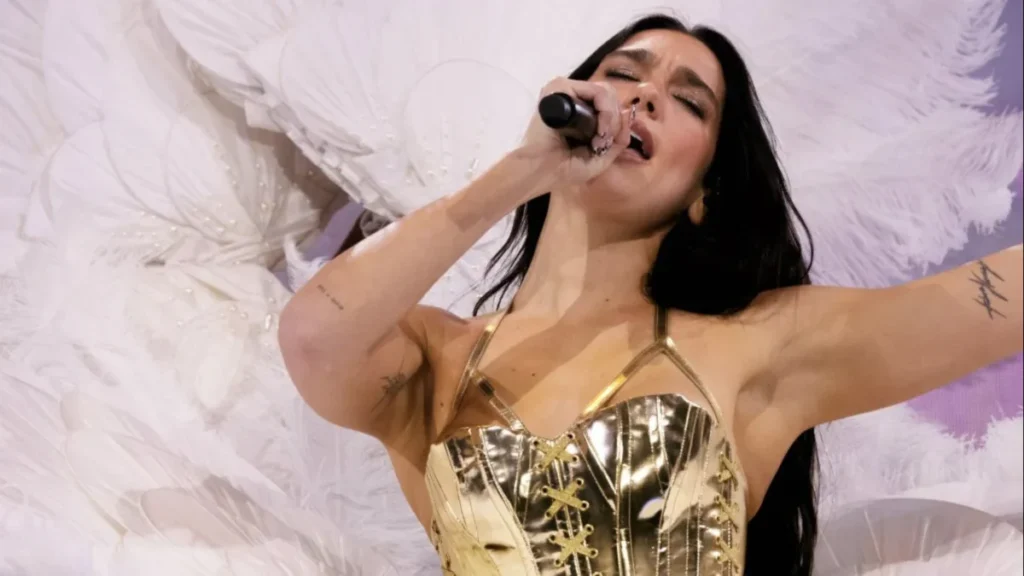

Global music sensation Dua Lipa has initiated a substantial legal battle against electronics giant Samsung, filing a $15 million lawsuit alleging the unauthorized use of her image to promote its television products. The Grammy-winning, dance-pop artist brought the copyright and trademark infringement case before a California federal court on May 8th, asserting that Samsung has been commercially exploiting her likeness without permission, thereby undermining her carefully constructed brand and denying her rightful compensation.
The Allegations: A Challenge to Image Rights
The lawsuit, lodged by Lipa’s legal team, contends that Samsung utilized a photograph of the singer on its television packaging to drive sales. The image in question reportedly depicts Lipa backstage at the Austin City Limits festival in 2024, an image the complaint explicitly states is copyrighted and owned by the artist herself. This alleged appropriation forms the crux of the multiple claims, which extend beyond copyright to include trademark infringement, violation of her publicity rights, and false endorsement.
According to court documents, Samsung’s actions constitute a direct assault on Lipa’s commercial identity. “Samsung’s infringing conduct – using Ms. Lipa’s assets for zero consideration – makes a mockery of her hard work in establishing a successful brand and has deprived her of the ability to control and monetize her assets,” the lawsuit declares. Her attorneys further emphasize that given Lipa’s meticulously cultivated brand and image, she would never have licensed her photograph for the purpose of selling televisions, especially not without proper contractual agreement and compensation. This assertion highlights the perceived incongruity between her artistic persona and the commercial context in which her image was allegedly used, suggesting a fundamental breach of trust and commercial ethics.
Chronology of Events Leading to Litigation
The timeline underpinning the dispute traces back to 2024, a pivotal year for Dua Lipa. In addition to her performance at Austin City Limits, which is where the contentious photograph was taken, she released her critically acclaimed studio album, "Radical Optimism." This period saw Lipa at the peak of her touring cycle, which continued robustly throughout 2025, culminating in a series of high-profile US tour dates featuring collaborations with esteemed musicians like Benjamin Gibbard of Death Cab for Cutie and Billie Joe Armstrong of Green Day. It was during this period of heightened public visibility and commercial activity that Samsung allegedly began using her image on its product packaging.
The exact date Samsung commenced the alleged unauthorized use remains unspecified in the initial filing, but the lawsuit details a period of prior attempts by Lipa’s representatives to resolve the matter outside of court. The complaint states that Lipa has repeatedly demanded that Samsung cease the use of her image, only to be met with dismissiveness and a "callous" attitude from the electronics giant. “Samsung’s arrogance in refusing to stop its infringement confirms its conscious disregard of Ms. Lipa’s intellectual property and personal identity rights,” the court filing asserts, painting a picture of deliberate non-compliance that ultimately forced Lipa’s hand to pursue legal action on May 8, 2026. The news of the lawsuit quickly disseminated, with legal commentators like Rob Freund (@RobertFreundLaw) drawing attention to the filing on May 9, 2026, underscoring the immediate public and industry interest in the case.
Samsung’s Alleged Conduct and Customer Impact
A significant element of Lipa’s complaint focuses on demonstrating the direct commercial benefit Samsung purportedly derived from the unauthorized use of her image. The lawsuit includes explicit quotes from posts on X (formerly Twitter), which her attorneys present as irrefutable evidence that consumers were indeed influenced to purchase Samsung televisions specifically because of Lipa’s presence on the packaging.
One X user is quoted in the lawsuit stating, “I wasn’t even planning on buying a tv but I saw the box so I decided to get it.” Another post cited in the complaint reads, “I’ll get that tv just because Dua is on it.” A third user’s comment further encapsulates the alleged commercial pull: “If you need anything selling just put a picture of Dua Lipa on it.” These social media excerpts are critical for Lipa’s case, as they directly link the use of her image to tangible consumer purchasing decisions, thereby strengthening the argument for actual damages and the negative impact on her brand’s commercial value and control. The direct correlation between celebrity image and sales underscores the value of intellectual property in modern marketing and the potential for substantial financial harm when such rights are violated.
The Legal Framework: Protecting Star Power
This lawsuit delves into fundamental aspects of intellectual property law, particularly as they pertain to celebrity image and brand endorsements. At its core, the case hinges on several legal principles:
- Copyright Infringement: Lipa claims ownership of the photograph used by Samsung. Copyright law grants the creator of original works of authorship (including photographs) exclusive rights to reproduce, distribute, and display their work. Unauthorized use constitutes infringement.
- Trademark Infringement: A celebrity’s name, likeness, and image can function as a trademark, signifying a source of goods or services. When a company uses a celebrity’s image without permission, it can create confusion among consumers who might believe the celebrity endorses the product, thereby infringing upon their trademark rights.
- Right of Publicity: This common law right protects an individual’s ability to control the commercial use of their identity, including their name, likeness, and voice. It ensures that individuals can monetize their fame and prevents others from profiting from their persona without consent. In many jurisdictions, this right is considered a personal identity right, granting individuals control over how their public image is used.
- False Endorsement: This claim arises when a company uses a celebrity’s image or identity in a way that implies an endorsement or affiliation that does not exist. The X posts cited in the lawsuit are crucial here, as they suggest consumers believed Lipa’s image on the box implied her approval or association with Samsung, leading them to purchase the product.
The $15 million sought in damages reflects not only the potential lost licensing fees that Lipa would have commanded for such an endorsement but also compensation for the perceived dilution of her brand, the loss of control over her image, and punitive damages for Samsung’s alleged "conscious disregard" of her rights. Celebrity endorsements are a multi-billion-dollar industry, with top-tier artists like Lipa commanding significant fees for brand partnerships. The unauthorized use of her image effectively circumvents this lucrative market, depriving her of income and the strategic control she exercises over her commercial associations.
Reactions and Corporate Silence
As of the filing date and subsequent reports, Samsung has not issued a formal public statement regarding the lawsuit. This is a common practice for large corporations involved in litigation, where legal counsel typically advises against public commentary to avoid prejudicing their case. However, the lawsuit itself details Samsung’s alleged prior "dismissive and callous" responses to Lipa’s demands to cease the infringement, indicating a pattern of non-cooperation that ultimately escalated to legal action.
A spokesperson for Ms. Lipa’s legal team, while not quoted directly outside the lawsuit’s filing, would likely reiterate the critical importance of protecting an artist’s intellectual property and the right to control their commercial identity. The legal team’s strong language within the complaint, particularly references to Samsung’s "arrogance" and "conscious disregard," suggests a firm stance against what they perceive as a blatant violation of established rights. The case will now proceed through the discovery phase, where both parties will exchange information and evidence, potentially leading to settlement negotiations or a full trial.
Broader Implications for Industry and Law
This lawsuit carries significant implications not only for Dua Lipa and Samsung but also for the broader entertainment, advertising, and legal industries.
- For Celebrities and Artists: The case serves as a stark reminder and reinforcement of the ongoing battle for intellectual property protection in an increasingly digital and image-driven world. It underscores the necessity for artists to vigilantly monitor the use of their likeness and to assert their rights aggressively when infringements occur. A successful outcome for Lipa could empower other artists to pursue similar actions, strengthening the legal safeguards around celebrity branding.
- For Corporations and Brands: Samsung, a global technology leader, now faces reputational damage and a potentially costly legal battle. The case highlights the critical importance of rigorous intellectual property clearance processes for all marketing and advertising materials. Companies must ensure they have explicit, legally binding agreements for the use of any third-party content, especially celebrity images, to avoid costly litigation and brand tarnishment. The "dismissive and callous" accusation also serves as a warning regarding corporate responsiveness to infringement claims.
- The Evolving Landscape of Digital Image Rights: In an era where images can be widely disseminated and repurposed almost instantaneously online, the control over one’s visual identity has become paramount. This lawsuit could contribute to the evolving legal discourse on how existing IP laws apply to digital assets and the ease with which they can be misused. The use of social media posts as evidence of consumer confusion also illustrates how digital footprints can play a crucial role in modern legal battles concerning brand perception and endorsement.
- Market Dynamics of Endorsements: The outcome of this case could influence the valuation of celebrity endorsement deals and the standard clauses within such contracts. It may lead to increased scrutiny of image rights and more robust indemnification clauses, impacting how brands engage with public figures for promotional purposes.
Dua Lipa’s lawsuit against Samsung is more than just a dispute over an image; it is a high-stakes battle over the fundamental principles of intellectual property, celebrity branding, and corporate accountability. As the legal proceedings unfold, the case will be closely watched by industry stakeholders, potentially setting new benchmarks for how celebrity images are protected and valued in the global marketplace.