
The traditional trajectory for high-end interior designers moving into a new residence often involves a complete overhaul: a blank slate, a fresh budget, and a comprehensive shopping spree for bespoke furnishings. For Michelle R. Smith, the founder of the design firm Studio M.R.S., the process is markedly different. Smith has cultivated a reputation for an intuitive, almost nomadic approach to her personal spaces, favoring the redeployment of a beloved collection of furniture and objects over the acquisition of the new. This philosophy was recently put to the ultimate test when Smith transitioned her family from the historic Garden District of New Orleans to a unique stone residence in Westchester County, New York.

Smith’s design methodology eschews the formal furniture plans and obsessive coordination that define much of the industry. Instead, she relies on a seasoned eye and the belief that quality pieces will find their place regardless of the architectural context. This transition to Westchester marks the latest chapter in a geographical and professional journey that has seen Smith move from Manhattan to Brooklyn, then to New Orleans, and finally back to the northern suburbs of New York City.
The Architectural Context of Westchester County
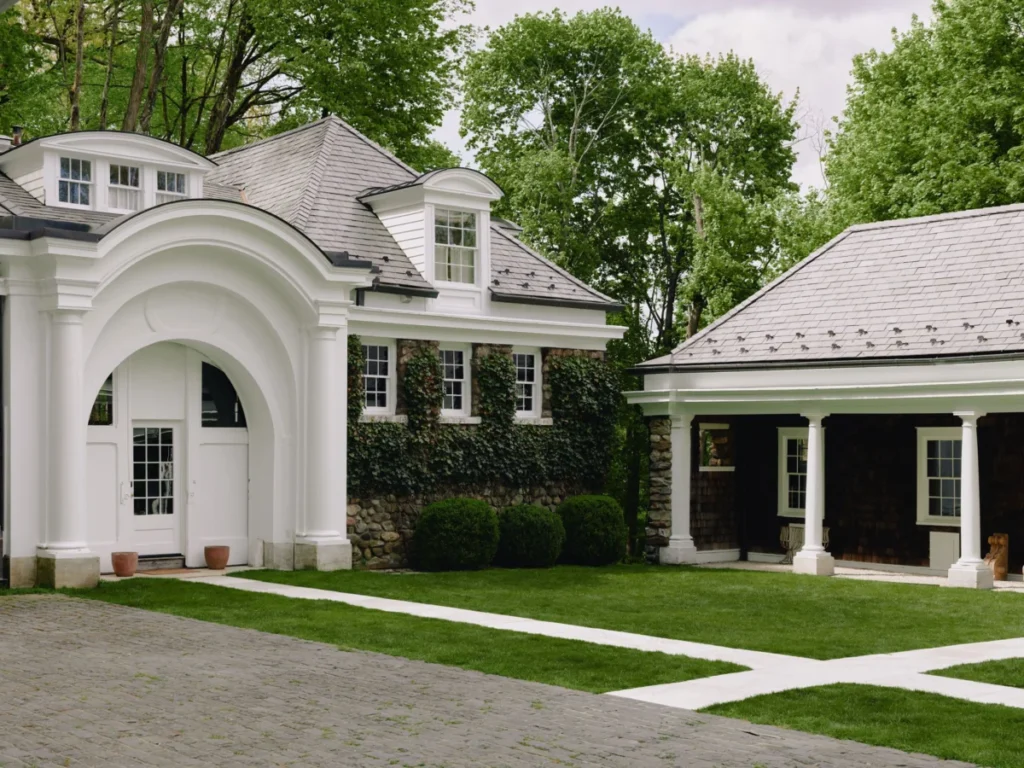
The property Smith and her partner, documentary filmmaker Sebastiano Tomada, eventually selected is a case study in historical preservation and adaptive reuse. Located in Westchester County—an area renowned for its Gilded Age estates and pastoral landscapes—the home is comprised of four distinct stone structures. These buildings were originally outbuildings for a much larger country estate, serving functions that likely included carriage storage or staff quarters.

The residence is defined by its "great bones," characterized by dynamic rooflines, internal masonry walls, and substantial marble accents in the form of lintels and sills. While a previous owner had updated the interiors in a style that did not align with Smith’s aesthetic, the structural integrity and historical character of the stone buildings provided a compelling foundation for her "chill renovation."
Westchester County has seen a significant shift in its residential market over the last several years. According to regional real estate data, there has been a 15% increase in demand for historic properties with unique architectural features as buyers move away from cookie-cutter suburban developments. Smith’s choice to inhabit former estate outbuildings reflects a broader trend among design professionals who value architectural "soul" over square footage.

A Chronology of Migration and Design
To understand the Westchester project, one must look at the timeline of Smith’s personal and professional evolution.
- The Manhattan/Brooklyn Era: Smith established her design credentials in the competitive New York City market, developing a style that balances spontaneity with a deep respect for tradition. It was during this time she acquired many of the pieces that now reside in Westchester, such as a macrame light fixture from Wyeth and various industrial pendants.
- The New Orleans Interval: Seeking a different pace of life, Smith moved to New Orleans’ Garden District. This period was characterized by an embrace of Southern textures and antiques, including a vintage dining table found in Louisiana.
- The Westchester Return: Two years ago, pining for the proximity to New York City but desiring a pastoral setting for her growing family, Smith began the search for a home that prioritized character over town amenities. The discovery of the stone courtyard residence occurred while she was pregnant with her second child, necessitating a renovation that was efficient yet impactful.
The "Studio M.R.S. Lite" Renovation Strategy
The renovation of the Westchester home was nicknamed "Studio M.R.S. Lite" by Smith herself. This reflected a strategic decision to limit custom work in favor of strategic, high-impact changes. The goal was to refresh the surfaces and optimize the layout without embarking on a multi-year construction project.

Surface and Materiality
The primary intervention involved the walls and floors. Smith opted for a uniform application of Benjamin Moore’s "White Blush," a color choice that provides a warm, gallery-like backdrop for her eclectic furniture. Where possible, she unearthed original interior stonework that had been covered by previous owners, restoring the tactile connection to the building’s origins.
For the flooring, Smith replaced dark cherry wood with wide planks of fumed oak. The fuming process involves exposing the wood to ammonia vapors, which react with the natural tannins to create a deep, variegated stain that permeates the wood. This choice was both aesthetic and practical; the "spotty" and timeworn appearance of fumed oak is exceptionally forgiving for a household with young children, as it camouflages spills and wear.

The Kitchen: A Study in Custom Contrasts
In the kitchen, Smith departed from her "lite" approach to create a highly specific, custom cabinetry scheme. Rather than traditional shaker doors with four-sided profiles, she designed lower cabinetry where the profiles appear only on the top and bottom. This subtle detail creates a streamlined, modern feel that still feels grounded in craftsmanship.
The backsplash features cream-colored scullery tiles laid in a precise four-inch-square grid. Smith added a layer of complexity by using vertical liners and a blue stripe edge, creating a texture she describes as "almost like corduroy." This attention to detail highlights the designer’s ability to elevate standard materials through clever orientation and finishing.

Strategic Repurposing and Sustainable Design
A central theme of the Westchester home is the reimagining of objects from Smith’s previous residences. This approach is increasingly viewed as a form of sustainable luxury—reducing the carbon footprint associated with new furniture production and shipping while preserving the narrative of a family’s history.
- Lighting: A vintage pendant lamp found on eBay accents the entry, while an industrial fixture previously used in a Long Island kitchen now hangs in the office. The macrame fixture from her Brooklyn townhouse has found a new home in the dining room.
- Furniture Adaptation: In the primary bedroom, Smith pushed together two antique twin bed frames from her son’s former bedroom in New Orleans to accommodate a king-size mattress. This creative solution avoided the need for a new, large-scale furniture purchase while retaining the charm of the antique ironwork.
- The Office: Smith uses an antique Charles Dudouyt table as her desk, proving that residential furniture can be successfully transitioned into functional workspaces.
Broader Implications for the Interior Design Industry
Smith’s Westchester project highlights several shifts currently occurring in the high-end residential market. First is the move toward "pastoral romance"—a design aesthetic that favors natural materials, historical context, and a connection to the outdoors. As more professionals embrace hybrid work models, the demand for homes that serve as both a sanctuary and a creative studio has reached an all-time high.

Furthermore, Smith’s "move it all in" philosophy challenges the industry standard of the "total look" renovation. By demonstrating that a cohesive home can be built from a disparate collection of items accumulated over decades, she promotes a more personal and less consumeristic approach to interior design.
Industry analysts note that the "ready-made" or "off-the-shelf" luxury market—which Smith tapped into by eschewing custom fittings for the bathroom in favor of high-quality retail options—is growing at a rate of 8% annually. This suggests that even at the highest levels of design, efficiency and speed are becoming as valued as complete customization.

Conclusion and Future Outlook
The Westchester residence of Michelle R. Smith is more than just a home; it is a living archive of a designer’s career and a family’s journey. By combining the "great bones" of a historic stone structure with "clever fixes" and a lifetime of collected treasures, Smith has created a space that feels both fresh and deeply rooted.
As Studio M.R.S. continues to influence the design world, the Westchester home serves as a primary example of how to balance high-design principles with the realities of family life. The project suggests that the future of interior design may lie not in the constant acquisition of the new, but in the thoughtful recontextualization of the old. For Smith, the process is never truly finished. As she noted of her collection, "Maybe I’ll have to mix it up" in the future—a testament to the ever-evolving nature of a truly personal home.