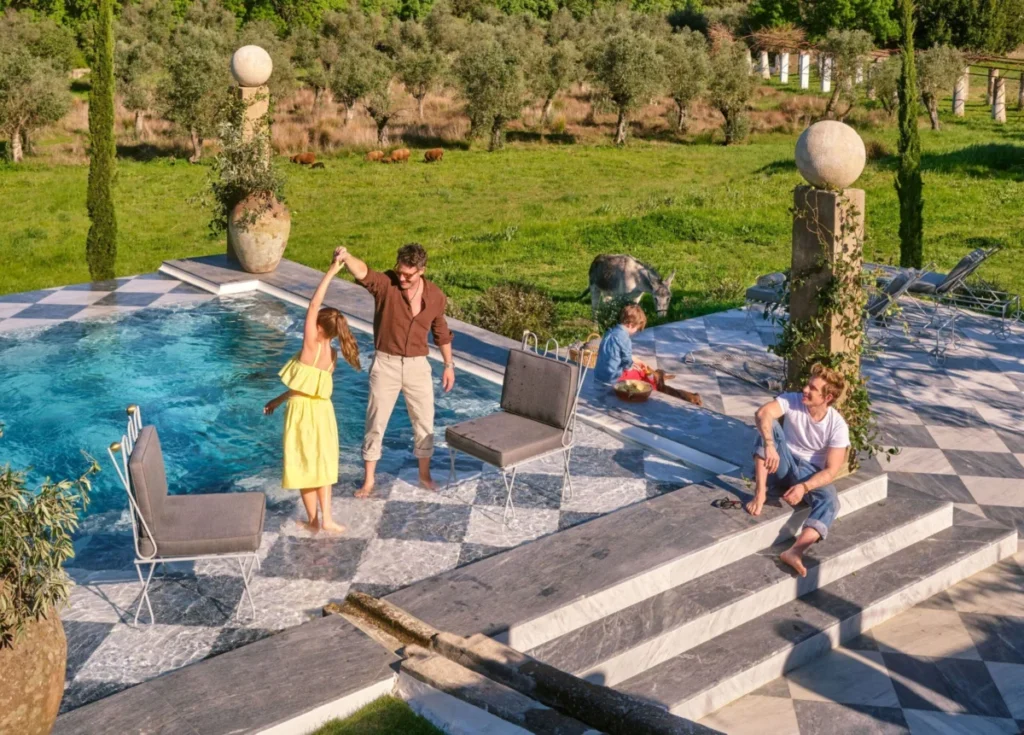

The completion of the rural Portuguese homestead belonging to AD100 designers Nate Berkus and Jeremiah Brent marks a significant milestone in the careers of two of America’s most prominent interior design authorities. After a meticulous five-year restoration process, the couple has unveiled a project that serves not only as a personal sanctuary but also as a masterclass in international property development, historic preservation, and sustainable land stewardship. While both Berkus and Brent are seasoned veterans of the high-end residential market, having renovated dozens of properties for themselves and a global roster of elite clients, they have characterized the Portuguese endeavor as one of their most challenging and educational undertakings to date.
The project, located in a remote corner of Portugal’s Alentejo region, represents a growing trend among high-net-worth individuals and creative professionals who are looking beyond traditional metropolitan hubs toward the "slow living" movement in rural Europe. However, as the designers discovered, the transition from urban luxury to rural agricultural management involves a steep learning curve that extends far beyond aesthetics.

A Chronology of Restoration: From Acquisition to Inhabitation
The timeline of the Berkus-Brent project spans half a decade, beginning with the acquisition of a neglected agricultural estate. The initial phase of the project was defined not by interior decoration, but by essential infrastructure and environmental rehabilitation. Before the residential structures could be addressed, the designers focused on the viability of the land itself.
In the first two years, efforts were concentrated on the property’s ecological health. This included a comprehensive assessment of the soil quality and the revitalization of the estate’s citrus and olive orchards. A critical component of this early phase was the restoration of ancient water channels—traditional irrigation systems that are vital in the arid climate of southern Portugal. By the third year, the focus shifted to the architectural restoration of the main house and outbuildings, navigating the complexities of local building codes and the logistical hurdles of sourcing materials in a remote location. The final two years saw the refinement of the interiors, the installation of a massive vegetable garden, and the integration of livestock, culminating in the family’s transition into the space.
Strategic Communication and Project Management
The primary challenge identified by Berkus and Brent was the linguistic and cultural barrier inherent in international construction. To mitigate the risks associated with distance and communication, the designers emphasized the necessity of hiring a high-level, bilingual local project manager. In the context of Portuguese real estate development, a project manager acts as more than a supervisor; they serve as a legal and cultural intermediary.

According to the designers, this role is essential for navigating the "bureaucratic labyrinth" of local municipalities (Câmaras Municipais) and ensuring that the technical nuances of the design are accurately conveyed to local tradespeople. Brent noted that the manager provides assistance in selecting and supervising construction teams, which is a critical safeguard for investors who cannot be on-site daily. Furthermore, the designers recommended the use of commercial contractors for residential projects of this scale, noting that commercial firms often bring a higher level of organizational rigor and adherence to timelines than smaller residential outfits.
The Economics of Local Sourcing: The Case of Alentejo Marble
One of the most significant architectural features of the Berkus-Brent estate is the extensive use of local stone, a decision that was as much about economic strategy as it was about aesthetic harmony. Portugal is one of the world’s leading exporters of ornamental stone, particularly marble from the Alentejo region. By sourcing materials locally, the designers were able to access world-class materials at a fraction of the cost of importing them to the United States.
A centerpiece of the property is the swimming pool, which features a sophisticated checkerboard pattern constructed from Ruivina and Estremoz White marble. Ruivina is a sought-after dark grey marble known for its durability and deep tonal variations, while Estremoz White is globally recognized for its luminous quality, often compared to Italian Carrara.

The designers’ decision to visit local quarries and select specific blocks allowed for a level of customization rarely seen in standard residential builds. However, they also issued a logistical warning: delivery timelines in Portugal can be protracted. Their professional advice for international developers is to purchase and store all necessary stone at the very beginning of the construction phase to prevent mid-project delays.
Infrastructure and Agricultural Stewardship
For Berkus and Brent, the project was an education in "land stewardship," a term that describes the responsible planning and management of resources. In the Alentejo region, where water scarcity is an increasing concern due to climate change, the restoration of the property’s five agricultural water tanks was a priority.
In a move that blended historical preservation with modern luxury, the designers converted one of these massive original tanks into a swimming pool. This required significant structural adaptation, including altering the depth while maintaining the rustic, weathered texture of the exterior masonry. This approach reflects a broader trend in European restoration known as "adaptive reuse," where agricultural relics are repurposed for residential comfort without erasing their historical context.

The designers also highlighted the importance of updating "invisible infrastructure" before focusing on cosmetic upgrades. This includes modernizing drinking water systems, wastewater management, and storm drainage. Brent advised that while the introduction of farm animals—such as the sheep and peacocks that now roam the grounds—is a key part of the "farm life" dream, it should be the final step of the process. The noise and disruption of a multi-year construction site are unsuitable for livestock, and their introduction should only occur once the land has been stabilized.
Community Integration and Social Impact
A significant but often overlooked aspect of international rural restoration is the relationship between the property owners and the local community. Berkus and Brent made a conscious effort to integrate into the local village, a move that is increasingly seen as essential for the long-term success of "lifestyle" migrations.
By hiring local villagers for both the construction phase and the ongoing maintenance of the farm, the designers contributed to the local economy and gained access to generational knowledge about the land. They have also hosted social events, such as wine and cheese gatherings, to foster relationships with their neighbors. This "community-first" approach is often cited by social analysts as a way to mitigate the tensions that can arise from "gentrification" in rural areas where property values are rising due to foreign investment.

Broader Implications for the Portuguese Real Estate Market
The Berkus-Brent project arrives at a time when Portugal’s real estate market remains a focal point for international investors. Despite recent changes to the "Golden Visa" program, which previously granted residency for property investment, the demand for high-end rural estates—particularly in the Alentejo and Comporta regions—continues to grow.
Market data suggests that the Alentejo region has seen a steady increase in property values as buyers seek alternatives to the crowded Algarve coast. The appeal lies in the region’s vast landscapes, historic architecture, and the availability of large parcels of land that allow for the type of "homesteading" Berkus and Brent have achieved.
The designers’ experience highlights the reality that while the "Portuguese Dream" is accessible, it requires a sophisticated level of project management and a willingness to adapt to local rhythms. Their five-year journey serves as a blueprint for other professionals looking to undertake similar projects: prioritize local expertise, respect the environmental constraints of the land, and invest in the community as much as the property.

Conclusion: The New Frontier of Residential Design
Nate Berkus and Jeremiah Brent’s Portuguese farm is more than a vacation home; it is a testament to the evolution of the modern designer. In an era where luxury is increasingly defined by authenticity and a connection to the land, their project demonstrates that the most successful renovations are those that honor the history and ecology of their location.
As the designers move into the next phase of their lives on the farm—tending to lavender fields and a burgeoning vegetable garden—they leave behind a set of professional guidelines for the next generation of international renovators. From the strategic use of Estremoz marble to the vital importance of bilingual project management, the lessons learned in the Alentejo will likely influence the designers’ future work for years to come. For the broader design community, the project reinforces the idea that even the most seasoned experts must remain students of their craft, especially when the classroom is a centuries-old farm in the heart of rural Portugal.