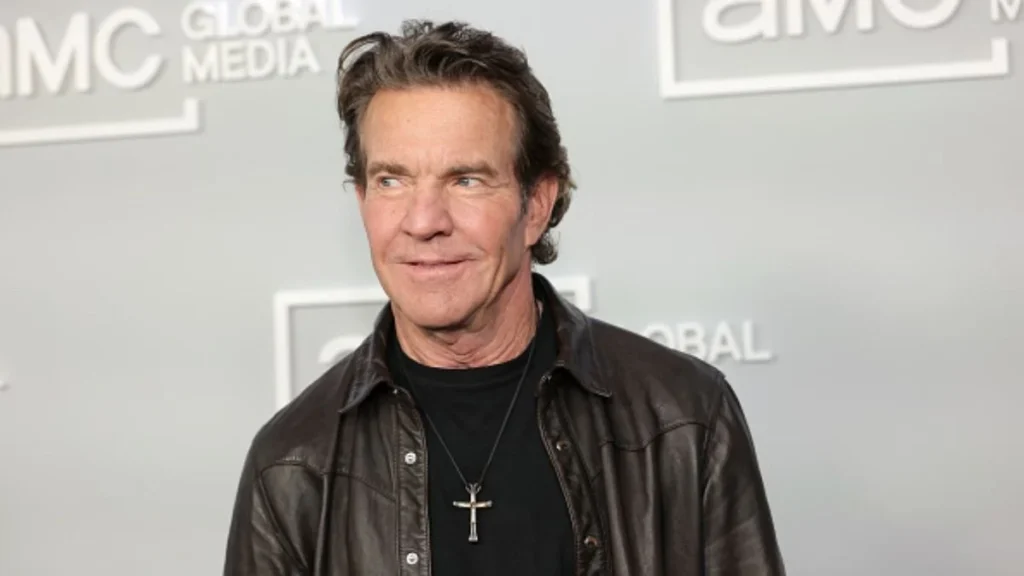

The landscape of Los Angeles politics took an unexpected turn this week as veteran actor Dennis Quaid publicly declared his support for mayoral candidate Spencer Pratt. Speaking at the 2nd Annual Military & Veteran Entertainment Awards Gala held on May 23, 2026, the 72-year-old Quaid signaled a shift in his political alignment, throwing his weight behind the former reality television personality. The endorsement came during a high-profile evening where Quaid was honored with the 2026 Patriot Ally Award, a distinction recognizing his long-standing support for service members and veterans. When asked by reporters to elaborate on his endorsement of Pratt, Quaid offered a blunt assessment of the current state of the city, suggesting that the need for change was self-evident to anyone observing the local environment.
The endorsement marks a significant moment in the 2026 Los Angeles mayoral race, which sees Pratt, 42, challenging incumbent Mayor Karen Bass. Bass, who has served as the city’s 43rd mayor since 2022, is facing a rigorous reelection campaign defined by debates over public safety, disaster preparedness, and the city’s ongoing housing crisis. While Quaid did not provide a detailed policy-based rationale for his support of Pratt during the gala, his previous public statements regarding the current administration provide a clear framework for his dissatisfaction. His "Go Spencer Pratt" declaration follows months of vocal criticism directed at the Bass administration, particularly concerning its handling of emergency services and the escalating insurance crisis in Southern California.
The Catalyst for Political Shift: The 2025 Palisades Wildfires
To understand the context of Quaid’s endorsement, observers point back to the catastrophic events of January 2025. During that period, the Pacific Palisades and surrounding coastal areas were devastated by a series of historic wildfires fueled by record-breaking Santa Ana winds. The fires resulted in the destruction of numerous homes and forced the evacuation of thousands of residents, including Quaid himself. The actor has been a vocal critic of the city’s response to the disaster, citing a lack of preparation and a failure in leadership during the height of the crisis.
According to Quaid, the administration’s failure was twofold: a lack of a cohesive evacuation plan and a perceived absence of leadership at the executive level. At the time of the fires, Mayor Karen Bass was on an official diplomatic trip to Ghana. Despite warnings from meteorological agencies regarding high-velocity wind conditions five days prior to the outbreak of the fires, the Mayor proceeded with her international itinerary. Quaid and other critics have frequently cited a viral video from that period showing the Mayor returning to Los Angeles, where she appeared to avoid direct questioning regarding the emergency response.
"Mayor Bass had five days’ warning about what could be record Santa Ana winds, and she chose to go to Ghana anyway," Quaid stated in a previous interview with local news outlets. "There was no evacuation plan. That makes me wonder about the next earthquake, the next mudslides that are going to happen." This sentiment of vulnerability has resonated with a segment of the Los Angeles electorate that feels the city’s infrastructure and emergency protocols are insufficient for the increasing frequency of natural disasters.
The Insurance Crisis and Economic Pressures
Beyond the immediate physical dangers of the 2025 wildfires, Quaid’s endorsement of an alternative candidate like Pratt is also rooted in the burgeoning insurance crisis affecting California homeowners. In recent years, major insurance providers, including State Farm, Allstate, and AIG, have significantly reduced their footprint in the state or ceased writing new policies altogether, citing the high risk of wildfires and the rising costs of reconstruction.
Quaid has personal experience with this systemic issue, noting that his own insurer, AIG, withdrew from the California market prior to the 2025 fires. This has left many residents relying on the California FAIR Plan, a state-mandated "insurer of last resort" that often carries higher premiums for less comprehensive coverage. The inability of the current administration to stabilize the insurance market or provide a clear path forward for homeowners has become a central theme of the 2026 campaign. Quaid’s frustration reflects a broader middle-class and affluent demographic in Los Angeles that feels increasingly abandoned by state and local regulatory frameworks.
The economic implications are vast. As insurance becomes unattainable or prohibitively expensive, property values in high-risk zones—which include large swaths of Los Angeles—face potential stagnation or decline. For Quaid, the "look around, man" comment likely refers to these visible signs of administrative struggle, where the intersection of climate risk and economic policy has created a volatile environment for residents.
Spencer Pratt: From Reality TV to Political Contender
The emergence of Spencer Pratt as a serious political figure has been met with both curiosity and skepticism. Pratt, who rose to fame in the mid-2000s on the MTV reality series The Hills, announced his candidacy in January 2026. While initially dismissed by some as a publicity stunt, Pratt has leveraged his significant social media following and media savvy to build a platform centered on "disruptive governance" and conservative-leaning fiscal policies.
Pratt’s campaign has focused heavily on the failures of the status quo. By positioning himself as an outsider, he has tapped into the frustrations of residents who feel that career politicians have failed to address the city’s most pressing issues. Pratt has been vocal about his support for gun ownership rights and has frequently criticized Mayor Bass for what he describes as "soft-on-crime" policies and a failure to uphold election laws. In May 2026, Pratt’s campaign filed formal accusations against the Bass administration, alleging violations of election protocols, further intensifying the rivalry between the two camps.
The endorsement from an established figure like Dennis Quaid provides Pratt with a level of "old Hollywood" gravitas that his campaign has previously lacked. Quaid’s reputation as a serious actor with deep ties to the community lends a degree of legitimacy to Pratt’s outsider bid, suggesting that the desire for a change in leadership transcends traditional political boundaries.
Analyzing the Implications for the 2026 Mayoral Race
The 2026 mayoral race is shaping up to be one of the most contentious in recent Los Angeles history. Mayor Karen Bass, a veteran of both the U.S. House of Representatives and the California State Assembly, remains a formidable incumbent with a deep well of support among the city’s Democratic establishment. However, the combination of the 2025 wildfire fallout and the persistent homelessness crisis has created a vulnerability that challengers like Pratt are eager to exploit.
The demographic shift in political endorsements is also noteworthy. Historically, the Los Angeles entertainment industry has been a reliable bastion of support for mainstream Democratic candidates. Quaid’s public break from the incumbent mayor—and his support for a candidate with a more conservative and populist platform—indicates a potential fracturing of that consensus. It suggests that issues of personal safety, property protection, and administrative competence are beginning to outweigh traditional party loyalty for some high-profile residents.
The "Patriot Ally Award" context of Quaid’s endorsement also signals a move toward a more "law and order" and "preparedness-centric" political discourse. By choosing a military and veteran-themed gala to voice his support for Pratt, Quaid aligned the candidate with values of service, protection, and national pride—themes that Pratt has attempted to incorporate into his campaign messaging.
Official Responses and Public Sentiment
The Bass administration has largely remained focused on its legislative agenda in the face of Quaid’s criticisms. In past statements, the Mayor’s office has defended the trip to Ghana as a vital mission to strengthen international trade and cultural ties, asserting that the city’s emergency management departments were fully operational and in constant communication with the Mayor during the 2025 fires. Supporters of Bass point to her efforts in securing federal funding for housing and her work on the "Inside Safe" initiative as evidence of her commitment to the city’s long-term health.
However, public sentiment remains divided. Recent polling suggests that while Bass maintains a lead, her approval ratings have seen a dip in areas most affected by the wildfires and the insurance crisis. The "recall" sentiment mentioned by Quaid in earlier interviews has not yet materialized into a formal movement, but it underscores the level of intensity among her detractors.
For Spencer Pratt, the challenge remains moving beyond his reality TV persona to present a comprehensive policy platform that can withstand the rigors of a general election. While endorsements from figures like Quaid provide momentum, the Pratt campaign will eventually need to provide the specific "reasons why" that Quaid opted to skip during his brief interaction with the press.
Looking Ahead: The Road to the Election
As the 2026 mayoral race enters its next phase, the influence of celebrity endorsements and the memory of the 2025 disasters will continue to play a pivotal role. The Los Angeles electorate is currently navigating a period of significant transition, grappling with the realities of a changing climate and a shifting economic landscape.
Dennis Quaid’s endorsement of Spencer Pratt serves as a high-profile barometer of the current political climate. It reflects a growing demand for accountability and a willingness among voters to look toward unconventional candidates when they feel the traditional system has failed to protect their interests. Whether Pratt can translate this momentum into a viable path to the mayor’s office remains to be seen, but the intervention of a respected figure like Quaid ensures that the debate over the city’s future will remain at the forefront of the public consciousness.
In the coming months, voters can expect increased scrutiny of both candidates’ plans for disaster mitigation, insurance reform, and urban management. As Quaid suggested, the people of Los Angeles are "looking around," and what they see in their neighborhoods and on their news feeds will ultimately determine the direction of the city for the next four years. The 2026 election is no longer just a contest of personalities; it has become a referendum on the city’s ability to survive and thrive in an era of unprecedented challenges.