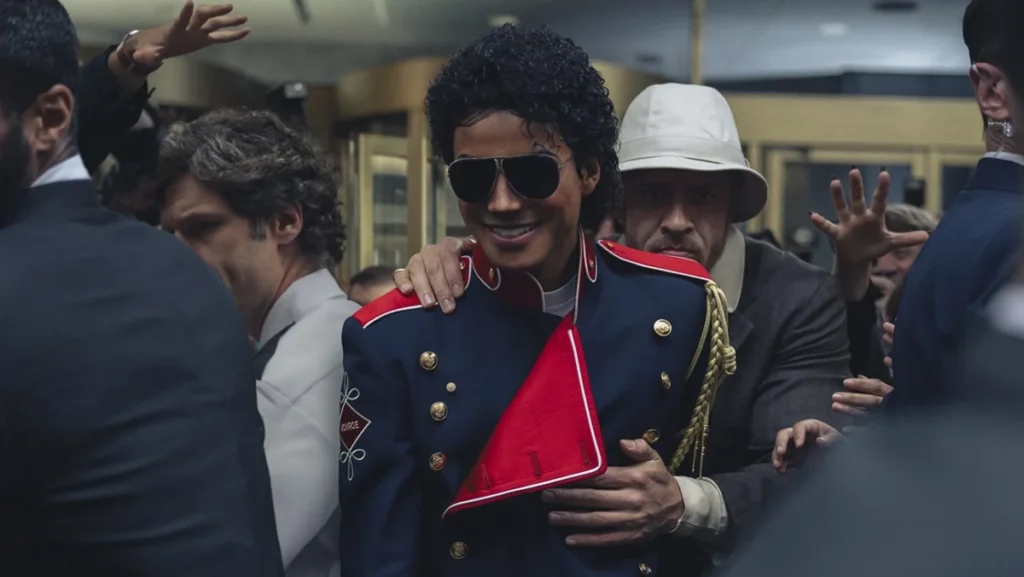

Acclaimed filmmaker Spike Lee has publicly defended Lionsgate’s Michael Jackson biopic, Michael, following widespread criticism regarding its omission of the late music icon’s child sexual abuse allegations. Lee, a long-time admirer and collaborator of Jackson, emphasized that the film’s narrative scope, concluding in 1988, predates the initial accusations that surfaced in 1993, rendering their inclusion incongruous with the established timeline. Despite a polarized reception from critics, the film has achieved substantial commercial success, underscoring a notable divergence between critical appraisal and audience engagement.
Spike Lee’s Unwavering Support and Personal Connection
In a recent interview with CNN, the Oscar-winning director, known for his incisive social commentary and distinctive cinematic style, expressed profound appreciation for Michael, revealing he had seen the film twice and "loved" it. Lee directly addressed critics who questioned the biopic’s selective portrayal of Jackson’s life. "First of all, if you’re a movie critic, and you’re complaining about the stuff — all this other stuff — but the movie ends at ’88," Lee explained, "The stuff you’re talking about, accusations, happen [later]. So you’re critiquing the film on something that you want in, but it doesn’t work in the timeline of the film. But people showed up. Worldwide, people showed their love." His statement firmly positions the film’s narrative choices as a valid artistic decision, separate from the broader controversies that unfolded later in Jackson’s life.
Lee’s connection to Michael Jackson runs deep, extending beyond professional admiration to a personal bond. He reflected on his relationships with both Jackson and Prince, stating, "I miss Mike. I miss Prince. I mean, these are my brothers. I worked with both of them. Both beautiful, beautiful people." This sentiment highlights a personal stake in defending Jackson’s artistic legacy. Lee’s professional collaborations with Jackson include directing the powerful music video for "They Don’t Care About Us," a song that itself touched upon themes of social injustice and media scrutiny. Furthermore, Lee helmed two significant documentaries exploring different facets of Jackson’s career: 2012’s Bad 25, commemorating the 25th anniversary of Jackson’s seminal album Bad, and 2016’s Michael Jackson’s Journey From Motown to Off the Wall, which delved into the artist’s formative years and transition to solo stardom. These projects underscore Lee’s intimate understanding of Jackson’s artistry and public persona.
The Michael Biopic: A Deep Dive into Production and Reception
The Michael biopic, directed by Antoine Fuqua (Training Day, The Equalizer) and produced by Graham King (known for his work on the critically acclaimed and commercially successful Queen biopic Bohemian Rhapsody), arrived with considerable anticipation and scrutiny. The film notably features Jaafar Jackson, Michael Jackson’s nephew, in the titular role, a casting choice that was lauded for its striking physical resemblance and vocal talent, adding an authentic dimension for many fans. The project is backed by the Michael Jackson estate, a significant detail that has fueled discussions about its potential for a hagiographic portrayal, given the estate’s consistent efforts to protect Jackson’s legacy.
The film’s narrative arc deliberately focuses on the first half of Jackson’s life, chronicling his rise from a child prodigy in the Jackson 5 to his unparalleled global superstardom as a solo artist, culminating in the cultural phenomenon of the Thriller era and the subsequent Bad album, which defined the late 1980s. This specific timeline is central to Spike Lee’s defense, arguing that it logically precludes the inclusion of later controversies.
While the film received a largely negative critical reception, with many reviewers citing its perceived superficiality, pacing issues, and, most prominently, its deliberate omission of the child sexual abuse allegations, its commercial performance tells a different story. Michael emerged as a massive box office success, grossing over $400 million worldwide. This financial triumph positions it as one of the top-performing musical biopics of all time, echoing the commercial prowess of films like Bohemian Rhapsody and Rocketman. The disparity between critical panning and audience embrace highlights a growing trend in the entertainment industry, where strong fan bases and compelling subject matter can often override professional critical consensus, particularly for biopics of beloved, albeit controversial, figures.
The Shadow of Allegations: A Chronology of Controversy
To understand the controversy surrounding Michael‘s narrative choices, it is essential to trace the timeline of the allegations against Michael Jackson. Jackson’s career, from his early days with the Jackson 5 in the late 1960s through his explosive solo career in the 1980s, was marked by unprecedented artistic achievement and global adoration. By the late 1980s, he was undeniably the "King of Pop," a cultural icon whose influence transcended music.
However, this glittering legacy began to be shadowed by serious accusations. The first significant public allegations of child sexual abuse against Jackson emerged in 1993. These accusations, brought by the family of 13-year-old Jordan Chandler, led to a highly publicized civil lawsuit. The case ultimately concluded in an out-of-court settlement, reportedly for a substantial sum, though Jackson consistently maintained his innocence, asserting the settlement was a pragmatic decision to avoid a protracted legal battle that would distract from his career.
The controversy reignited in 2003 with the documentary Living with Michael Jackson, which led to new allegations and subsequently a criminal trial in 2005. Jackson faced multiple charges, including child molestation and conspiracy. After a sensationalized trial that garnered global media attention, Jackson was acquitted on all counts. Despite the legal victory, the trials irrevocably altered his public image, and he spent his final years largely out of the intense public spotlight.
The debate surrounding Jackson’s alleged conduct was further amplified in 2019 with the release of the HBO documentary Leaving Neverland. This two-part film featured detailed testimonies from Wade Robson and James Safechuck, who alleged that Jackson had sexually abused them as children over several years. The documentary reignited fierce public discourse, leading to renewed scrutiny of Jackson’s legacy, with some radio stations ceasing to play his music and cultural institutions reconsidering his presence. Throughout these periods, and in the years following his death in 2009, the Michael Jackson estate has consistently and vehemently denied all allegations, asserting Jackson’s innocence and launching legal challenges against accusers and media outlets.
Timeline Defense and Its Nuances
Spike Lee’s defense of Michael hinges on a critical point: the film concludes its narrative in 1988. This timeline is crucial because the initial child sexual abuse allegations against Jackson did not become public until 1993, five years after the film’s chronological endpoint. From a purely narrative construction standpoint, incorporating events that occur after the story’s chosen conclusion would disrupt its established temporal framework. Biopics, by their nature, often select specific periods or thematic arcs from a subject’s life to explore, rather than attempting an exhaustive cradle-to-grave account. Filmmakers often make deliberate choices about where to begin and end their narratives, shaping the audience’s focus and interpretation.
However, critics and some audience members argue that while the allegations may fall outside the film’s explicit timeline, a comprehensive and responsible biographical portrayal of Michael Jackson’s life, even if focused on an earlier period, should at least acknowledge the shadow of these later controversies, perhaps through subtle foreshadowing, thematic undertones, or a framing device. The counter-argument posits that completely omitting such a significant aspect of his public and personal narrative, particularly given its profound impact on his legacy, represents a form of historical revisionism or an incomplete picture, regardless of the chronological cut-off. This debate underscores the inherent tension in biographical filmmaking: the balance between artistic license, narrative cohesion, and historical accountability, especially when dealing with figures as complex and controversial as Michael Jackson.
Behind the Scenes: The Production Overhaul and Estate Influence
Adding another layer of complexity to the Michael biopic’s production is The Hollywood Reporter‘s exposé detailing a significant overhaul during filming. According to the report, initial drafts of the screenplay and early filming included the child sexual abuse allegations as a central part of the film’s third act. This indicates an original intention by the filmmakers to address these sensitive issues, suggesting a more comprehensive approach was initially considered.
However, the report revealed that the film underwent extensive revisions due to an oversight by the Michael Jackson estate, which is a key backer of the project. A past accuser had reportedly reached a settlement with the estate that included a clause guaranteeing they would never be depicted in any future commercial projects. The inclusion of the allegations in the initial script was therefore found to be in potential violation of this existing legal agreement.
This unforeseen legal hurdle necessitated a drastic course correction. The production embarked on an additional 22 days of shooting, a substantial and costly undertaking for any major film. This extensive reshoot schedule was dedicated to reworking the film’s ending and excising the scenes related to the abuse allegations. The logistical and financial implications of such a change are immense, involving reassembling cast and crew, incurring additional production costs, and potentially impacting the film’s creative integrity by forcing a narrative shift late in the process. The reshoots also resulted in the film’s release date being pushed back from April 2025 to its eventual April 2026 slot.
This revelation from The Hollywood Reporter provides crucial context, demonstrating that the omission of the allegations was not solely an artistic choice from the outset but was heavily influenced by legal and financial pressures stemming from the estate’s existing settlements. It highlights the complex interplay between creative freedom, legal obligations, and the demands of estate-backed biographical projects, where the portrayal of a subject’s life can be significantly shaped by external factors beyond pure narrative intent. The report also indicated that filmmakers are already considering a sequel to Michael, raising questions about how or if the later, more controversial periods of Jackson’s life would be addressed in a subsequent installment.
Broader Implications and Industry Discourse
The discussion surrounding Michael and Spike Lee’s defense of it extends beyond the film itself, touching upon broader implications for biographical filmmaking and the entertainment industry. The ethical responsibilities of biopics, particularly those dealing with controversial figures, are consistently debated. Filmmakers grapple with the challenge of presenting a nuanced, truthful portrayal that respects the complexity of a life while also engaging audiences and navigating the sensitivities of estates and public perception. The Michael controversy underscores the tension between celebrating an artist’s undeniable genius and addressing the darker, more problematic aspects of their legacy.
Furthermore, the film’s divergent critical and commercial performance highlights the evolving landscape of film reception. In an era dominated by social media and fervent fan communities, audience loyalty and a desire for specific narratives can often outweigh professional critical assessments. This phenomenon is particularly pronounced for biopics of cultural icons, where fans may prioritize a celebratory portrayal over a forensic examination of a subject’s life. The box office success of Michael, despite its critical shortcomings, signals that there is a significant audience demand for films that honor the artistic contributions of figures like Jackson, even if they sidestep uncomfortable truths.
The possibility of a sequel adds another layer of intrigue to the Michael saga. If a second film were to cover the period after 1988, it would inevitably confront the child sexual abuse allegations that defined much of Jackson’s later life. The decisions made by filmmakers and the estate regarding the inclusion or continued omission of these elements would undoubtedly reignite the intense public debate, further shaping the narrative of Michael Jackson’s life on screen.
In conclusion, Spike Lee’s defense of the Michael biopic illuminates the intricate challenges inherent in bringing a complex icon’s story to the screen. The film navigates a precarious balance between artistic interpretation, historical context, legal constraints, and public expectation. While Lee champions the film’s adherence to its chosen timeline, the underlying production adjustments revealed by The Hollywood Reporter underscore the significant influence of the Michael Jackson estate and existing legal settlements on the final narrative. As Michael continues its successful run at the box office, it remains a pivotal case study in the ongoing discourse surrounding biographical integrity, artistic freedom, and the enduring, multifaceted legacy of one of music’s most enigmatic figures.