
The trajectory of a K-pop idol’s career is often characterized by a brief, intense period of public adoration followed by a challenging transition into secondary careers. However, for Kim Sanghyuk, a prominent member of the first-generation boy band Click-B, this transition has resulted in a financial success that dwarfs his previous earnings as a television and music star. During a recent broadcast, Kim revealed the substantial scale of his entrepreneurial ventures, noting that his monthly business revenue now exceeds the annual salary of high-level employees at South Korea’s major conglomerates.
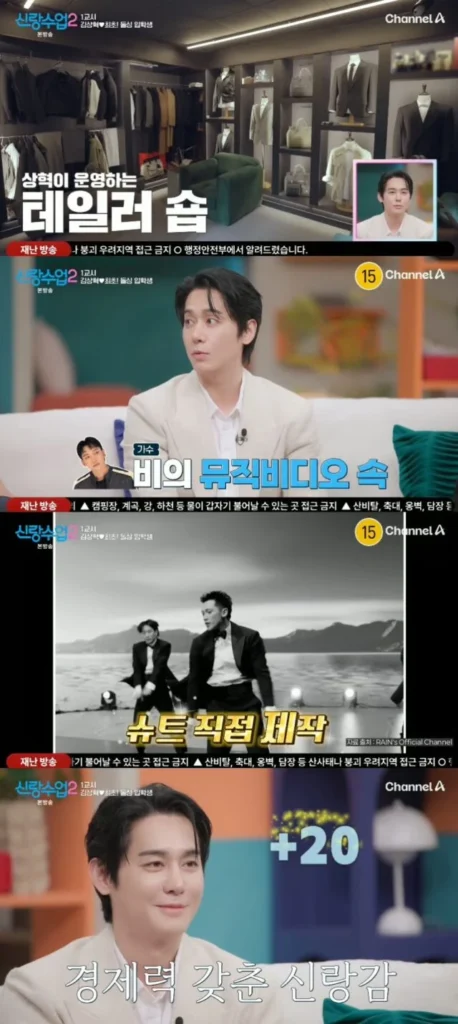
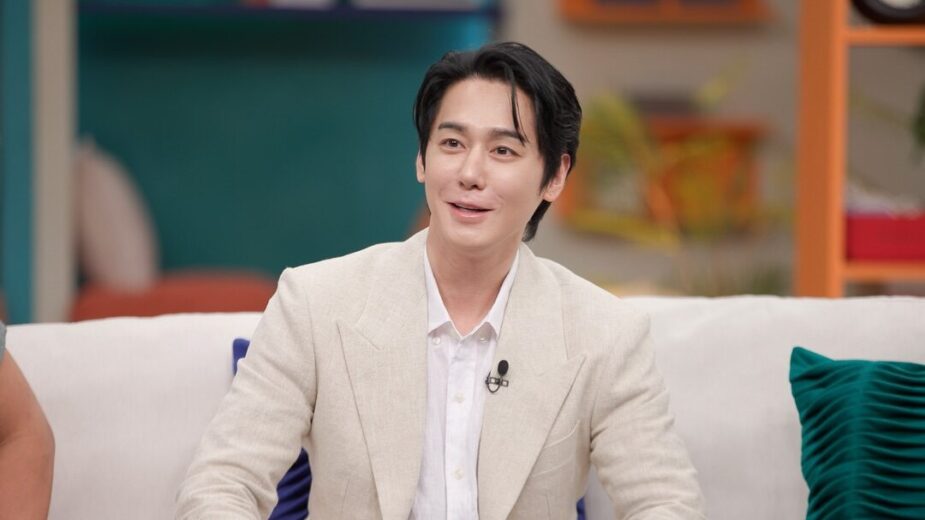
Appearing on the July 16 episode of Channel A’s reality program Groom Class Season 2, Kim Sanghyuk provided a rare glimpse into his life as a multifaceted businessman. The program, which typically focuses on eligible bachelors preparing for marriage, took a historic turn by featuring Kim as its first-ever divorced cast member. The episode followed Kim as he navigated his daily routine, which now centers more on design meetings and inventory management than recording studios and variety show sets.
The Evolution of a Business Portfolio
Kim Sanghyuk’s primary focus in the current market is his bespoke tailor shop, where he serves as more than just a figurehead. He revealed to the production team and viewers that he is deeply involved in the creative process, including the direct design of garments. His influence in the fashion world reached a peak when he was commissioned to design a suit for the global superstar Rain, which was featured prominently in one of the singer’s music videos. This high-profile endorsement served as a catalyst for the brand’s reputation among Korea’s elite.
Beyond formal wear, Kim has diversified his business interests to include health-related products and lifestyle accessories. He has successfully launched a line of health patches and high-end bags. During the Groom Class episode, veteran singer Lee Seung Chul expressed genuine shock when he realized that the bags Kim had designed were the same ones he had recently purchased. Lee admitted that he had no idea the former idol was the creative mind behind the brand, a testament to the product’s ability to stand on its own merit rather than relying solely on celebrity branding.
The financial implications of these ventures are significant. When pressed by the show’s hosts regarding his specific earnings, Kim provided a comparison that highlighted his financial turnaround. He stated that his monthly revenue "basically exceeds the annual salary of someone working at a major corporation." In the context of the South Korean economy, where starting salaries at "Chaebols" like Samsung, SK, or Hyundai often range between 50 million and 70 million KRW (approximately $37,000 to $52,000 USD), Kim’s assertion suggests that his businesses generate several hundred thousand dollars in revenue annually, with monthly takes potentially reaching the mid-five-figure range.
A Career Defined by Resilience and Anxiety
The motivation behind Kim’s pivot to entrepreneurship is rooted in the inherent instability of the South Korean entertainment industry. Unlike the structured career paths found in the corporate world, the life of an idol is often subject to the whims of public opinion and the expiration dates imposed by aging and new competition.
Kim explained that his drive to build a business empire was born out of profound anxiety. Having experienced periods where his celebrity status did not translate into consistent work or income, he felt a desperate need to establish a foundation that did not depend on his visibility in the media. This "survivalist" approach to business has led him to explore various sectors, ensuring that he is never reliant on a single source of revenue. Before his current success in fashion and health, Kim was also known for operating a successful chain of traditional steamed bun (jjinppang) shops, which provided him with early lessons in retail and franchise management.

The Shadow of the Past: A Timeline of Controversy
To understand the weight of Kim Sanghyuk’s current success, one must look at the significant obstacles he faced during his early career. Kim debuted in 1999 as a member of Click-B, a group that successfully bridged the gap between boy bands and rock bands. Click-B was a cornerstone of the first-generation Hallyu wave, and Kim was one of its most popular members due to his wit and frequent appearances on variety shows.
However, his career came to a screeching halt in April 2005 following a severe legal and public relations crisis. Kim was involved in a drunk-driving incident that escalated into a hit-and-run. According to police reports from the time, Kim collided with a taxi and fled the scene. He did not report to the police for approximately 11 hours, a delay that many suspected was an attempt to allow his blood-alcohol level to drop before testing.
The ensuing press conference became one of the most infamous moments in Korean entertainment history. In an attempt to explain his actions, Kim uttered the phrase: "I drank alcohol, but I did not drive drunk." The statement, which was intended to distinguish between the act of consuming alcohol and the legal definition of intoxication, was perceived by the public as an insulting attempt at linguistic gymnastics. The remark was widely mocked and became a permanent fixture in Korean pop culture as a meme for deceptive logic.
The legal repercussions were swift. Kim was sentenced to 10 months in prison, suspended for two years, and ordered to complete 120 hours of community service. While the legal sentence eventually ended, the social "death sentence" lasted much longer. Kim was effectively blacklisted from major broadcasting networks for years, forcing him into a long period of reflection and, eventually, a transition into the world of private business.
Navigating Personal Life and Public Scrutiny
Kim’s return to the spotlight through Groom Class also brings his personal life back into focus. His inclusion as the show’s first divorced cast member is a significant step for South Korean reality television, which has historically favored "pristine" images for its stars. Kim married influencer Song Da-ye in 2019, but the marriage ended in divorce just one year later.
The divorce itself has not been without controversy. In recent years, Kim has faced public criticism from his ex-wife regarding his mentions of their past relationship on television. In 2021, Song expressed her frustration on social media, accusing Kim of using their divorce for "clout" and "broadcast content." This tension highlights the delicate balance Kim must maintain as he seeks to re-enter the entertainment sphere while protecting his private interests and business reputation.
Analysis: The "Second Act" for Former Idols
Kim Sanghyuk’s story is part of a broader trend in the South Korean entertainment landscape where former idols seek "second acts" in the business world. As the K-pop industry matures, the market is seeing an influx of former stars who are leveraging their brand recognition—and the capital earned during their peak years—to launch startups, fashion labels, and food and beverage empires.
Kim’s success is particularly notable because it was achieved in the wake of a scandal that would have permanently ended most careers. His ability to build a profitable business portfolio suggests a shift in how the public perceives disgraced celebrities. While their "moral" standing may remain a topic of debate, their "functional" success as entrepreneurs is increasingly respected.

For Kim, the transition from an idol who was mocked for a single sentence to a designer whose work is worn by industry icons like Rain represents a profound redemption arc. His monthly revenue figures serve as a quantifiable metric of this recovery. By focusing on tangible products—suits, bags, and health patches—Kim has created value that exists independently of his 2005 controversy.
Broader Economic Impact and Implications
The success of Kim Sanghyuk’s businesses also reflects the evolving consumer behavior in South Korea. The "celebrity-designed" market is moving away from simple endorsements toward genuine creative involvement. Consumers are increasingly discerning, favoring quality and design over mere name recognition. The fact that Lee Seung Chul purchased Kim’s bags without knowing the designer’s identity suggests that Kim’s brands are meeting market standards of quality.
Furthermore, Kim’s transparency about his "celebrity anxiety" resonates with a younger generation of Koreans who face intense job insecurity and a hyper-competitive labor market. His story serves as a case study in career pivoting, demonstrating that the skills acquired in one high-pressure environment—such as the discipline and public relations savvy required of an idol—can be translated into the business sector.
As Kim Sanghyuk continues his stint on Groom Class, the focus will likely remain on whether his financial stability can translate into personal happiness. For now, however, the "Controversial K-Pop Idol" has successfully rebranded himself as a formidable business leader, proving that there is indeed life—and significant profit—after the stage lights dim.