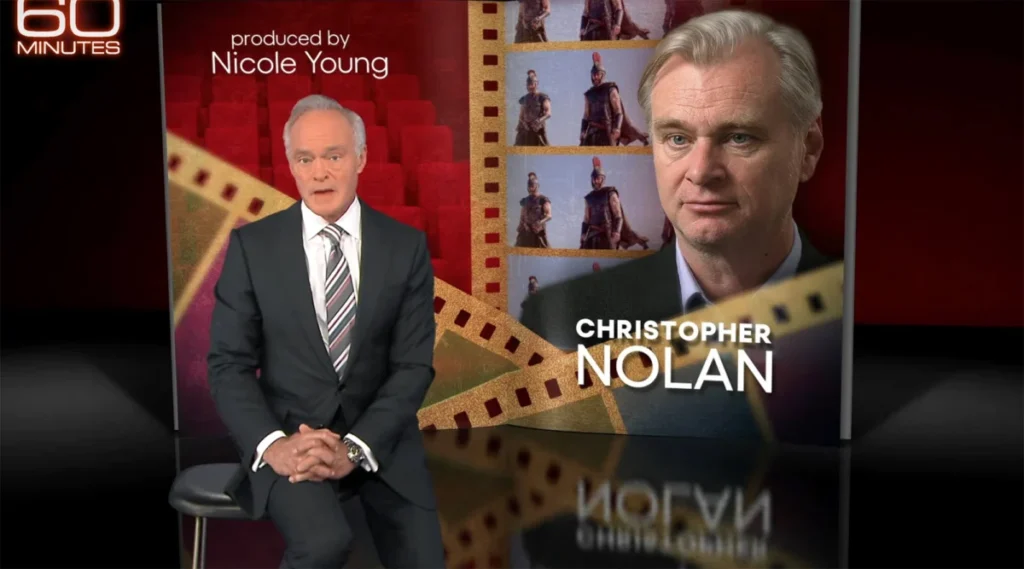

The highly anticipated cinematic adaptation of Homer’s epic, Christopher Nolan’s "The Odyssey," has taken center stage in a comprehensive feature on the venerable news program "60 Minutes." Airing on May 17, 2026, the segment offered a rare and insightful glimpse into the mind of the acclaimed filmmaker, delving into his creative process, his approach to adapting classic literature, and the ambitious undertaking of bringing the journey of Odysseus to the silver screen. This broadcast serves as a significant promotional push for the film, slated for a July 17, 2026, global release, and provides an unprecedented opportunity for audiences to connect with Nolan’s distinct directorial vision.
A Deep Dive into Nolan’s Craft
The "60 Minutes" interview, conducted as part of a broader promotional campaign for "The Odyssey," provided a platform for Nolan to articulate his philosophical underpinnings as a storyteller. He articulated a core tenet of his filmmaking approach: "When I’m writing, I’m visualizing the film as an audience member. As somebody experiencing the story. Then when I direct the story, I’m trying to take the audience there." This statement underscores Nolan’s commitment to immersive storytelling, aiming to place viewers directly within the narrative fabric of his films. The interview, which reportedly extended beyond the typical broadcast segment, allowed for a more extended exploration of his methodologies, a departure from his often-guarded public persona.
Nolan, known for his meticulous attention to detail and his tendency to maintain a degree of privacy regarding his personal life and creative endeavors, offered a candid perspective on his filmmaking choices. The "60 Minutes" team, renowned for their in-depth profiles of influential figures, managed to elicit a significant amount of information regarding his directorial philosophy and the specific challenges and inspirations behind "The Odyssey." The segment highlighted Nolan’s characteristic intellectual curiosity and his profound passion for the medium of cinema, portraying him as an individual who genuinely revels in the craft of filmmaking.
The Genesis and Vision of "The Odyssey"
"The Odyssey," directed by the Oscar-winning British filmmaker Christopher Nolan, is a monumental adaptation of Homer’s ancient Greek epic poem. The film chronicles the arduous ten-year journey of Odysseus, the legendary king of Ithaca, as he endeavors to return home following the devastating Trojan War. The narrative promises to be a visually spectacular and emotionally resonant exploration of homecoming, resilience, and the trials of the human spirit.
The film’s synopsis details Odysseus’s encounters with a pantheon of mythological challenges and beings, including the monstrous Cyclops Polyphemus, the alluring Sirens, and the formidable sorceress-goddess Circe. These legendary episodes are poised to be rendered with Nolan’s signature blend of practical effects, groundbreaking visual artistry, and a palpable sense of scale. The culmination of his arduous voyage is the long-awaited reunion with his devoted wife, Penelope, a poignant resolution that forms the emotional anchor of the epic.
Christopher Nolan, whose directorial filmography includes critically acclaimed and commercially successful films such as "Following," "Memento," "Insomnia," "Batman Begins," "The Prestige," "The Dark Knight," "Inception," "The Dark Knight Rises," "Interstellar," "Dunkirk," "Tenet," and the recent blockbuster "Oppenheimer," has penned the screenplay himself. This marks his direct interpretation and adaptation of Homer’s foundational literary work. The film’s technical artistry is further bolstered by the cinematography of Hoyte van Hoytema, a frequent Nolan collaborator, and the evocative musical score composed by Ludwig Göransson, who previously collaborated with Nolan on "Oppenheimer." The production is a joint venture by Emma Thomas and Christopher Nolan through their production company, Syncopy.

Promotional Milestones and Audience Anticipation
The "60 Minutes" interview arrives at a pivotal moment in the film’s promotional cycle. Prior to this extensive television feature, audiences have been offered glimpses of "The Odyssey" through two officially released trailers. The first trailer, unveiled in 2025, introduced the film’s ambitious scope and the central performance by Matt Damon as Odysseus. The second trailer, released in 2026, further amplified anticipation, showcasing more of the film’s mythological elements and hinting at the dramatic intensity of Odysseus’s journey.
The film is set to be distributed worldwide by Universal Pictures, with its theatrical debut scheduled for July 17, 2026. This summer release positions "The Odyssey" as a major cinematic event, poised to draw large audiences eager to experience Nolan’s unique interpretation of this timeless saga. The convergence of Nolan’s established reputation for delivering thought-provoking and visually stunning blockbusters with the inherent cultural significance of Homer’s epic has generated considerable buzz and expectation within the global film community.
Historical Context and Cinematic Precedent
Homer’s "Odyssey" is one of the cornerstones of Western literature, a narrative that has resonated with audiences for millennia. Its themes of heroism, perseverance, temptation, and the profound desire for home have been explored and reinterpreted across various art forms throughout history. The epic poem’s influence can be traced through countless literary works, theatrical productions, and, more recently, cinematic adaptations.
While numerous adaptations of the "Odyssey" have graced screens in various forms, Christopher Nolan’s approach is anticipated to bring a contemporary sensibility and his signature stylistic innovations to the material. His previous works have consistently demonstrated a capacity to re-contextualize complex narratives and deliver them with a visceral impact that appeals to both critical and popular tastes. Films like "Inception" and "Interstellar" showcase his penchant for intricate plotting and grand-scale visual storytelling, suggesting that "The Odyssey" will be no exception.
The decision to adapt such a foundational text underscores the enduring power of its themes. In an era where narratives often grapple with themes of displacement, arduous journeys, and the search for belonging, the "Odyssey" offers a timeless allegory. Nolan’s engagement with this classic tale may serve to reintroduce its profound messages to a new generation of viewers, framed through his distinctive cinematic lens.
Supporting Data and Industry Analysis
The film industry has observed a growing trend of studios investing in high-concept projects that blend established intellectual property with auteur-driven visions. "The Odyssey," as a universally recognized literary masterpiece, provides a strong foundation, while Christopher Nolan’s involvement guarantees a distinct creative signature and a significant built-in audience. Nolan’s track record of commercial success, with films like "Oppenheimer" grossing over $950 million worldwide, and "The Dark Knight" trilogy collectively earning billions, positions "The Odyssey" as a potential box office titan.
The film’s production budget, while not officially disclosed, is expected to be substantial given Nolan’s commitment to large-scale practical effects and extensive location shooting, as suggested by the epic scope of the source material. The cinematography by Hoyte van Hoytema, known for his breathtaking work on "Interstellar" and "Dunkirk," further indicates a commitment to visual grandeur. The inclusion of Ludwig Göransson for the score, following his Oscar-winning work on "Oppenheimer," signals a dedication to crafting an immersive auditory experience that complements the visual spectacle.

The casting of Matt Damon as Odysseus is a strategic choice. Damon, an Academy Award-winning actor with a diverse range of performances, brings gravitas and a relatable humanity to the role of the legendary hero. His previous collaborations with prominent directors, coupled with his established star power, lend significant weight to the film’s ensemble.
Reactions and Implications
While direct statements from Universal Pictures regarding the "60 Minutes" segment are not yet available, the network’s decision to dedicate significant airtime to Nolan and "The Odyssey" speaks volumes about the studio’s confidence in the project. Such a high-profile feature on a major news program is a clear indicator of the film’s perceived importance and its potential to be a significant cultural and commercial event.
The implications of this extensive media coverage extend beyond mere promotion. It signifies a calculated effort to position "The Odyssey" not just as another blockbuster, but as a significant artistic endeavor. By delving into Nolan’s creative process, "60 Minutes" aims to cultivate a deeper appreciation for the craft involved, potentially drawing in audiences who might be less familiar with the intricacies of filmmaking but are intrigued by Nolan’s reputation for intellectual depth and visual innovation.
The "60 Minutes" segment, by offering a more intimate look at Nolan’s approach, also serves to demystify the filmmaking process for a broad audience. His articulate explanations of his methodology, particularly his emphasis on audience experience, can foster a greater understanding and anticipation for the film’s narrative and thematic complexities. This approach is particularly relevant for an adaptation of a text as rich and layered as the "Odyssey," which has been subject to myriad interpretations.
Furthermore, the timing of this interview, coupled with the release of multiple trailers and a firm release date, indicates a meticulously planned marketing strategy. The goal is to build sustained anticipation, ensuring that "The Odyssey" remains a prominent topic of discussion leading up to its theatrical debut. The success of this strategy will be measured not only by box office receipts but also by the film’s ability to spark meaningful conversations about heroism, fate, and the enduring power of storytelling.
As July 17, 2026, draws closer, the comprehensive coverage provided by "60 Minutes" is poised to amplify the already considerable excitement surrounding Christopher Nolan’s "The Odyssey." The segment serves as a testament to the film’s ambition and its potential to be a landmark cinematic achievement, offering audiences a profound and immersive journey into one of literature’s most celebrated epics.