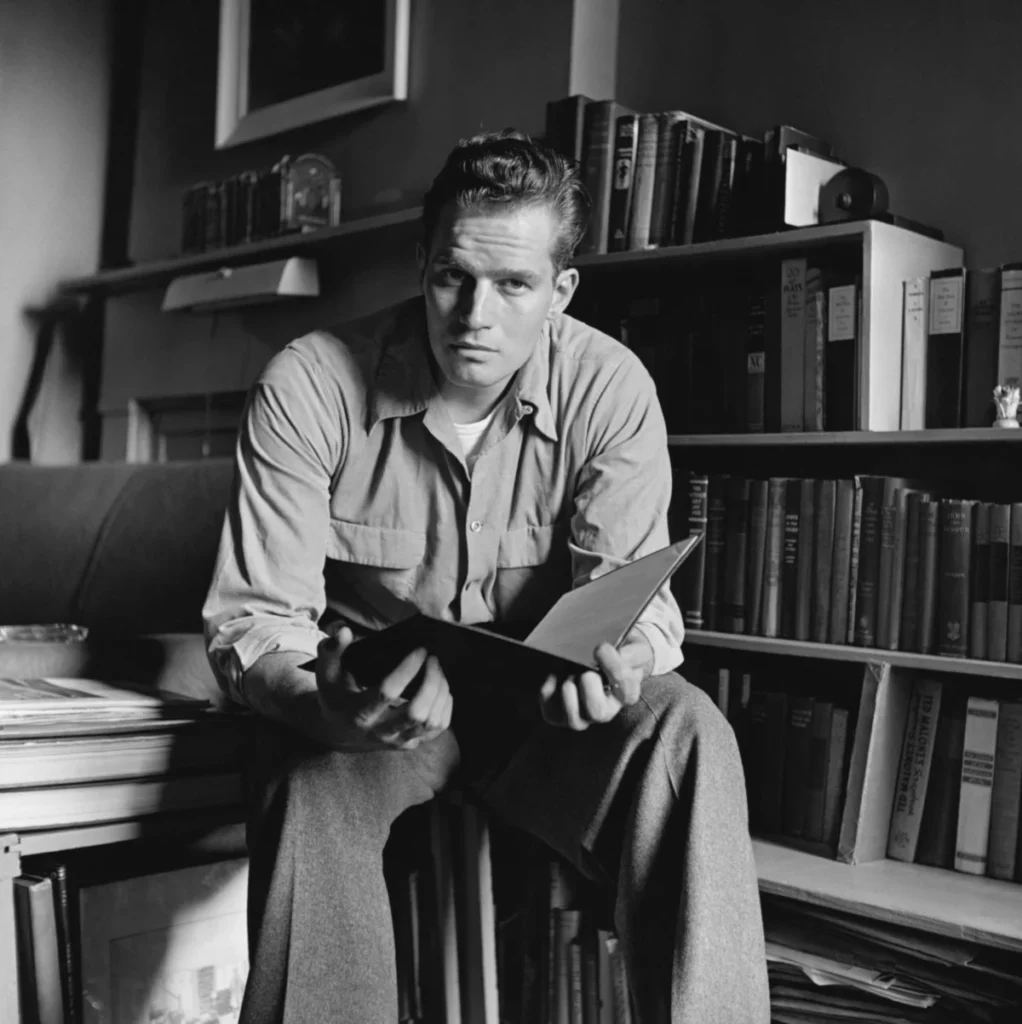

Charlton Heston remains one of the most recognizable figures in the history of cinema, a man whose physical presence and gravitas defined the Hollywood epic. From his towering portrayal of Moses in The Ten Commandments to the intense, chariot-racing rivalry of Judah Ben-Hur, Heston was the face of mid-century cinematic grandeur. Yet, for all his public acclaim and the larger-than-life characters he inhabited, Heston’s private life was anchored by a profound need for solitude and a deep-seated appreciation for the architecture of home. Throughout his storied career, the actor curated a series of residences that reflected his evolution from a struggling artist in New York City to a Hollywood legend living in a custom-built estate in the California hills.

A Life Rooted in the Great Lakes
Born in 1923 in Evanston, Illinois, John Charles Carter—later known as Charlton Heston—spent his formative years in the dense, secluded woods of Michigan. This early exposure to the quietude of nature created a lifelong psychological requirement for silence. Even as his professional life demanded he become "public property," as he famously noted in his 1995 memoir In the Arena, Heston maintained that the chaos of film sets necessitated a retreat to the private sphere. For Heston, the home was not merely a status symbol but a necessary fortress of solitude where he could disconnect from the performative demands of his craft.
The New York Years: Necessity and Ingenuity
In 1944, Heston married actress Lydia Clarke, marking the beginning of a partnership that would last until his passing in 2008. Their early life together was a testament to the classic "struggling actor" narrative. Settling in Hell’s Kitchen, New York City, in the early 1950s, the couple occupied a nineteenth-century railroad flat that stood in stark contrast to the opulence of the film sets he would later dominate.

The apartment was a masterclass in urban frugality. Renting for a mere $30 a month, the space lacked central heating, forcing the couple to rely on the residual warmth of their gas oven during the bitter Manhattan winters. Despite the cramped quarters and the presence of uninvited urban pests, Heston found the experience formative. He took an active hand in shaping his environment, demonstrating a pragmatic craftsmanship by building his own bed frame, closet, and living room shelving. This period of his life, characterized by secondhand furniture and Salvation Army acquisitions, underscored a sense of self-reliance that would persist even after he achieved immense financial success.
The Breakthrough and the Transition
The trajectory of Heston’s living arrangements shifted in tandem with his professional ascent. Following his breakout performance as Brad Braden in Cecil B. DeMille’s 1952 film The Greatest Show on Earth, the Heston family’s standard of living rose, though they remained tethered to the city. By the late 1950s, they had moved to a penthouse apartment near the United Nations in Manhattan. This residence offered a significant upgrade: a fireplace, 20-foot ceilings, and views of the East River, all for a relatively modest $480 monthly rent.

During this era, the Heston family expanded. Their son, Fraser Clarke Heston, was born in 1955. In a quirk of Hollywood history, Fraser’s infancy coincided with his father’s work on The Ten Commandments. Director Cecil B. DeMille, learning of the pregnancy, effectively cast the newborn Fraser as the infant Moses, creating a cinematic legacy that spanned generations. By 1961, the family grew again with the adoption of their daughter, Holly Ann Heston. These family milestones necessitated a departure from the vertical living of New York City in favor of the expansive, natural terrain Heston craved.
The Coldwater Canyon Estate: A Legacy of Design
As filming concluded on the 1958 Western The Big Country, Heston recognized that his family’s future required space, specifically the kind of sprawling, wooded environment he remembered from his Michigan youth. He discovered a three-acre ridge in Coldwater Canyon, just seven minutes from the Beverly Hills Hotel. Captivated by the 800 acres of surrounding wilderness, he purchased the land immediately.

The resulting residence, designed by architect Bill Beckett, became famously known as "the house that Ben-Hur built." The construction process was meticulously documented, with Beckett even spending nights on the property to study the way sunlight interacted with the topography. The estate was a mid-century architectural marvel, featuring a multi-level layout that included four bedrooms, staff quarters, a two-story library, a professional-grade screening room, and a photography studio. The grounds were equally ambitious, boasting a swimming pool and tennis court, yet the house remained fundamentally focused on providing the privacy Heston deemed essential.
Implications of the "Ridge" Lifestyle
For Heston, the Beverly Hills home was the ultimate instrument of his career. It allowed him to engage with the global film industry while remaining physically isolated from its pressures. In his memoir, he highlighted the ability to conduct satellite interviews with international media from his own library, reinforcing the idea that the home was an efficient, self-contained unit of productivity.

This desire for autonomy was not merely about comfort; it was about professional longevity. The financial demands of maintaining such a significant property served as a catalyst for his relentless work ethic. As he noted, the responsibility of the house and the needs of his growing family motivated him to read scripts with a critical eye, ensuring that his career choices provided the security required to sustain the lifestyle he had built for his children.
Chronology of a Changing Property
The residence at Coldwater Canyon remained the Heston family’s anchor for nearly five decades. Following Charlton Heston’s death in 2008 and the eventual passing of Lydia Clarke Heston in 2018, the estate entered a period of transition in the real estate market.

- 2015: The family listed the property for $12.25 million, an emotional decision described by Fraser Heston as a "difficult" but necessary step in moving forward.
- 2020: After being acquired by French director Luc Besson, the estate returned to the market with an asking price of $14.9 million, reflecting both its historical significance and the volatility of the luxury Los Angeles real estate market.
- 2025: The property was listed again by an undisclosed owner for $10.5 million, highlighting the shifts in valuation and demand for mid-century estates in the modern era.
Broader Impact: The Star as Homeowner
The evolution of Charlton Heston’s residences serves as a microcosm of the 20th-century American success story. His journey from a $30-a-month walk-up to a $12 million custom estate mirrors the broader democratization of wealth that defined his generation, yet it also highlights the personal cost of fame. Heston’s insistence on "the ridge" as a sanctuary suggests that the higher a public figure climbs, the more valuable, and perhaps more elusive, the concept of home becomes.
The architecture of his Beverly Hills home, preserved through various sales and market fluctuations, continues to be analyzed by historians of design and film alike. It remains a physical manifestation of a man who, despite portraying deities and warriors on the silver screen, found his true center in the quiet contemplation of his own living space. As the property continues to change hands, it remains a testament to the era of the Hollywood titan—a period when the homes of stars were as carefully crafted as the films that made them famous. Whether viewed as a piece of real estate or a relic of cinema history, Heston’s long-standing home stands as a durable monument to his commitment to both his family and his need for a private, stable foundation in an often unstable industry.