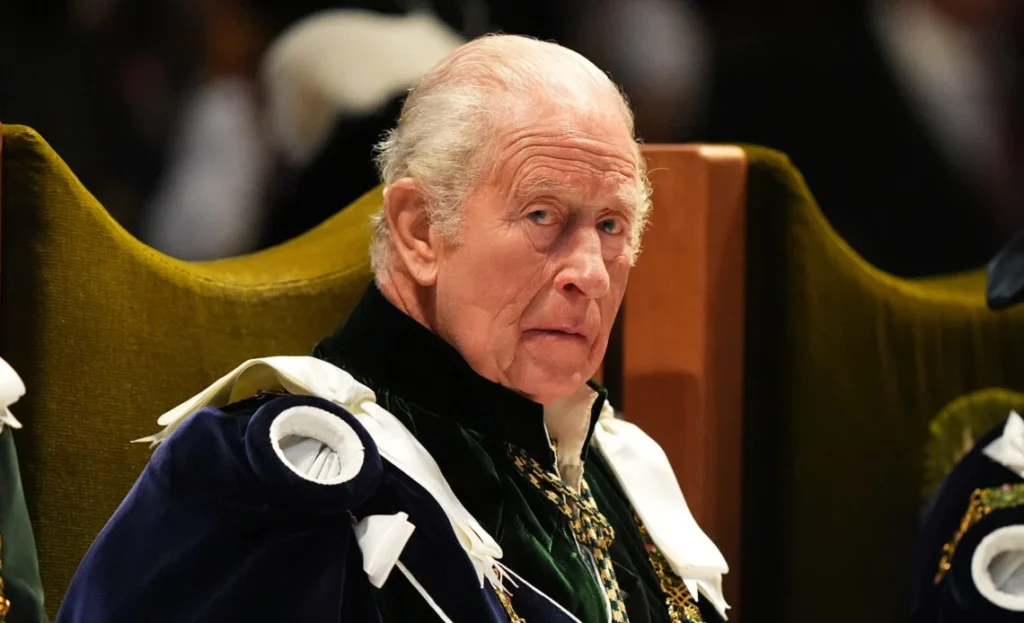

The British monarch has secured a significant legal victory in Australia following a unanimous decision by a three-judge panel at the Court of Appeal in Victoria, which formally rejected an ongoing effort to bring a private criminal prosecution against him. The ruling marks the third consecutive legal setback for Indigenous activist and elder Robbie Thorpe, who has spent years attempting to hold the crown accountable for historical and systemic injustices faced by Indigenous Australians. Despite this latest judicial rejection, the case has ignited broader conversations regarding constitutional immunity, the historical grievances of Australia’s First Nations peoples, and the complex pathways of international human rights law.
The Genesis of the Legal Challenge and Chronology of Events
The legal confrontation initiated by Mr. Thorpe began in earnest in 2023, though its roots stretch deep into centuries of colonial history. Mr. Thorpe, a 68-year-old elder of the Krautatungalung people, lodged complaints and legal applications seeking to prosecute the King, alongside various Australian government institutions. The central thesis of Mr. Thorpe’s legal challenge argued that the monarch, as Australia’s head of state, bears institutional responsibility for genocide through entrenched legal, social, and economic systems that have historically disadvantaged Indigenous Australians.
The chronology of the case reflects a persistent effort by Mr. Thorpe to breach traditional legal barriers:
- 2023: Mr. Thorpe initiates preliminary legal filings in Victoria seeking to bring a private prosecution against the King.
- Subsequent Months: Lower courts and initial magistrates review the applications, ultimately finding them legally unsustainable, leading to the first dismissal.
- Interim Appeals: Mr. Thorpe escalates the matter through judicial review processes, culminating in a hearing before the Court of Appeal in Victoria.
- Current Ruling: A panel of three appellate judges definitively dismisses the latest application, leaving the plaintiff with very limited domestic judicial avenues.
Constitutional Protections and Sovereign Immunity
At the heart of the judicial decisions lies the formidable doctrine of sovereign immunity. As Australia’s head of state and the sovereign of the United Kingdom, the King benefits from extensive legal protections shielding him from both criminal and civil liability.
Constitutional law experts have extensively debated how these traditional British constitutional protections apply within the Australian federal framework. Professor Anne Twomey of the University of Sydney noted during media analysis of the proceedings that while such absolute immunities are codified and well-understood in the United Kingdom, their precise transference to the Australian constitutional monarchy has rarely been tested directly in domestic courts. Nevertheless, the prevailing view among legal scholars is that the sovereign enjoys robust structural protections that make direct criminal prosecution inside Australian jurisdiction legally untenable.
Commentators across the legal spectrum have consistently pointed out that prosecuting an individual for systemic historical outcomes detached from direct, personal criminal intent fundamentally conflicts with established principles of criminal jurisprudence. This legal reality formed the cornerstone of the appellate judges’ reasoning, echoing broader public sentiment that questioned how such a case managed to traverse initial court filing systems.
Public Reaction and Digital Discourse
The protracted legal battle has not occurred in a vacuum; it has generated widespread public discourse across traditional media channels and digital platforms, particularly on social media networks such as X. Following the Court of Appeal’s ruling, a wave of public commentary emerged, overwhelmingly expressing support for the King and echoing the legal consensus regarding sovereign immunity.
Many social media users voiced bewilderment that the case had been permitted to reach an appellate court level. One widely shared comment highlighted the explicit constitutional separation, stating that the monarch of Australia cannot be prosecuted under domestic laws in this manner. Other commentators emphasized the core tenets of criminal law, stressing that personal liability cannot be assigned to an individual without direct involvement in the alleged offenses.
Conversely, supporters of Mr. Thorpe and various Indigenous rights advocates have viewed the proceedings through a different lens. For many within First Nations communities, the court actions are not merely about securing a criminal conviction against a single individual, but rather about utilizing the judicial system as a platform to draw international attention to ongoing systemic disadvantages, land rights disputes, and the lingering generational trauma stemming from colonization.
Future Legal Horizons: The High Court of Australia
Undeterred by the consecutive dismissals within the Victorian judicial system, Mr. Thorpe has indicated that his legal team is actively considering the next steps. The most immediate domestic recourse involves seeking special leave to appeal the decision before the High Court of Australia, the nation’s highest judicial authority.
However, constitutional analysts caution that securing a hearing before the High Court is an exceptionally difficult hurdle. The High Court operates under a strict discretionary leave system, accepting only a small fraction of the applications petitioned to it each year. To gain traction, an applicant must demonstrate a question of profound public importance, a significant constitutional ambiguity, or an apparent miscarriage of justice. Given the deeply established precedents surrounding sovereign immunity, legal observers view an appeal to the High Court as an uphill battle with a low statistical likelihood of success.
International Avenues: The International Criminal Court
Recognizing the steep domestic barriers within Australian courts, Mr. Thorpe has publicly stated his intention to pivot toward international tribunals, specifically targeting the International Criminal Court (ICC) based in The Hague. Mr. Thorpe asserted that bringing the matter before the ICC would expose Australia’s historical and contemporary treatment of Indigenous populations on a global stage.
However, international law experts have clarified the stringent procedural rules governing the ICC, which differ significantly from domestic legal systems. Professor Don Rothwell of the Australian National University has explained that individual citizens cannot unilaterally initiate criminal prosecutions or trials before the ICC.
Instead, the ICC operates under a framework where individuals or advocacy groups can submit evidence, dossiers, and communications to the Office of the Prosecutor. Once such materials are submitted, it falls entirely within the discretion of the prosecutor’s office to evaluate whether the threshold for war crimes, crimes against humanity, or genocide has been met, and whether an official preliminary examination or investigation is warranted.
While the ICC does not recognize traditional head-of-state immunity—meaning leaders cannot automatically hide behind their official titles to evade international accountability—the procedural mechanism requires navigating a rigorous filtering process managed by international prosecutors, rather than a direct filing by a private citizen.
Broader Implications for the Monarchy and Reconciliation in Australia
The dismissal of the private prosecution and the subsequent fallout highlight the delicate and evolving nature of the constitutional relationship between the Australian nation, its Indigenous peoples, and the British Crown.
As Australia continues to navigate its national identity, questions regarding the republic debate, constitutional recognition of First Nations peoples, and truth-telling processes remain prominent. While the legal avenues pursued by Mr. Thorpe have met insurmountable procedural and constitutional walls, the persistence of these challenges serves as a powerful reminder of the unresolved historical grievances that continue to shape modern Australian sociopolitical discourse.
For now, the definitive rulings of the Victorian courts have reaffirmed the entrenched legal immunities of the Crown within domestic jurisdictions. Yet, the determination of Indigenous elders to pursue accountability—whether through higher domestic appeals or international human rights forums—ensures that the underlying dialogue surrounding historical justice, institutional responsibility, and constitutional reform will remain firmly in the public spotlight.