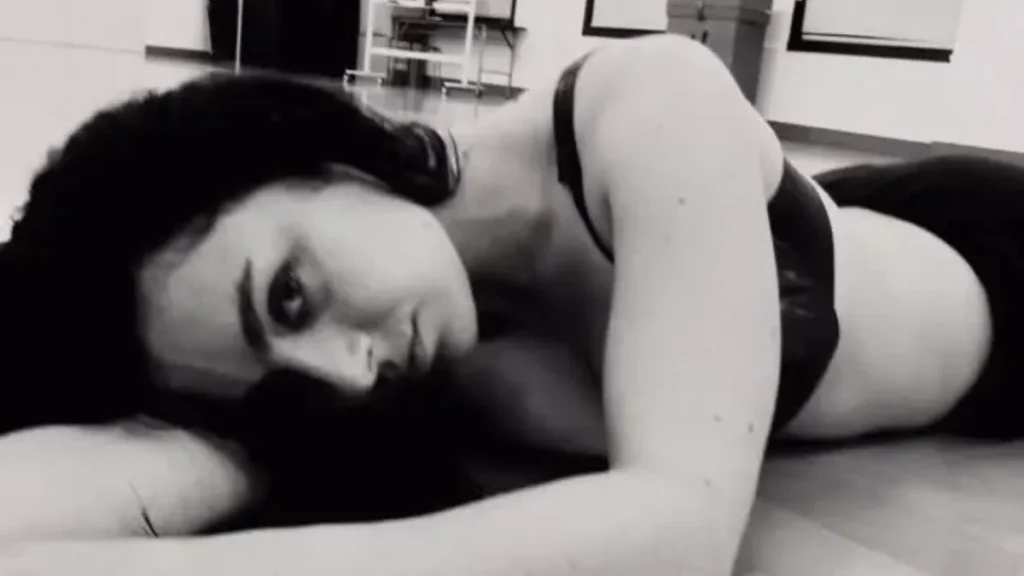

Following the recent unveiling of her aggressive new track "Rock Music" on Friday, avant-pop provocateur Charli XCX has swiftly shifted gears, releasing its B-side, "I Keep Thinking About You Every Single Day And Night." This immediate pivot underscores the artist’s unpredictable approach to her latest musical era, which appears to be characterized by deliberate stylistic contrasts and provocative lyrical content designed to stir conversation and challenge listener expectations. The rapid succession of releases, coupled with the stark thematic and sonic differences, suggests a calculated strategy to maintain momentum and amplify the chaotic energy she has cultivated throughout her career.
The Sonic Pivot: From Pop-Punk Aggression to ’90s Club Nostalgia
The initial offering, "Rock Music," signaled a foray into a raw, rage-baiting pop-punk aesthetic, a departure that hinted at a potential new direction for the artist whose previous album, Brat, solidified her status as a mainstream experimental pop icon. That track, with its abrasive textures and confrontational delivery, led many to anticipate a sustained period of high-octane, genre-bending aggression. However, "I Keep Thinking About You Every Single Day And Night" immediately subverts this expectation. Musically, the B-side sees Charli XCX returning to a more understated, ’90s-adjacent club sound. It features a pulsating beat, shimmering synths, and a hypnotic groove that recalls the golden age of house and techno, offering a stark sonic counterpoint to the guitar-driven fury of "Rock Music." This abrupt stylistic shift is a hallmark of Charli XCX’s artistry, demonstrating her refusal to be confined by genre labels and her consistent desire to explore the diverse facets of electronic and pop music. The juxtaposition of these two tracks, released within days of each other, not only showcases her versatility but also establishes a dynamic tension that defines this new chapter.
Lyrical Provocations: Unpacking the Queer-Coded Rage
While the musical landscape of "I Keep Thinking About You Every Single Day And Night" leans into a more refined, atmospheric territory, the lyrical content remains firmly entrenched in the "rage-inducing deep end" previously explored. Charli XCX continues to engage in provocative, often meta-commentary, employing lines designed to ignite discussion and perhaps even discomfort. One notable lyric, "Now I’m wondering if I maybe could be gay/But come on, look at me, I’m probably not," immediately draws attention. This self-reflexive and seemingly contradictory statement plays with notions of identity, perception, and performance, inviting listeners to question the sincerity of the speaker and the boundaries of public self-declaration.
Another equally pointed line appears later in the track: "I’ve always wondered if you were actually gay/Or if that’s something you just say for your career." This direct and confrontational query, aimed at an unspecified "you," escalates the lyrical intensity. It delves into the fraught territory of authenticity, queer identity, and its commodification within the entertainment industry. The choice to include such lines is not accidental; it aligns with Charli XCX’s established persona as an artist who uses her platform to dissect and satirize the nuances of celebrity, pop culture, and social dynamics. These lyrics, whether interpreted as genuine introspection, cynical observation, or a deliberate provocation, are undeniably crafted to resonate and provoke a strong reaction from her audience and the wider cultural discourse.
The Inter-Pop Beef: Charli XCX, Taylor Swift, and the Art of the Diss Track
The pointed nature of the lyrics in "I Keep Thinking About You Every Single Day And Night" has immediately led to speculation regarding its target, with many observers drawing connections to Taylor Swift. This speculation is not unfounded, as the two artists have a documented history of public exchanges, notably a series of "diss" tracks exchanged between 2024 and 2025. This period marked a significant moment in contemporary pop culture, illustrating how artistic expression can be utilized as a medium for inter-artist commentary and rivalry.
The perceived beef began with Charli XCX’s track "Sympathy is a knife," featured on her critically acclaimed 2024 album, Brat. Brat itself was lauded for its raw, unfiltered exploration of identity, ambition, and the pressures of celebrity, often delivered with a biting wit and an experimental edge. "Sympathy is a knife" was widely interpreted as a direct jab at Swift, utilizing thinly veiled allusions and a confrontational tone to critique perceived industry practices or personal interactions.
Taylor Swift, known for her masterful lyrical storytelling and strategic responses, did not remain silent. In 2025, she released "Actually Romantic" from her album, The Life of a Showgirl. While The Life of a Showgirl garnered attention for its introspective look at the complexities of fame and public image, "Actually Romantic" stood out as a clear retort to Charli XCX. Swift’s track, with its own set of coded messages and lyrical barbs, offered a counter-narrative, often leveraging her signature blend of vulnerability and sharp observation to address the criticisms leveled against her. This back-and-forth demonstrated a sophisticated form of artistic dialogue, where each artist utilized their respective platforms to engage in a public, yet highly stylized, commentary on the other.
The inclusion of lines like "I’ve always wondered if you were actually gay/Or if that’s something you just say for your career" in Charli XCX’s new song directly taps into this established narrative. Given the history, it is plausible that these lyrics are another layer in this ongoing, albeit artistic, conversation between the two pop titans. Whether a direct accusation or a broader commentary on the performative aspects of celebrity identity, the reference reignites the public’s fascination with the dynamics between major artists and the potential for their art to serve as a battleground for personal and professional grievances. The precise target, however, remains open to listener interpretation, a deliberate choice that fuels engagement and speculation.
Queer-Baiting or Meta-Commentary? Deconstructing Charli XCX’s Intent
The question of whether Charli XCX’s use of queer-coded language constitutes "queer-colored ragebaiting" is a critical point of discussion. On a superficial level, using potentially loaded questions about sexual identity for perceived shock value or to fuel a celebrity feud could be seen as problematic. However, understanding Charli XCX’s artistic modus operandi requires a deeper look beyond surface-level interpretations.
Charli XCX has consistently engaged with themes of identity, sexuality, and the fluidity of modern existence throughout her career. Her music often blurs lines, challenges conventional norms, and embraces ambiguity. The "rage-baiting" quality of her recent lyrics, particularly those touching on queer identity, could be interpreted not as an attempt to genuinely exploit or offend, but rather as a form of meta-commentary on the very nature of public discourse and celebrity. In an era where online identities are constantly scrutinized and authenticity is both demanded and doubted, Charli XCX appears to be deliberately playing with these expectations.
Her artistic practice often involves pushing boundaries and exploring the uncomfortable, frequently with an underlying layer of irony or satire. The lines about questioning one’s own sexuality or the authenticity of another’s could be seen as a critique of how sexual identity is often performative, scrutinized, or even commodified within the public eye. This approach aligns with her broader aesthetic, which often celebrates the chaotic, the contradictory, and the unapologetically "bratty" aspects of pop culture. Rather than a genuine attempt to "bait" a specific demographic, it can be argued that she is holding a mirror up to the audience’s own eagerness to categorize, label, and judge, particularly concerning complex issues of identity.
The Charli XCX Playbook: Chaos as a Cohesive Strategy
The entire rollout strategy for "Rock Music" and "I Keep Thinking About You Every Single Day And Night" further solidifies the notion that Charli XCX operates within a carefully constructed framework of controlled chaos. The immediate release of a B-side that starkly contrasts its A-side, coupled with the provocative lyrical content, suggests a deliberate effort to keep listeners on their toes and conversations buzzing. This approach is not haphazard; it’s a testament to her sophisticated understanding of how to leverage modern media and fan engagement.
Her instruction to fans to "rip it ourselves" from her B-sides Instagram account for "I Keep Thinking About You Every Single Day And Night" is a prime example of this strategy. In an industry increasingly dominated by meticulously planned album cycles and highly curated releases, Charli XCX embraces a more anarchic, direct-to-fan approach. This method not only fosters a deeper sense of intimacy and exclusivity with her fanbase but also bypasses traditional gatekeepers, allowing her to control the narrative and distribution in a way that feels authentic and immediate. It echoes the early days of file-sharing and mixtape culture, albeit recontextualized for the social media age. This anti-establishment stance, where she effectively tells her audience to "figure it out" or "do it yourself," aligns perfectly with the "none of it’s really all that deep" sentiment often attributed to her work.
This modus operandi suggests that much of the perceived controversy and the rapid-fire releases are, as the original article posits, "all mostly for the LOLZ." Charli XCX has cultivated a persona that thrives on mischief, meta-commentary, and a playful subversion of pop norms. She understands that in the current media landscape, engagement often stems from conversation, debate, and even mild outrage. By presenting deliberately ambiguous or provocative material, she ensures that she remains a central figure in pop cultural discourse, not through manufactured sincerity, but through an authentic embrace of artistic freedom and irreverence. For Charli XCX, the "beefs," the pivots, and the provocative lyrics are not distractions; they are integral components of a larger artistic vision that prioritizes amusement, challenge, and the continuous evolution of what pop music can be.
Visual Companion: The "I Keep Thinking…" Music Video
Accompanying the release of "I Keep Thinking About You Every Single Day And Night" is a black-and-white video directed by Aidan Zamiri. This visual component is described as "equal parts silly and sensuous," providing a compelling visual narrative that reinforces the song’s themes and Charli XCX’s artistic intentions. The choice of black-and-white cinematography often lends itself to a timeless, artistic, and sometimes stark aesthetic, which can heighten the impact of both the "silly" and "sensuous" elements.
The "silly" aspect likely manifests through playful visuals, perhaps featuring Charli XCX in unexpected scenarios or displaying her characteristic irreverence. This could include exaggerated expressions, comedic timing, or a general air of lighthearted rebellion that cuts through any potential seriousness of the lyrical content. Conversely, the "sensuous" elements would likely emphasize mood, atmosphere, and a more intimate, perhaps provocative, portrayal of the artist. This duality in the video’s aesthetic mirrors the song’s own contrasts – the understated club music against the fiery lyrics, the vulnerability against the bravado.
Zamiri’s direction, in collaboration with Charli XCX’s vision, often results in visually striking and conceptually rich pieces that push the boundaries of traditional music videos. The video for "I Keep Thinking About You Every Single Day And Night" serves as a crucial interpretative lens, offering further clues into the artist’s mindset. It acts as a visual manifestation of her argument, providing tangible proof that her latest era is not just musically adventurous but also visually bold, unapologetically bratty, and ultimately, designed to be deliciously fun. It allows her to convey layers of meaning that might be missed in the audio alone, solidifying her position as a multi-dimensional artist who controls every aspect of her narrative.
Broader Implications and the Future of Pop
Charli XCX’s latest moves carry significant implications for the landscape of contemporary pop music. By deliberately embracing chaos, blurring genre lines, and engaging in meta-commentary, she continues to challenge the established norms of pop stardom. Her approach suggests that in an increasingly saturated market, authenticity, even if it’s the authenticity of a meticulously crafted persona, resonates powerfully. She demonstrates that pop can be both deeply personal and universally appealing, while simultaneously being a vehicle for critical engagement with culture.
Her willingness to discuss potentially contentious topics, such as queer identity and industry authenticity, within the context of a pop song, pushes the boundaries of what mainstream artists are expected to address. This contributes to a broader conversation within the music industry about the role of artists as cultural commentators and the responsibility that comes with such a platform. Furthermore, her unconventional release strategies highlight the evolving relationship between artists and their audience in the digital age. By leveraging social media for direct interaction and distribution, she empowers her fanbase and cultivates a loyal community that feels invested in her artistic journey.
The Charli XCX model – one of artistic fluidity, strategic provocation, and direct fan engagement – could serve as a blueprint for future artists seeking to carve out unique spaces in a dynamic industry. It champions the idea that pop music should not merely be consumable but also thought-provoking, challenging, and, above all, genuinely entertaining. Her current era, characterized by this blend of audacity and artistry, reinforces her position not just as a pop star, but as a significant cultural force continually redefining the parameters of popular music.
Conclusion
With the release of "I Keep Thinking About You Every Single Day And Night" immediately following "Rock Music," Charli XCX has not merely launched a new musical era; she has declared it an era of calculated unpredictability and unapologetic self-expression. The rapid sonic pivot, coupled with intensely provocative lyrics that playfully engage with celebrity feuds and identity politics, cements her status as a master of modern pop provocation. This latest offering, complete with its "silly and sensuous" visual accompaniment, is a powerful statement. It solidifies the argument that Charli XCX’s current artistic phase is her most audacious yet, a testament to her unique ability to blend high-concept artistry with accessible, often humorous, pop sensibilities. For those seeking depth, daring, and sheer amusement in their music, Charli XCX’s latest output confirms that she is operating at the peak of her creative, bratty, and deliciously fun powers.