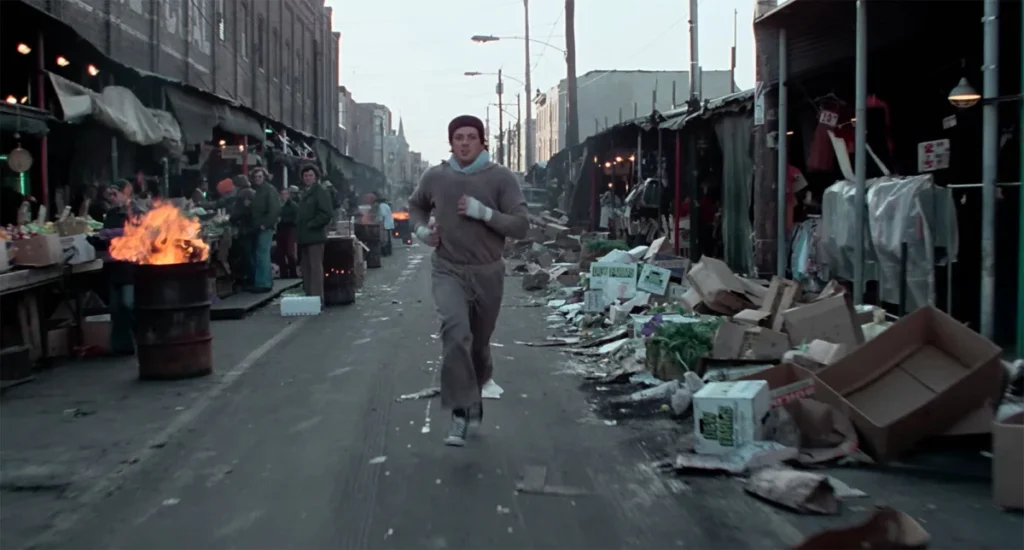

Half a century after Sylvester Stallone first tied his leather boots and jogged through the gritty streets of Philadelphia, the cinematic masterpiece that defined an era is returning to the big screen. Fathom Entertainment has officially announced a nationwide theatrical re-release of John G. Avildsen’s 1976 classic Rocky, complete with a stunning 4K restoration to celebrate its golden jubilee. To mark the milestone, a fresh series of commemorative trailers has been released, reminding audiences of the iconic underdog story that captured the global imagination.
The special engagement is scheduled to run in theaters from November 7th through November 11th, 2026. This cinematic event arrives concurrently with a wave of renewed cultural interest in the franchise, which includes the upcoming biographical drama I Play Rocky, detailing the tumultuous behind-the-scenes creation of the original film and Stallone’s relentless crusade to get his script produced.
Main Facts and the Theatrical Return
The 50th-anniversary screenings offer modern moviegoers a rare opportunity to experience the Academy Award-winning film as it was originally intended: on the big screen, bolstered by contemporary projection and audio standards. The newly minted 4K restoration breathes fresh life into James Crabe’s gritty cinematography, sharpening the contrast between the cold industrial bleakness of 1970s Philadelphia and the electric, sweat-soaked atmosphere of the final championship bout.
Fathom Entertainment’s limited engagement is expected to draw substantial crowds, appealing both to aging cinephiles who saw the film during its initial run in the winter of 1976 and to younger generations discovering the definitive sports drama for the first time. The official synopsis released for the re-release highlights the timeless hook that launched a multi-billion-dollar franchise:
"Struggling Philadelphia boxer Rocky Balboa has a chance to become a somebody when heavyweight champion Apollo Creed comes up with the Bicentennial gimmick of fighting a sure-ringer and easily winning the bout himself. But someone forgot to tell Rocky, who trains earnestly. And in the climactic fight sequence, the ‘Italian Stallion’ gets his wish: to go the distance… against all the odds!"

Chronology and Production History
The journey of Rocky from an unproduced spec script to a permanent fixture in cinematic history is one of Hollywood’s most legendary anecdotes. In 1975, Sylvester Stallone was a struggling, virtually unknown actor living in New York City with meager prospects and just $106 in his bank account. Inspired by the March 1975 heavyweight championship bout between Muhammad Ali and underdog Chuck Wepner—in which Wepner managed to knock Ali down in the ninth round and last nearly the entire fifteen rounds—Stallone wrote the screenplay for Rocky in just three and a half days.
Despite significant interest from producers Irwin Winkler and Robert Chartoff, who offered substantial sums for the screenplay, Stallone refused to sell unless he was cast in the lead role. United Artists, wary of gambling a significant budget on an unproven leading man, ultimately agreed to a remarkably modest budget of approximately $1.1 million.
Principal photography commenced in January 1976 and wrapped in twenty-eight days. Filming on a shoestring budget forced the production to rely heavily on natural lighting, handheld cameras, and impromptu locations across Philadelphia—such as the historic Italian Market and the steps of the Philadelphia Museum of Art, which would permanently enter the cultural lexicon as the "Rocky Steps."
Box Office Phenomenon and Critical Acclaim
Upon its theatrical release in December 1976, Rocky far exceeded industry expectations, transforming from a risky independent-style investment into a monumental commercial juggernaut. The film grossed an estimated $225 million worldwide during its initial theatrical run, making it the highest-grossing film of 1976 in the United States and Canada. Adjusted for inflation, its financial footprint rivals many of the modern era’s highest-earning blockbusters.
The critical reception mirrored its commercial triumphs. At the 49th Academy Awards held in March 1977, Rocky received ten nominations across nine categories. It ultimately secured three major Oscars: Best Picture, Best Director for John G. Avildsen, and Best Editing for Richard Halsey and Scott Conrad. Sylvester Stallone earned dual nominations for Best Actor and Best Original Screenplay, placing him in an elite class of artists alongside Charlie Chaplin and Orson Welles, who had previously achieved the feat of being nominated for both acting and writing in a single film.
Supporting Data and Cast Dynamics
The enduring legacy of Rocky is inextricably linked to its iconic ensemble cast, whose chemistry grounded the high-stakes sports narrative in authentic human emotion.

- Sylvester Stallone starred as Rocky Balboa, delivering a breakout performance characterized by raw vulnerability, comedic timing, and physical dedication.
- Carl Weathers portrayed Apollo Creed, blending charismatic showmanship with formidable athletic presence, creating one of cinema’s most complex and enduring antagonists-turned-allies.
- Talia Shire delivered a profoundly restrained and memorable performance as Adrian Pennino, the shy pet-store clerk who becomes Rocky’s emotional anchor.
- Burt Young brought a chaotic, flawed humanity to Paulie Pennino, Adrian’s volatile brother.
- Burgess Meredith provided the paternal grit and tough-love wisdom as Mickey Goldmill, Rocky’s gravel-voiced trainer.
Directionally, John G. Avildsen—who stepped in after several other directors were considered—infused the movie with a documentary-style realism that elevated the material above standard sports melodrama. Bill Conti’s iconic musical score, anchored by the triumphant brass anthem "Gonna Fly Now," provided an auditory backbone that remains instantly recognizable worldwide.
Industry Implications and Cultural Impact
The 50th-anniversary re-release of Rocky arrives at a time when Hollywood increasingly relies on nostalgia and intellectual property re-launches. However, unlike contemporary franchise extensions or digital reboots, the return of the original Rocky serves as a testament to the enduring power of practical filmmaking, original storytelling, and character-driven drama.
Film historians and analysts note that the enduring appeal of the Rocky franchise—which subsequently spawned five direct sequels (Rocky II, III, IV, V, Rocky Balboa) and three spin-off films in the Creed series—stems entirely from the emotional equity established in the 1976 original. The archetype of the underdog who refuses to surrender in the face of insurmountable odds transcends cultural and generational boundaries, ensuring that Balboa’s mantra of "going the distance" continues to resonate with new audiences fifty years later.
Tickets and showtime details for the special 50th-anniversary screenings, running from November 7th through November 11th, 2026, are available directly through the official Fathom Entertainment portal and participating theater box offices nationwide.