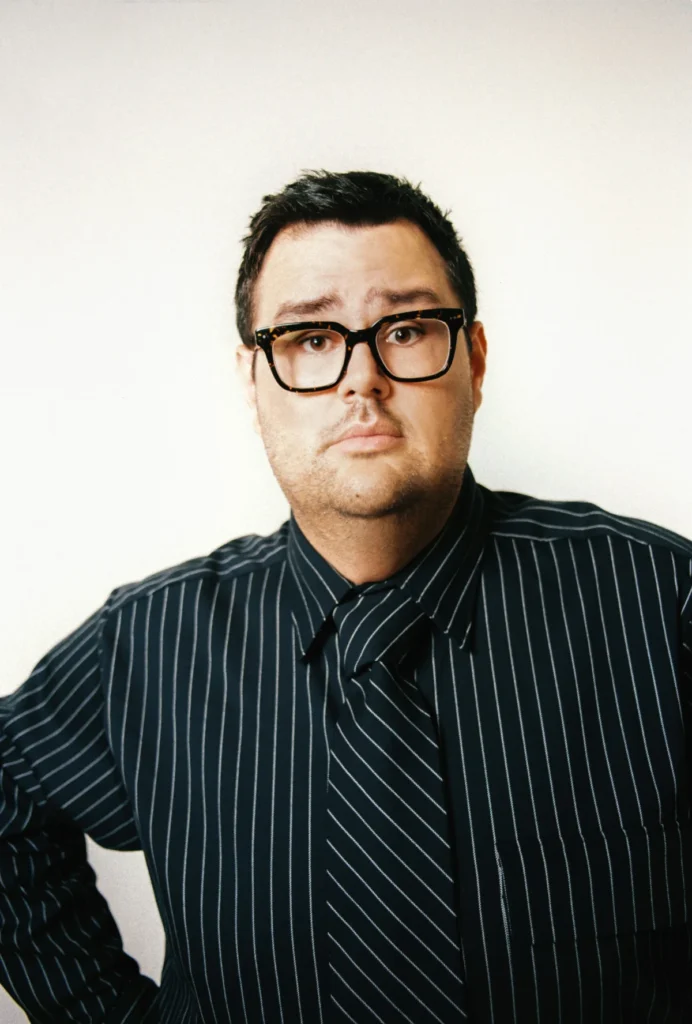

Comedian, writer, and rising actor Caleb Hearon is taking a profound leap forward in his career with the indie feature film Trash Mountain, heading to the Toronto International Film Festival (TIFF). Co-written by Hearon and directed by independent cinema veteran Kris Rey, the film is Hearon’s most vulnerable and personal project to date, translating the surreal, heavy logistics of grief and the idiosyncratic realities of growing up queer in rural America into a narrative feature.
The film centers on Gavin, a gay man living in Chicago who is abruptly summoned back to his small Missouri hometown by his half-sister, played by Zooey Deschanel. Following the death of their estranged, hoarding father, the siblings are forced to confront an overwhelming mountain of physical clutter and deep-seated emotional baggage. The storyline mirrors Hearon’s own life events, bridging a gap between trauma and comedy that has long defined his distinct artistic voice.
Main Facts and Narrative Premise
Trash Mountain explores the messy, unglamorous aftermath of a loved one’s passing—a universal human experience rarely captured with nuance in mainstream media. When Gavin and Abbi meet at their late father’s estate, they must navigate a maze of bureaucratic hurdles, local eccentricities, and unresolved family dynamics.
Hearon, who grew up in a rural Missouri town with a population of under 10,000, drew heavily from his own upbringing. Growing up queer in an insular environment provided him with lingering psychological scars, but it also forged the resilient, deadpan sense of humor that propelled him into the national comedy spotlight.
In the film, Zooey Deschanel portrays the grounded yet overwhelmed half-sister, delivering a dynamic that balances heartbreak with comedic relief. The sibling relationship serves as the emotional anchor of the movie, illustrating how shared history can help individuals survive life’s most absurd and painful moments.
Chronology and Development of the Project
The genesis of Trash Mountain dates back several years, following the unexpected death of Hearon’s own father. At the time, Hearon was working in a Los Angeles writers’ room, suddenly thrust into the arduous logistics of sorting through paperwork, cleaning a home, and managing end-of-life bureaucracy while processing complex grief.
"We had a really complicated relationship—but a beautiful one," Hearon reflects on his father. "I feel lucky that we got to a really good place before he passed."
As a cathartic writing exercise, Hearon began drafting a screenplay about the experience, never anticipating that the script would materialize into a feature film. However, after sharing the draft with established filmmaker friends Colin Trevorrow and Lilly Wachowski, the project gained sudden momentum. Both Trevorrow and Wachowski signed on as producers, initiating a turbulent development cycle typical of independent cinema.
Like many indie productions, Trash Mountain faced years of false starts, with financing and casting configurations shifting constantly. Hearon continued to build a formidable resume in television and stand-up, landing prestige acting roles in Fargo and Mr. & Mrs. Smith, launching his hit podcast So True with Caleb Hearon, and preparing his debut HBO stand-up special, Model Comedian, slated for 2025.

The production timeline accelerated dramatically during a brief filming hiatus for Hearon’s largest project to date: a role alongside Meryl Streep and Anne Hathaway in The Devil Wears Prada 2. Colin Trevorrow called Hearon with news that the long-awaited financing had finally cleared, but with a catch—production had to begin the very next month.
Casting and Production Realities
Securing Zooey Deschanel for the production added star power to the micro-budget enterprise. Hearon shares an agency representative at Creative Artists Agency (CAA) with Deschanel. When his agent mentioned that the actress was seeking a new project and had an opening in her schedule during Trash Mountain’s compressed filming window, Hearon jumped at the opportunity.
"If the job is pretending to love Zooey Deschanel, it’s gonna be like the easiest acting job in the whole world," Hearon jokes. During a lunch meeting in Los Angeles, Hearon candidly warned her about the realities of the production: "I knew everyone was going to have to do it for like $7 and a handshake in rural Illinois in the winter." Despite the modest compensation, Deschanel committed to the project.
Principal photography was completed in an intensive 18-day schedule, characterized by classic independent filmmaking hurdles, including stolen locations and racing against fading daylight. In one memorable instance, while filming a scene inside a local big-box store, Hearon grew frustrated by a loud conversation in the adjacent aisle. He repeatedly interrupted the take to complain about the noise, assuming it was careless crew members, only for director Kris Rey to inform him that the disruptions were caused by local shoppers debating T-shirt purchases. Because the production could not afford to shut down the store, they had to work around the public during their final hour on location.
Stepping into the Lead Role
Trash Mountain marks Hearon’s first time anchoring a film as the primary lead on the call sheet. Transitioning from supporting roles and ensemble casts to the emotional center of a feature film required a shift in perspective.
"During filming, I kept joking, ‘You know what this film needs? 30 pages where you don’t see Caleb,’" he laughs. Beyond the physical demands of shooting a feature in less than three weeks, Hearon remained mindful of the cultural tone set by the lead actor. "There’s this thing I’ve learned through the years of not being number one on the call sheet where I watch the people who are, and they have so many other jobs. Everyone’s energy, everyone’s tone, everyone’s gratitude flows from the director and the leads."
Broader Impact and Industry Implications
As Trash Mountain heads to the Toronto International Film Festival, it represents a significant milestone for independent cinema focusing on regional queer narratives. While Hearon has cultivated a massive digital following and a successful career in mainstream television and podcasting, the comedian views this project as a return to his core artistic identity.
"I was acting before I was ever a presence on the internet," Hearon notes, addressing the pressures of crossing over from digital media to prestige filmmaking. "It’s funny because sometimes I do feel that pressure of wanting people to know that I’m an artist. I do want people to know that, sure, I have a popular podcast that I’m very fucking grateful for, and I appreciate that so much, but this is what I got into all this for."
Industry analysts note that personal, low-budget indie projects premiering at major festivals like TIFF often serve as critical validation for multi-hyphenate creators. By combining authentic regional representation with universal themes of familial reconciliation, Trash Mountain positions Hearon not just as a comedic internet personality or supporting television actor, but as a formidable dramatic talent and distinctive cinematic voice.