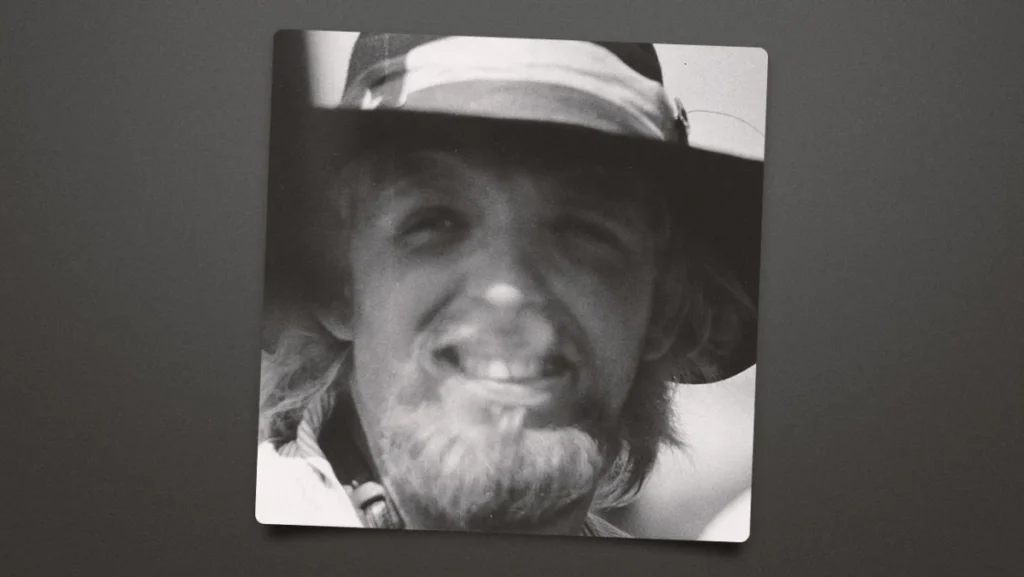

Bill Kerby, the fiercely independent screenwriter, script doctor, and creative force behind the initial draft of the Bette Midler-starring rock drama The Rose, as well as major cinematic and television projects spanning three decades, has passed away. He was 88 years old.
Kerby died on August 13 at his home on Whidbey Island in Washington state, according to a statement provided to industry trade publications by his longtime agent and producer, John Ptak. Kerby had been receiving at-home hospice care when he suffered a severe fall resulting in a fracture, which ultimately contributed to his passing.
As a full-time fixture in the Hollywood screenwriting community for thirty years, Kerby carved out a distinct reputation as a "script doctor"—a writer called upon by studios to salvage troubled productions, punch up dialogue, and inject grounded realism into studio pictures. His career bridged the traditional Hollywood studio era with the gritty, director-driven auteur movement of the 1970s, leaving an indelible mark on American cinema and television.
Early Life, Military Service, and the Road to Cinema
Born William Kerby on December 13, 1937, in Buffalo, New York, Kerby’s childhood was characterized by transience. He lived in a multitude of locations across the United States, including Lakeside, Michigan; San Diego, California; Bremerton, Washington; Phoenix, Arizona; Michigan City, Indiana; and Tryon, North Carolina.
His education and early adulthood were equally varied. He attended the Christ School for Boys in Arden, North Carolina, before graduating from Tryon High School, where he served as senior class president. Following his secondary education, Kerby enlisted in the United States Marine Corps, serving from 1955 to 1957.
Upon completing his military service, Kerby enrolled at Kent State University, where he demonstrated an early affinity for the dramatic arts by appearing in stage productions of The Little Foxes and Under Milkwood. He subsequently relocated to New York City, pursuing acting opportunities while making a living as a municipal welfare investigator.
A turning point arrived while watching public television, when Kerby saw two student films produced at the University of California, Los Angeles (UCLA). Inspired, he applied to the institution’s graduate film program. Accepted in 1964, he earned his Master of Fine Arts degree four years later. His cohort at UCLA included notable future industry figures such as John Ptak, filmmaker Rob Reiner, and Ray Manzarek, future keyboardist for The Doors.
The 1970s Counterculture and Breakout Success
Long-haired and riding motorcycles, Kerby immersed himself in the countercultural arts scene of Los Angeles. While still finishing his studies at UCLA, he found odd jobs in the industry, including a stint working for legendary independent producer and director Roger Corman. Corman hired Kerby to travel across the country editing Dennis Hopper out of release prints for the 1967 counterculture film The Trip.
Kerby supplemented his income by teaching at the Chouinard Art Institute and working as a music journalist for the Los Angeles Free Press, where he reviewed rock concerts and interviewed prominent musicians. This background in music journalism proved fortuitous when it intersected with his cinematic aspirations.
In 1973, producer Marvin Worth—who held a production deal at 20th Century Fox—hired Kerby to write a fictionalized rock-and-roll drama loosely inspired by the meteoric rise and tragic downfall of Janis Joplin. At the time, Kerby was virtually unknown in the studio system. Entitled The Pearl in its earliest iterations, the script underwent extensive revisions over the years, including a week-to-week polish by Academy Award-winning screenwriter Bo Goldman.
Retitled The Rose and directed by Mark Rydell, the 1979 film starred Bette Midler in her cinematic breakthrough role as a self-destructive rock star modeled after Joplin. The film was a critical and commercial success, earning four Academy Award nominations, including a Best Actress nod for Midler and supporting actor and actress nominations for Frederic Forrest and Amanda Pays. Reflecting on the project later in life, Kerby expressed immense pride that one of his original, foundational scenes—in which Midler’s character is coldly rebuffed by her idol, a country music star played by Harry Dean Stanton—survived every draft of the script’s decade-long development.
Master of the Script Doctor and Cinematic Collaborations
Throughout the 1970s and 1980s, Kerby established himself as a reliable and sharp-witted script doctor. He famously expressed a pragmatic philosophy regarding screenwriting, preferring the efficiency of rewriting existing material over developing stories entirely from scratch.
"You get in and you get out quick," Kerby remarked in a 1980 archival interview with the Writers Guild Foundation. "The check always clears, and if you did a great job, you saved the picture. But if you didn’t do a great job, it was the other fucker’s fault. It also is somewhat easier to doctor because you have the patient laid out in front of you."
This methodology landed him prominent assignments on major studio films. In 1973, Kerby was brought in to replace two dismissed writers on Lamont Johnson’s The Last American Hero, a stock car racing drama starring Jeff Bridges and Valerie Perrine based on an Esquire essay by Tom Wolfe. Kerby was tasked with rewriting scenes on the fly while production was actively underway in North Carolina.
Following that assignment, Kerby tackled Terrence Malick’s original, highly idiosyncratic script for The Gravy Train (1974), a gritty crime drama directed by Jack Starrett and starring Frederic Forrest and Stacy Keach as West Virginia coal-mining brothers turned criminals. Recognizing Malick’s penchant for poetic abstraction, Kerby set out to ground the narrative while honoring its regional authenticity.
"It was weird and wonderful as only Terry writes," Kerby recalled. "It was real early in his career, so it was heavy on the weird. So I un-weirded it a little bit and put a whole lot of my stuff in it, because I’m from that part of the United States, from Appalachia." Malick, dissatisfied with the studio’s alterations, ultimately used the pseudonym David Whitney on the film, which has since achieved cult status among cinephiles.
Kerby’s talent for punchy action and character dynamics led to a rewrite of Thomas Rickman’s screenplay for Hooper (1978), directed by Hal Needham and starring Burt Reynolds as an aging, legendary Hollywood stuntman. His other cinematic credits included Michael Winner’s Firepower (1979) and the 1997 action thriller Dead Men Can’t Dance.
Television Acclaim and Later Career
As the film landscape shifted in the late 20th century, Kerby transitioned successfully into high-profile television projects. His television resumé included telefilms and miniseries that tackled complex historical and social narratives.
In 1994, he wrote the acclaimed TNT original film Lakota Woman: Siege at Wounded Knee, directed by Frank Pierson. His television credits further expanded to include the biographical telefilm Little Richard (2000), directed by Robert Townsend, a 2000 adaptation of the apocalyptic drama On the Beach, and the 1988 Australian miniseries Dadah Is Death, starring Julie Christie.
Kerby’s crowning television achievement came later in his career with the 2012 History channel miniseries Hatfields and McCoys. Developed from a project he originally initiated for producer Leslie Greif at CBS in the 1980s, the three-part historical drama starred Kevin Costner and Bill Paxton. The miniseries became a historic ratings phenomenon for the network, drawing tens of millions of viewers and earning Kerby both an Emmy Award nomination and a Writers Guild of America (WGA) award. The project ultimately served as his final official screen credit.
Legacy, Teaching, and Industry Impact
In addition to his practical work in the writers’ room, Kerby dedicated significant time to mentoring the next generation of screenwriters. For several years, he traveled to London each spring to teach screenwriting at the National Film School. He was a devout adherent of Syd Field’s seminal 1979 text Screenplay: The Foundations of Screenwriting and maintained a lifelong loyalty to his IBM Correcting Selectric II typewriter long after digital word processors became industry standard.
John Ptak, reflecting on Kerby’s place in Hollywood history, contextualized his contributions within the broader transformation of the American film industry during the 1970s.
"The voices of students from the small AFI, UCLA, and USC film schools provided the catalyst for change in the ’70s as music and the traditional studio systems were evolving," Ptak said. "Bill Kerby was part of that wave."
Kerby is survived by his wife, Paula, whom he married in 1996. The couple relocated from Santa Barbara, California, to Whidbey Island in 1999, where Kerby spent his final decades enjoying a quiet life away from the daily grind of studio politics.
Reflecting on his career in a 2011 interview, Kerby remained deeply appreciative of his chosen profession, characterizing screenwriting not as an agonizing burden, but as a deeply rewarding craft.
"A writing routine was easy," he noted. "When it rained, I was inside and didn’t get wet like the roofers."