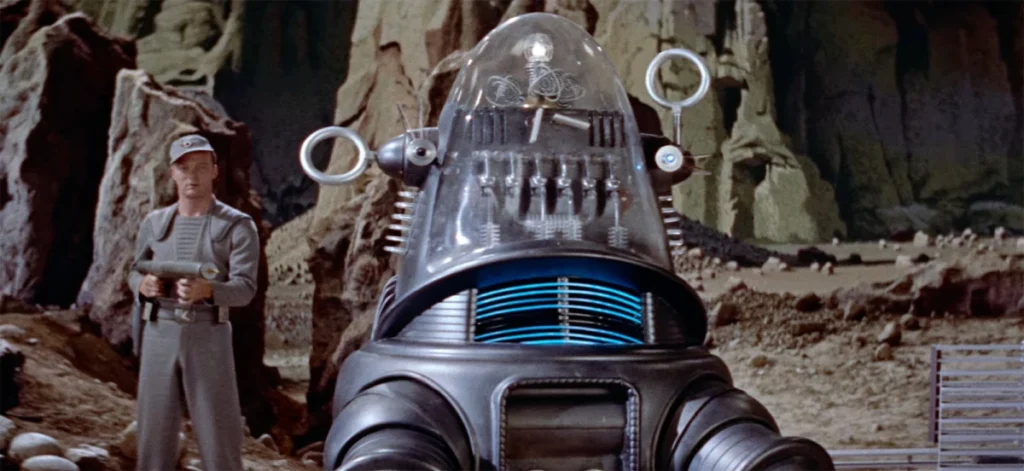

Long before the vast interstellar voyages of 2001: A Space Odyssey, Star Wars, and Logan’s Run captured the global imagination, a cinematic milestone laid the foundational groundwork for modern science fiction cinema. Arrow Video has officially released a new trailer celebrating the upcoming 4K Limited Edition Blu-ray release of Fred M. Wilcox’s 1956 masterpiece, Forbidden Planet. This definitive home video release breathes new life into a film that fundamentally revolutionized visual effects, narrative scope, and thematic maturity within the genre, transporting Shakespeare’s classic play The Tempest into the deep, unforgiving reaches of outer space.
Scheduled for release on September 28, 2026, this new edition marks a historic milestone for collectors and cinephiles alike. For the very first time, Forbidden Planet will be presented in its original, breathtaking Cinemascope aspect ratio of 2.55:1, accompanied by its authentic theatrical "Perspecta" stereo soundtrack. Painstakingly restored in 4K resolution, the release aims to offer a pristine viewing experience that highlights the film’s innovative set design, groundbreaking matte paintings, and pioneering electronic score.
Main Facts of the Release
The upcoming physical media release by Arrow Video is designed as a premier collector’s item, featuring extensive packaging, archival bonus materials, and top-tier audio-visual restorations. The core details of the release include:
- Distributor: Arrow Video
- Format: Limited Edition 4K UHD Blu-ray
- Release Date: September 28, 2026
- Visuals: Brand new 4K restoration in the original 2.55:1 Cinemascope aspect ratio
- Audio: Restored theatrical "Perspecta" stereo soundtrack
- Key Cast Members: Walter Pidgeon, Anne Francis, Leslie Nielsen, Warren Stevens, and Robby the Robot
The narrative of Forbidden Planet is set in the 23rd century. A United Planets starship, commanded by John Adams (played by a young Leslie Nielsen), is dispatched to the distant, isolated planet of Altair IV. The mission: to investigate the fate of the Bellerophon, an expedition that vanished decades prior. Despite explicit radio warnings from Dr. Edward Morbius (Walter Pidgeon) urging them to turn back for their own safety, Commander Adams orders the ship to land.

Upon arrival, the crew discovers that only two human survivors remain: Dr. Morbius and his ethereal daughter, Altaira (Anne Francis). They are accompanied and aided by Robby the Robot, an engineering marvel who would instantly cement his status as one of the most iconic mechanical characters in pop culture history. However, the crew quickly learns that the Bellerophon was not destroyed by natural causes, but by a terrifying, invisible force that wiped out the rest of the crew in a single night. As this mysterious entity begins to stalk the new arrivals, the crew must unravel the dark, buried secrets of the long-dead Krell civilization that once inhabited Altair IV, uncovering a horrifying truth about the destructive capabilities of the subconscious mind.
Chronology and Historical Context
To understand the immense cultural footprint of Forbidden Planet, one must examine its place in 1950s cinema and the historical context of its production.
In the mid-1950s, Hollywood was experiencing a major boom in science fiction, largely driven by post-World War II anxieties, atomic age paranoia, and rapid advancements in aerospace technology. However, the vast majority of sci-fi films during this era were low-budget creature features, B-movies characterized by cheap rubber suits, flying saucers suspended by visible strings, and cautionary tales about nuclear annihilation.
Forbidden Planet shattered these industry standards. Produced by Metro-Goldwyn-Mayer (MGM), the studio invested an unusually large budget—reportedly around $1.9 million, a substantial sum for the era—into the production. The investment paid off through unprecedented production design.
- 1952–1955: Development and Pre-Production. Writers Irving Block and Allen Adler conceived the initial story, which Cyril Hume adapted into a screenplay. Director Fred M. Wilcox was brought on board to helm the project, utilizing MGM’s massive soundstages and special effects department.
- March 1956: Theatrical Release. Forbidden Planet premiered in United States theaters, captivating audiences with its rich Technicolor palette, gigantic subterranean Krell machinery, and groundbreaking animation sequences designed in collaboration with animators from Walt Disney Studios.
- 2006: 50th Anniversary Edition. The film received a significant digital remastering and release for its golden anniversary, cementing its reputation among home video collectors on standard-definition DVD and early high-definition formats.
- September 2026: 4K Restoration Debut. Arrow Video takes over the distribution mantle to deliver the ultimate definitive presentation of the film, utilizing modern scanning technologies to rescue and enhance the original camera negatives.
Supporting Data and Production Innovations

Forbidden Planet was a pioneer of technical achievements that influenced generations of filmmakers, prop designers, and sound engineers.
One of the film’s most notable achievements is its musical score. Composed by Louis and Bebe Barron, the soundtrack is widely recognized as the first entirely electronic film score in history. Eschewing traditional orchestral arrangements, the Barrons utilized custom-built electronic circuits and magnetic tape manipulations to create an eerie, otherworldly auditory landscape. This ambient soundscape perfectly mirrored the alien atmosphere of Altair IV and predated the widespread commercial adoption of the Moog synthesizer by over a decade.
Furthermore, the creation of Robby the Robot cost an estimated $100,000—an enormous budget for a single prop at the time. Designed by Robert Kinoshita, Robby was fully functional, featuring complex mechanical and electrical components operated by off-screen puppeteers and internal actors. Robby became an instant sensation, later starring in his own film, The Invisible Boy (1957), and making numerous guest appearances in classic television series such as The Twilight Zone, Lost in Space, and Columbo.
Critical and Industry Implications
The cultural and narrative implications of Forbidden Planet extend far beyond its initial box office run. By adapting William Shakespeare’s The Tempest, the screenwriters elevated science fiction from juvenile pulp entertainment into a medium capable of exploring high-concept philosophical and psychological themes.
Dr. Morbius represents a futuristic iteration of Prospero, utilizing advanced technology rather than magic to manipulate his environment. The central twist of the film—that the terrifying invisible monster terrorizing the crew is actually the physical manifestation of Morbius’s own suppressed id, amplified by the immense psychic machinery of the Krell—introduced Freudian psychology into mainstream genre filmmaking. This cerebral approach directly paved the way for Stanley Kubrick’s 2001: A Space Odyssey, Andrei Tarkovsky’s Solaris, and Ridley Scott’s Alien.

Industry analysts and film historians frequently cite Forbidden Planet as the blueprint for the modern blockbuster. Its seamless integration of live-action actors with elaborate miniature work, matte paintings, and early animation set a high-water mark for cinematic world-building.
The upcoming 4K restoration by Arrow Video arrives at a time of surging demand for boutique physical media. As streaming platforms increasingly fragment and digital libraries face licensing uncertainties, cinephiles and collectors are prioritizing premium, uncompressed physical releases. By securing the rights to restore and distribute this landmark title in its proper aspect ratio and with comprehensive bonus content, Arrow Video ensures that future generations can experience Fred M. Wilcox’s vision with the visual and auditory fidelity it has deserved since 1956.
Pre-orders and purchase information for the Limited Edition 4K UHD release are currently available through the official Arrow Films website, ahead of its official street date on September 28, 2026.