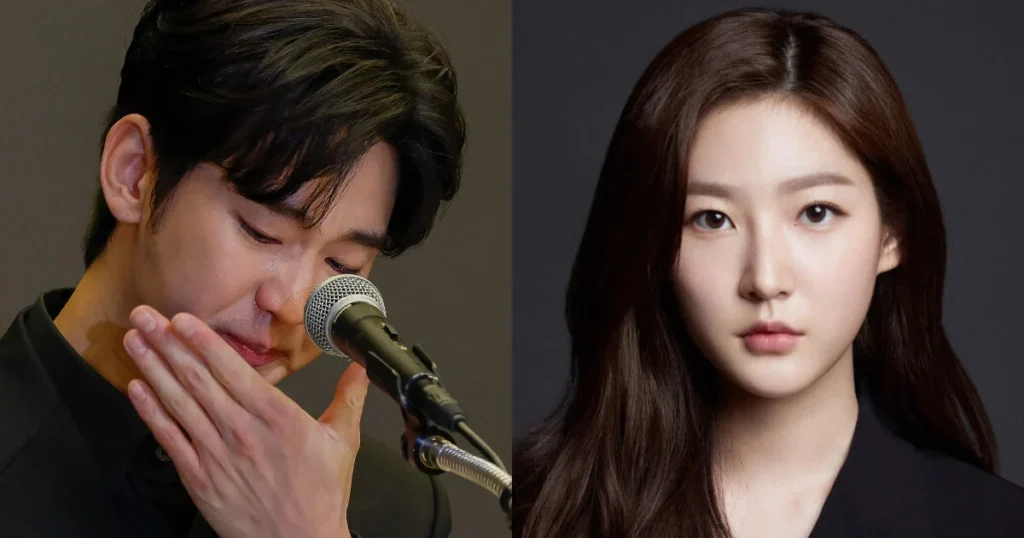

The Seoul Gangnam Police Station has formally moved to request an arrest warrant for Kim Se Ui, the representative of the controversial YouTube channel Garosero Institute, on charges of spreading false information and orchestrating a defamation campaign against Hallyu star Kim Soo Hyun. According to a report by JoongAng Ilbo on the 21st, the police application for the warrant details a systematic effort by the suspect to disseminate falsehoods for personal financial gain, specifically citing the accumulation of YouTube advertising revenue and donations generated by sensationalist content. This legal development marks a significant escalation in the ongoing battle between high-profile celebrities and "cyber wreckers"—online personalities who profit from the propagation of unverified or malicious rumors.
The Allegations of Evidence Fabrication and Manipulation
Central to the police investigation is the claim that Kim Se Ui deliberately manipulated digital evidence to lend a veneer of credibility to his reports regarding a purported relationship between Kim Soo Hyun and the late actress Kim Sae Ron. The warrant application asserts that the suspect was fully aware that the two actors had not been involved in a romantic relationship since the actress’s minor years, yet he proceeded to broadcast defamatory content with the intent to damage the actor’s reputation.
The investigation has uncovered startling details regarding the nature of the evidence presented by the Garosero Institute. In March, Kim Se Ui presented several messenger conversations as definitive proof of a romantic liaison. However, forensic analysis by the police determined that these records were entirely fabricated. The police report indicates that after receiving 11 screenshots of messages allegedly exchanged between the late actress and an unidentified individual in 2016—provided by the bereaved family last year—Kim Se Ui altered seven specific sections. These alterations included manually changing the name of the interlocutor to "Kim Soo Hyun" to mislead the public into believing the actor was the direct participant in the exchange.
Furthermore, the police have raised alarms regarding the use of advanced technology in the defamation campaign. Voice files of the late actress, which were released by the Garosero Institute in May of last year, are now believed to have been manipulated using Artificial Intelligence (AI) voice-cloning technology. The police pointed out that the suspect posted these manipulated materials to create a false narrative of intimacy, despite having no confirmation of the identity of the parties involved in the original recordings.
Involvement of Legal Professionals as Accomplices
In a development that legal experts describe as "extremely rare," the investigation has also ensnared the legal representative of the late actress’s bereaved family. Investigative authorities have registered the family’s lawyer as a suspect and an accomplice in the case. The police have judged that the lawyer not only supplied the incriminating (though later found to be altered) materials to Kim Se Ui but also participated in a "systematic, organized, and premeditated" effort to expand and reproduce the false narrative across various media platforms.
Kim Soo Hyun’s legal representative, lawyer Ko Sang Rok, addressed these developments on social media on the 20th. He clarified that Kim Soo Hyun’s team did not initially file a complaint against the family’s lawyer. Instead, the investigative agencies independently identified the lawyer as a key participant in the defamation scheme after reviewing the flow of information and the nature of the coordination between the lawyer and the Garosero Institute. Ko Sang Rok noted that the conversion of a suspect’s or a related party’s lawyer into a criminal suspect is a highly unusual occurrence in the South Korean legal system, reflecting the severity with which the police view the organized nature of this specific defamation case.
Chronology of the Controversy
To understand the gravity of the current legal proceedings, it is necessary to trace the timeline of the events that led to the arrest warrant request:
- 2016: The period during which the original, unedited messenger conversations were allegedly held between the late actress and an unknown individual.
- Late Last Year: The bereaved family provides 11 screenshots of these messages to Kim Se Ui and the Garosero Institute.
- March: Kim Se Ui broadcasts a report claiming Kim Soo Hyun and the late actress were in a relationship, presenting seven manipulated screenshots where the name "Kim Soo Hyun" had been inserted.
- May: The Garosero Institute releases voice recordings of the late actress, which police now identify as AI-manipulated fabrications intended to support the dating rumors.
- Recent Months: Kim Soo Hyun’s legal team files complaints for defamation and obstruction of business, prompting a deep forensic investigation by the Seoul Gangnam Police.
- The 20th: Lawyer Ko Sang Rok confirms that the police have identified the family’s lawyer as an accomplice.
- The 21st: News breaks of the formal arrest warrant application submitted by the Gangnam Police Station against Kim Se Ui.
The Socio-Economic Impact on Kim Soo Hyun
The police warrant application provides a sobering assessment of the damage inflicted upon Kim Soo Hyun’s life and career. The document states that the spread of these falsehoods led to the "collapse of actor Kim Soo Hyun’s social foundation." In the high-stakes world of the South Korean entertainment industry, where a celebrity’s public image is their primary capital, such allegations can lead to the immediate termination of endorsement contracts, the stalling of film and television projects, and a broader "social death" within the industry.
Beyond the professional fallout, the police highlighted the severe psychological toll on the actor. It was revealed that Kim Soo Hyun is currently receiving psychiatric treatment to cope with the trauma and stress caused by the organized defamation campaign. The authorities emphasized that if the suspect were allowed to continue spreading false information, it could result in "serious, irreparable harm" to the actor’s well-being. This focus on the mental health of the victim marks a growing trend in South Korean jurisprudence, where the "human cost" of cyberbullying and defamation is increasingly weighed in the decision to seek detention.
Defense Claims and Allegations of Political Interference
In response to the arrest warrant request, Kim Se Ui has adopted a defiant stance, framing the legal action as a politically motivated attempt to silence his reporting. During a live broadcast following the news, Kim claimed that the prosecution’s request was a "plot" designed to hinder his investigation into other matters.
Specifically, Kim asserted that he had been planning to further investigate a sensitive case involving a prominent politician and alleged sexual crimes in Hanoi, Vietnam. He argued that the timing of the arrest warrant was intended to obstruct this work, positioning himself as a whistleblower rather than a purveyor of false information. However, legal analysts suggest that these claims may do little to sway the court, given the forensic evidence of message manipulation and AI voice fabrication cited by the police.
Broader Implications: The "Cyber Wrecker" Phenomenon
This case is being closely watched as a potential landmark in the regulation of "cyber wreckers" in South Korea. For years, the South Korean entertainment industry has struggled with YouTube channels that thrive on scandal, often blurring the lines between reporting and harassment.
Data on Defamation and Cybercrimes in South Korea:
According to data from the Supreme Prosecutors’ Office of the Republic of Korea, the number of reported cases of defamation and insult under the Information and Communications Network Act has seen a steady increase over the past decade. In 2022 alone, reported cyber defamation cases reached record highs, yet the prosecution rate remains relatively low due to the difficulties in proving "intent to defame" and the complexities of digital evidence.
The police’s decision to seek an arrest warrant for Kim Se Ui—rather than pursuing a trial without detention—signals a "zero-tolerance" approach toward the fabrication of evidence. The use of AI in this case also sets a dangerous precedent, as it demonstrates how easily technology can be weaponized to create "deepfake" narratives that are difficult for the general public to discern from reality.
Conclusion and Future Outlook
The request for an arrest warrant against Kim Se Ui represents a pivotal moment in the intersection of celebrity rights, digital ethics, and the law. By highlighting the financial motives behind the defamation and the technical manipulation of evidence, the Seoul Gangnam Police Station is attempting to set a standard for how digital-age harassment should be prosecuted.
As Kim Soo Hyun continues his psychiatric recovery and legal battle, the industry at large is calling for stricter legislative measures to curb the influence of profit-driven rumor-mongering. The outcome of this warrant hearing will not only determine the immediate fate of Kim Se Ui but will also serve as a barometer for how South Korean society values the protection of an individual’s "social foundation" against the unchecked power of digital fabrication. For now, the legal community and the public remain focused on the court’s upcoming decision, which will weigh the freedom of expression against the catastrophic impact of organized falsehoods.