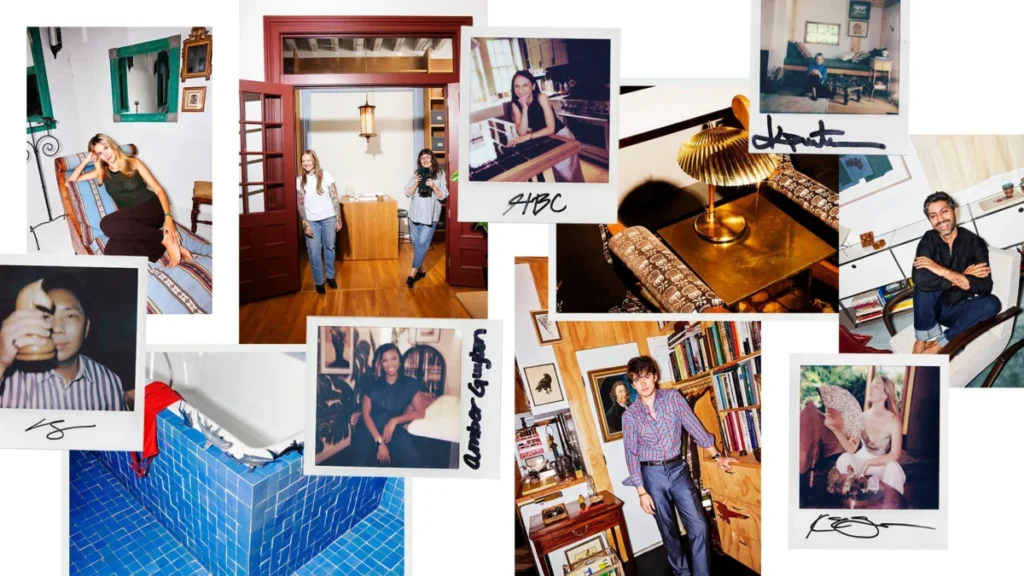

The landscape of American residential design is undergoing a significant transformation, driven by a new generation of practitioners who are balancing global influences with a distinctly localized, modern sensibility. Each year, the editorial team at Architectural Digest undertakes a comprehensive cross-country survey to identify the "New American Voices"—firms that are not merely following current trends but are actively redefining how interior spaces function, communicate, and evolve. The 2026 cohort, comprised of nine standout firms, reflects a shift away from the homogenized aesthetic of the early 2020s toward a more layered, narrative-driven approach that prioritizes architectural integrity and personalized utility.

The Evolution of the American Interior
The emergence of these nine firms comes at a pivotal moment in the domestic design industry. According to industry analysis from the American Society of Interior Designers (ASID), the sector has seen a 12% increase in demand for bespoke residential architecture and interior services since 2023. This growth is largely attributed to a post-pandemic shift in consumer behavior, where homeowners are placing higher value on spaces that provide both sensory comfort and functional versatility.
The 2026 class of New American Voices represents a departure from traditional "cookie-cutter" luxury. Instead, these designers are drawing upon diverse educational backgrounds—ranging from fine arts and architecture to industrial design and historic preservation—to create environments that feel lived-in and historically grounded.

A Geographic and Aesthetic Snapshot
The geographical distribution of the 2026 honorees spans from the coastal hubs of New York and Los Angeles to the burgeoning design centers of Portland and Atlanta. This regional diversity is critical, as it demonstrates how climate, local material availability, and regional architectural vernacular are being reinterpreted through a contemporary lens.
New York City: The Intersection of Craft and Architecture
In New York, the design scene is being invigorated by firms like Dyali, founded by Rahul Ghera. Ghera’s practice is rooted in a deep understanding of textile history and architectural structure. By bridging the gap between high-fashion embroidery and residential spatial planning, Ghera has set a new standard for how interior finishes can inform structural layouts. Similarly, Marshall Neve, based in Manhattan’s Chinatown, is challenging the "maximalism vs. minimalism" dichotomy. Neve’s work focuses on the curation of disparate objects—ranging from antique folk art to Japanese industrial pieces—within "quiet" architectural shells, suggesting that the future of urban luxury lies in the thoughtful layering of history rather than opulent renovations.

Hayley Cavagnolo of Hayley Bridget Interiors represents the rigorous side of this new wave. Her practice, operating between New York City and Westchester, emphasizes a total-design approach. By managing every detail from initial concept to the final organizational touches, Cavagnolo is addressing a growing market segment that seeks "turnkey" design solutions that do not sacrifice artisanal quality for convenience.
The Southern and Southwestern Shift
In Atlanta, Amber Guyton’s firm, Blessed Little Bungalow, is shifting the discourse around maximalism. With the release of her upcoming book, Soulful Maximalism, Guyton is advocating for design as an inclusive, accessible tool for personal expression. Her work—which leverages bold color and layered cultural references—reflects a broader trend in the South where residents are increasingly embracing vibrant, history-informed design over traditional Southern formality.

Meanwhile, in Austin, Texas, Matthew Tsang is utilizing his background in hospitality and botany to pioneer a "transportive" style of residential design. Tsang’s practice is heavily influenced by wabi-sabi principles, focusing on the flow of space and the psychological impact of indoor-outdoor connections. His work serves as a case study for the integration of biophilic design—the practice of connecting people to nature within their built environments—which has become a primary driver in high-end real estate development over the last 36 months.
West Coast and Pacific Northwest Innovations
The Los Angeles design community continues to act as a crucible for avant-garde domestic ideas. Garance Rousseau, whose work spans both coasts, is noted for her ability to synthesize European architectural heritage with California’s relaxed lifestyle. Her approach is fundamentally intuitive, often beginning with the "demands" of the existing architecture, a practice that emphasizes sustainability by working with the structural bones of a home rather than opting for total demolition.

Kelsey Sundberg, also based in Los Angeles, is reshaping the designer-client relationship by prioritizing the "experience" of a space over its visual output. Her research-heavy methodology, often utilizing public archives to inform the "memory" of a home, represents a move toward narrative-driven design. This practice of "massaging" historical motifs—such as her recent reinterpretation of Renzo Mongiardino’s work—shows how young designers are effectively using the past to inform the future of luxury living.
In the Pacific Northwest, Pat Austin Design is challenging the status quo with an emphasis on unpredictability. Founders Candace Cohu and Ally Hasche have established a firm that intentionally avoids a signature "look." By focusing on the tension between bold forms and refined textures, they have carved out a niche that favors artisanal uniqueness over the rapid-fire production common in social-media-driven design.

The Role of Preservation and Sustainability
A recurring theme among the 2026 New American Voices is the emphasis on historic preservation. Kacee Witherbee of Insides Studio, based in Freeport, Maine, is a prime example of this trend. Her background in historic preservation at the College of Charleston informs her work, which often involves the creative repurposing of family heirlooms and historical artifacts. This approach not only lends emotional weight to a space but also aligns with the industry-wide push toward sustainable consumption and circular design.
Industry Implications and Future Outlook
The rise of these nine firms indicates several key shifts in the architectural and interior design industry:

- The Rise of the "Specialist-Generalist": Designers are no longer confined to single disciplines. The most successful new firms are those that synthesize knowledge from disparate fields—such as botany, industrial design, journalism, and weaving—to create more cohesive, functional environments.
- Emphasis on Longevity: There is a noticeable pivot away from "fast design." The New American Voices are focused on creating homes that age well, utilizing vintage furnishings and high-quality, long-lasting materials.
- The "Anti-Designer" Aesthetic: As noted by several of these designers, a primary client desire is for spaces that do not look like they were "designed" by an outsider. The goal is a highly curated, deeply personal environment that reflects the inhabitant’s own journey.
- Community-Driven Development: With firms like Kelsey Sundberg’s participating in fire relief initiatives, there is an increasing recognition that design is a tool for social good, not just aesthetic refinement.
Conclusion: A New Standard
The 2026 New American Voices are not merely creating beautiful rooms; they are creating the frameworks for how we will inhabit our domestic spaces in the coming decade. By blending deep technical skill with an intuitive, narrative-driven approach, these firms are proving that the future of design lies in the intersection of personal identity and architectural stewardship. As the industry moves forward, the influence of these nine firms will likely be felt in the way homes are not just built, but lived in, ensuring that American design remains a vibrant, evolving, and deeply human endeavor.
As the industry prepares for the final quarter of 2026, the success of these practitioners serves as a bellwether for the broader housing market. The demand for homes that possess both "soul" and "flow" is only expected to increase, placing these nine firms at the forefront of a significant cultural and professional movement. For those tracking the evolution of the built environment, the work of Ghera, Tsang, Rousseau, Neve, Austin, Witherbee, Guyton, Cavagnolo, and Sundberg is not just worth watching—it is setting the standard for the next generation of American homes.