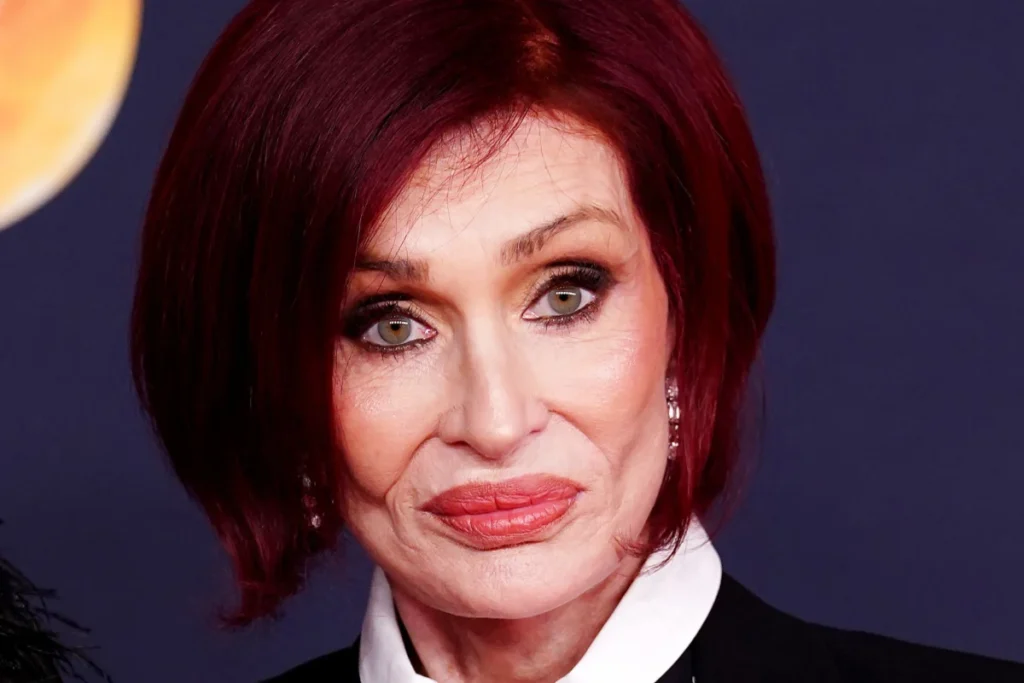

London, UK – Leading homelessness charity Centrepoint has formally announced its decision to cease all future collaborations with media personality Sharon Osbourne, following her public endorsement of a rally organised by controversial right-wing activist Tommy Robinson. The charity, which dedicates its efforts to supporting young homeless individuals across the UK, stated unequivocally that such political activity fundamentally "runs counter to our values" and its long-standing commitment to inclusivity.
The controversy ignited when Osbourne, a prominent figure known for her roles on television shows like The X Factor, used her official Instagram account to express support for an upcoming event. In response to a post promoting a rally, she commented, "See you at the march," signaling her intention to participate or her approval of the demonstration. This public declaration quickly drew attention and scrutiny, particularly given Osbourne’s previous association with charitable causes.
Centrepoint’s swift and decisive action underscores the increasing pressure on public figures and organisations to maintain clear ethical and political alignments in an era of heightened social and political polarisation. A spokesperson for Centrepoint elaborated on the charity’s position, stating, "Sharon supported us on this campaign and, while she is referred to as an ambassador in that context, she was not an official ambassador for Centrepoint. We have no plans to work together in the future. Political activity like this runs counter to our values and our long history of supporting young people regardless of their background, religion or ethnicity. If we want young people to thrive in this country then we need to ensure our society continues to allow them to live without fear and to access the opportunities they need to start education or work and leave homelessness behind."
The Unveiling of Public Support and Its Immediate Aftermath
Sharon Osbourne’s comment, made on a social media platform with a vast global reach, swiftly became a focal point of discussion. Her Instagram account, boasting millions of followers, amplified her support for the "Unite the Kingdom" rally, scheduled to take place in London on May 16. The event is organised by Tommy Robinson, whose real name is Stephen Yaxley-Lennon, a figure synonymous with anti-immigrant and anti-Islam activism in the UK. Robinson has a long history of organising protests and demonstrations that often draw both fervent supporters and strong opposition, frequently leading to public order concerns.
This upcoming rally follows a previous demonstration organised by Robinson in September, which reportedly drew a significant crowd, with estimates ranging from 110,000 to 150,000 participants. Such figures highlight the scale of support that Robinson can command, making any public endorsement by a celebrity a matter of considerable public interest and potential controversy. Osbourne’s decision to publicly back the march indicates a willingness to align with a figure whose views are widely considered divisive and, by many, inflammatory.

Centrepoint’s Unwavering Commitment to Inclusivity
Centrepoint’s response was not merely a reaction to a celebrity’s misstep but a reaffirmation of its foundational principles. Established in 1969, Centrepoint has grown to become the UK’s leading charity for homeless young people aged 16-25. Its mission extends beyond merely providing shelter; it focuses on offering a holistic range of support services, including mental health assistance, education, and employment training, all aimed at helping young individuals transition out of homelessness and into independent living.
Crucially, Centrepoint’s work is predicated on the principle of unconditional support, regardless of a young person’s background, religion, ethnicity, or any other characteristic. The charity’s extensive network of services, spanning London, Manchester, Yorkshire, and the North East, annually supports thousands of vulnerable young people. For an organisation built on such an inclusive ethos, any association with a figure whose rhetoric is perceived to sow division and animosity based on these very characteristics represents a fundamental ideological conflict. The spokesperson’s statement explicitly highlighted this dissonance, underscoring that political activities perceived as divisive "run counter to our values." This principled stand serves to protect the charity’s reputation and, more importantly, to ensure that its beneficiaries feel safe, respected, and supported without fear of prejudice.
Sharon Osbourne’s Prior Philanthropic Engagement
Prior to this controversy, Sharon Osbourne had lent her public profile to Centrepoint, specifically participating in an Omaze campaign. Omaze is a platform known for offering sweepstakes to win luxury prizes, often in support of various charities. Osbourne had encouraged the public to enter a sweepstake to win a luxury house, with proceeds benefiting Centrepoint. In this context, she was referred to as an "ambassador," a term often used broadly in promotional materials to signify a public figure’s support for a cause, even if they do not hold a formal, official ambassadorial title within the charity’s governance structure.
This previous engagement highlights a paradox: a public figure who had actively helped raise funds for a charity dedicated to vulnerable youth now aligns herself with a movement that many critics argue contributes to social marginalisation and fear among diverse communities. The charity’s clarification that she was not an "official ambassador" but merely "supported us on this campaign" in a specific context is vital. It delineates the nature of her past involvement, suggesting a transactional or project-specific collaboration rather than a deep, enduring partnership rooted in shared values. This distinction allows Centrepoint to sever ties cleanly without repudiating the success of past fundraising efforts, while clearly stating a divergence in current ethical alignment.
A Deeper Look at Tommy Robinson and His Activities
Tommy Robinson, born Stephen Yaxley-Lennon, first gained national prominence as a co-founder and former spokesperson for the English Defence League (EDL), a far-right street protest movement. Over the years, he has cultivated a highly visible public persona, primarily through social media and independent media channels, propagating views that are often described as Islamophobic and anti-immigrant. His activism has been characterised by direct action, street protests, and frequent legal battles, leading to multiple convictions for various offences, including contempt of court.
Robinson’s "Unite the Kingdom" rallies typically aim to mobilise individuals concerned about issues such as immigration, perceived threats to British culture, and a critique of mainstream media and political institutions. The rhetoric employed often involves strong nationalistic undertones and a critical stance towards multiculturalism. The large attendance figures at his previous events demonstrate a segment of the population that resonates with his messaging, making him a potent, albeit controversial, force in British public discourse. His divisive nature has led to him being widely condemned by anti-racism groups, politicians, and media commentators, who argue his activities incite hatred and social discord. For a charity like Centrepoint, which serves a diverse population including many young people from immigrant and minority backgrounds, an association with Robinson’s ideology would directly undermine its mission and potentially alienate the very communities it seeks to assist.

Implications for Celebrity-Charity Partnerships in the Digital Age
This incident serves as a stark reminder of the evolving landscape of celebrity endorsements and charity partnerships in the digital age. Social media platforms have blurred the lines between private opinions and public statements, making it increasingly difficult for public figures to compartmentalise their various roles. A single comment, post, or ‘like’ can have immediate and far-reaching consequences, impacting not only the individual’s brand but also the organisations they are associated with.
For charities, the stakes are particularly high. Partnering with celebrities can significantly boost visibility, fundraising, and public engagement. However, such partnerships also carry inherent risks. A celebrity’s controversial actions or statements can quickly reflect poorly on the charity, potentially alienating donors, volunteers, and beneficiaries. This incident highlights the critical need for charities to conduct thorough due diligence on potential partners and to establish clear ethical guidelines and exit strategies. It also underscores the importance for charities to be prepared to take swift action when a partner’s public conduct deviates from their core values, as Centrepoint has demonstrated. Maintaining integrity and public trust is paramount, especially for organisations reliant on public goodwill and donations.
The Broader Socio-Political Landscape and Youth Homelessness
The controversy unfolds against a backdrop of complex socio-political challenges in the UK. Issues of national identity, immigration, social cohesion, and the rise of right-wing populism are subjects of intense public debate. In this climate, organisations like Centrepoint find themselves not only addressing direct societal problems like homelessness but also navigating the broader ideological currents that shape public opinion and policy.
The statistics on youth homelessness in the UK are sobering and underscore the urgency of Centrepoint’s work. According to the charity’s own data, over 120,000 young people approached their local council for help with homelessness in 2022/23. This figure represents a significant increase in recent years, driven by factors such as the cost-of-living crisis, a shortage of affordable housing, and family breakdown. Many of these young people come from diverse backgrounds, reflecting the multicultural fabric of British society. Centrepoint’s commitment to supporting every young person, "regardless of their background, religion or ethnicity," is not just an ethical stance but a practical necessity given the demographics of those experiencing homelessness. Any association that could be perceived as discriminatory or exclusionary would directly impede its ability to reach and effectively serve its target population.
Public Discourse and Future Considerations
The news of Centrepoint’s decision has generated significant discussion across social media and traditional news outlets. While some have criticised Osbourne’s stance and lauded Centrepoint’s principled response, others have defended her right to free expression, highlighting the ongoing tension between freedom of speech and the potential for such speech to cause harm or division. This polarisation of public opinion mirrors the broader societal debate around figures like Tommy Robinson.
Looking ahead, the incident serves as a cautionary tale for public figures about the scrutiny they face, particularly in their online activities. For Centrepoint, the move reinforces its brand as an organisation deeply committed to its values, even when it means making difficult decisions regarding high-profile associations. It sends a clear message that its mission of fostering a society where young people can thrive "without fear" takes precedence over any individual partnership. The upcoming "Unite the Kingdom" rally on May 16 will likely draw further media attention and public discourse, continuing to highlight the fault lines in contemporary British society and the responsibilities of those who occupy public platforms.