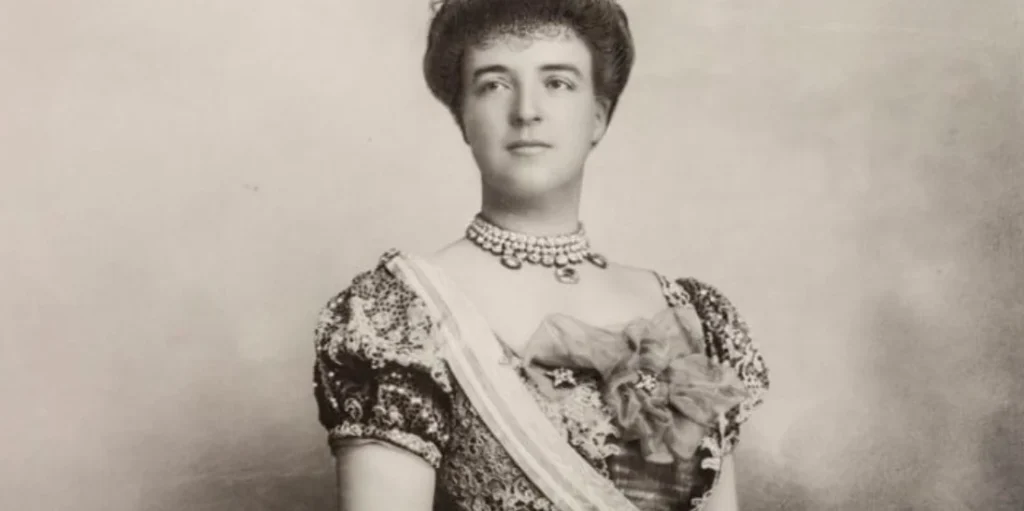

The international auction world is preparing for a landmark event this autumn as Sotheby’s in Geneva hosts its highly anticipated "Royal and Noble Jewels" sale on November 11. The auction promises a rare glimpse into the opulent personal collections of several European monarchies, bringing together priceless pieces that once adorned queens, princesses, and tsardinas. Among the headlining lots are magnificent artifacts tied to the royal houses of Denmark, Sweden, Portugal, and Russia, offering collectors and historians alike a tangible connection to centuries of European dynastic history.
From 1920s Art Deco masterpieces to centuries-old imperial gems, the upcoming sale features items that have traversed continents, weathered political upheavals, and passed through generations of royal descendants. As these historical treasures transition from private family vaults to the public market, the auction provides a fascinating window into the shifting fortunes and enduring legacies of Europe’s royal houses.
The Provenance and Historical Chronology
The genealogical trails of the items featured in the November 11 auction read like a masterclass in European royal history, crisscrossing borders through strategic marriages, tragic losses, and post-dynastic dispersals.
At the center of the Swedish consignments are pieces inherited following the passing of Princess Birgitta of Sweden, the older sister of King Carl XVI Gustaf, who died last year. Princess Birgitta’s collection forms a substantial portion of the high-value lots, most notably a striking sapphire and diamond demi-parure consisting of a necklace and earrings. The historical roots of this set reach deep into the 19th and early 20th centuries. Princess Birgitta originally inherited the suite from her mother, Princess Sybilla of Sweden. Sybilla had received the magnificent jewels as a wedding present in 1932 upon her marriage to Prince Gustaf Adolf of Sweden, courtesy of Ferdinand, the ex-Tsar of Bulgaria.
Historical research suggests that the lineage of these sapphires extends even further back into the Romanov imperial vault. It is widely believed that the core stones once belonged to Maria Feodorovna, Tsarina of Russia—born Princess Dagmar of Denmark—before finding their way into the hands of Balkan and Scandinavian royalty.
Further enriching the Scandinavian connection are pieces linked to Queen Alexandrine of Denmark and Queen Ingrid of Denmark. Among them is an exquisite 180mm Art Deco emerald and diamond bracelet belonging to Queen Alexandrine. Comprising hundreds of brilliant-cut diamonds interspersed with cabochon-cut emeralds to form a flexible cuff, the piece was passed down to her son, Prince Knud, and worn by his wife, Princess Caroline Mathilde. It eventually came into the possession of Princess Elisabeth of Denmark before surfacing at a Copenhagen auction in 2022, and it is now set to cross the block in Geneva with an initial estimate of 35,000 Swiss francs.
Meanwhile, items from Queen Ingrid—grandmother of the reigning King Frederik X of Denmark—offer a more intimate look at mid-20th-century royal life. Rather than grand gala jewels, the Ingrid lots comprise finely crafted personal accessories, including a silver and enamel cigarette case, a matching powder compact, and a sophisticated makeup and grooming stypator.
Southern European royalty is similarly well-represented through the inclusion of emerald and diamond heirlooms belonging to Marie Amelie, the final Queen of Portugal. Her collections provide a stark reminder of the tumultuous end of the Portuguese monarchy in 1910, adding a layer of dramatic political history to the physical brilliance of her bracelets and brooches.
Inside the Catalog: Star Lots and Valuation Data
Sotheby’s experts have curated a catalog that balances museum-grade historical significance with wearable high jewelry. The breadth of the collection is reflected not only in the illustrious names attached to the provenance but also in the wide spectrum of valuations, catering to both institutional collectors and private connoisseurs.
At the upper end of the valuation scale is the aforementioned sapphire and diamond demi-parure associated with Tsarina Maria Feodorovna and Princess Sybilla, which carries a starting price of 220,000 Swiss francs. The high financial threshold reflects both the rarity of unheated historical sapphires of this magnitude and their impeccable royal pedigree.
In the mid-tier range, pieces with exceptional craftsmanship and targeted royal wearers are expected to command fierce competitive bidding:
- Queen Marie Amelie’s emerald and diamond bangle: Estimated up to 100,000 Swiss francs.
- An unusual 23-carat padparadscha sapphire brooch, worn by both Princess Sybilla and Princess Birgitta, framed by an intricate millegrain diamond design: Estimated to raise at least 40,000 Swiss francs.
- Queen Alexandrine’s Art Deco emerald and diamond bracelet: Starting price of 35,000 Swiss francs.
- A loose, unmounted giant European royal sapphire weighing over 13 carats: Estimated up to 30,000 Swiss francs.
- An emerald ring boasting a stone of nearly 8 carats: Estimated up to 18,000 Swiss francs.
The catalog also features accessible entry points for emerging collectors interested in royal provenance. These include a seed pearl and diamond necklace belonging to Margaret of Connaught, Crown Princess of Sweden (with bids starting at 1,400 Swiss francs), personal rings from Princess Sybilla’s estate starting at 2,800 Swiss francs, and various diamond and pearl bracelets ranging from 1,000 to 2,800 Swiss francs. Alongside the Scandinavian and Iberian pieces, the auction features rare items from English and Italian aristocratic circles, including a 1950s Bulgari bracelet showcasing alternating Burma rubies and step-cut diamonds, as well as a bracelet set with the historic Romanov Sapphire.
Official Responses and Institutional Perspectives
Auction houses specializing in high-end provenance sales routinely emphasize the emotional and narrative resonance that accompanies royal jewels. While direct commentary from reigning monarchs regarding the dispersal of family heirlooms is historically muted—as private estates are managed independently by dynastic descendants or executors—representatives for Sotheby’s have highlighted the unique market dynamics driving the November event.
Market analysts note that jewelry belonging to recognizable historical figures commands a distinct premium over anonymous high-end pieces. In promotional statements surrounding the "Royal and Noble Jewels" catalog, Sotheby’s representatives have pointed out that buyers are increasingly drawn to the "storytelling aspect" of antique jewelry. In an era where modern luxury is mass-produced, items bearing the authentic wear marks, bespoke artisan settings, and verified documentation of European palaces offer an irreplaceable sense of individuality and heritage.
The decision by royal families to consign these items to auction is often driven by practical estate management, inheritance tax obligations, or the simple reality that sprawling collections cannot be practically divided among dozens of modern descendants. By releasing these items into the open market, families ensure that the pieces are preserved, documented, and appreciated by new custodians who possess the resources required for their specialized maintenance.
Broader Impact and Market Implications
The November 11 sale in Geneva arrives at a time of robust global demand for antique and royal-provenance jewelry. High-net-worth collectors increasingly view historically significant gems not merely as ornamental assets, but as secure, portable stores of wealth with intrinsic cultural value.
The dispersal of collections like those of Princess Birgitta and Queens Ingrid, Alexandrine, and Marie Amelie also serves a vital historiographical function. As these items are photographed, cataloged, and examined by gemological laboratories prior to the auction, new details regarding their fabrication, alterations, and stone origins are brought to light. This process frequently corrects historical oversights, clarifies trade routes of 19th-century precious stones, and deepens our understanding of court life and royal gift-giving customs.
Furthermore, the presence of these items on the auction block underscores the evolution of modern European monarchies. While reigning houses maintain core state jewels reserved for coronations and official state functions—often locked into institutional trusts or foundations—their personal, private collections are increasingly subject to the realities of modern inheritance laws and lifestyle changes.
As the countdown to November 11 continues, attention remains fixed on Geneva, where collectors from around the globe will gather to bid on fragments of a bygone imperial and royal era. Whether these pieces return to private European vaults, enter prominent international museums, or find new life in modern collections, the auction guarantees that the legacy of these remarkable queens and princesses will continue to shine brightly on the global stage.