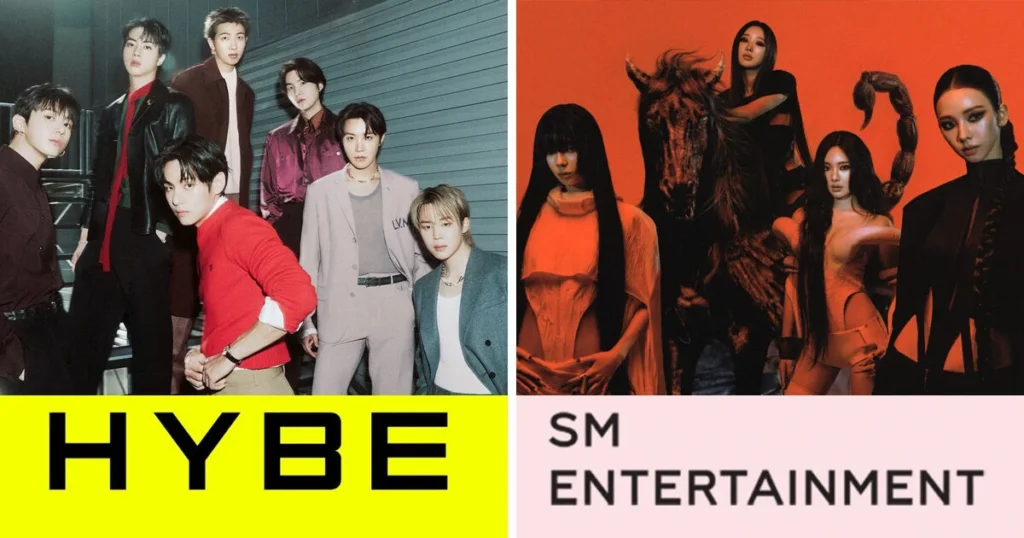

The global dominance of South Korean popular music, commonly known as K-pop, is inextricably linked to the strategic management and rigorous training systems of its primary entertainment conglomerates. For decades, the industry was defined by a "Big 3" hierarchy consisting of SM Entertainment, YG Entertainment, and JYP Entertainment. However, the unprecedented global ascent of BTS and the subsequent expansion of Big Hit Entertainment into HYBE Co., Ltd. has established a new "Big 4" era. As fans worldwide debate which of these titans possesses the most talented roster, a new interactive poll has emerged to quantify public sentiment regarding the artistic caliber of these agencies. This debate transcends mere popularity, touching upon the distinct training philosophies, performance styles, and vocal standards that each agency instills in its artists.
The Evolution of the Big 4 Hierarchy
The landscape of the Korean music industry has undergone a seismic shift over the last thirty years. In the late 1990s and early 2000s, SM Entertainment, founded by Lee Soo-man, pioneered the "idol system," focusing on high-concept visuals and technical vocal proficiency. YG Entertainment, led by Yang Hyun-suk, carved a niche in hip-hop and R&B, prioritizing "swag" and individualistic stage presence. JYP Entertainment, headed by Park Jin-young, emphasized a "half air, half sound" vocal technique and a focus on catchy, performance-heavy choreography.
For years, these three agencies held an effective oligopoly over the market. The emergence of HYBE (formerly Big Hit Entertainment) disrupted this long-standing structure. By leveraging the massive success of BTS and acquiring established labels like Pledis Entertainment and Source Music, HYBE transformed into a multi-label conglomerate that now rivals, and often surpasses, the original Big 3 in terms of revenue, market capitalization, and global reach. This evolution has created a competitive environment where each agency must continually refine its talent development strategies to maintain its status.
SM Entertainment: The Architects of Technical Perfection
SM Entertainment is frequently cited by industry analysts as the standard-bearer for technical skill in K-pop. The agency’s training regimen is notoriously rigorous, focusing on what they call "Culture Technology." This approach emphasizes high-level vocal training, resulting in some of the industry’s most respected vocalists, such as Taeyeon of Girls’ Generation, Baekhyun of EXO, and Wendy of Red Velvet.
Beyond vocals, SM is known for its experimental musical direction and complex choreography. Groups like NCT and aespa represent the agency’s commitment to pushing the boundaries of the genre, incorporating elements of hyper-pop and metaverse storytelling. Fans who vote for SM as the most talented agency often point to the "Neo Culture Technology" concept—a system that allows for infinite expansion and sub-unit formations—as evidence of the agency’s ability to manage diverse and highly skilled talent pools.
YG Entertainment: Mastery of Charisma and Individual Identity
In contrast to the synchronized perfection of SM, YG Entertainment has built its reputation on the "YG Style," which prioritizes individual charisma and a hip-hop-centric aesthetic. Since the debut of BIGBANG and 2NE1, the agency has focused on creating artists who feel like "superstars" rather than just "idols." This philosophy is most evident in the global success of BLACKPINK, whose members are recognized not only for their musical output but also as individual fashion icons and global brand ambassadors.
The talent at YG is often characterized by a "raw" energy and the ability to command a stage with presence alone. The recent debut of BABYMONSTER and the continued success of TREASURE suggest that YG is attempting to bridge the gap between their traditional hip-hop roots and the modern demands of high-performance K-pop. Voters who favor YG typically value stage presence, rapping ability, and the unique "color" of each artist over traditional technical metrics.
JYP Entertainment: The Power of Discipline and Performance
JYP Entertainment, under the guidance of Park Jin-young (J.Y. Park), has long been associated with the concept of "honesty, integrity, and humility." From a talent perspective, JYP is often viewed as the premier destination for performance-heavy groups. The agency has a storied history of producing successful girl groups, including the Wonder Girls, Miss A, TWICE, and ITZY.
JYP artists are frequently praised for their work ethic and their ability to execute complex, high-energy choreography with perfect synchronization. The agency’s "Globalization by Localization" strategy, which led to the creation of groups like NiziU and VCHA, demonstrates JYP’s ability to export its talent development system to different cultures. Those who select JYP in the poll often highlight the agency’s consistency and the "human" element of its performers, who are trained to be as charismatic off-stage as they are on-stage.
HYBE: The Modern Disruptors and Global Storytellers
HYBE’s rise to the top of the Big 4 was fueled by a different philosophy: storytelling and artist-led creativity. While BTS is the cornerstone of HYBE’s success, the agency’s multi-label system (including Big Hit Music, ADOR, Source Music, and Pledis) has allowed it to diversify its talent pool significantly. Groups like SEVENTEEN, NewJeans, LE SSERAFIM, and Tomorrow X Together (TXT) represent a broad spectrum of talent, from self-producing idols to experimental performance artists.
HYBE’s strength lies in its massive infrastructure and its ability to integrate technology with music. The agency’s talent is often marketed through "transmedia storytelling," where music videos, social media, and webtoons create a cohesive universe for the fans. Supporters of HYBE argue that the agency represents the future of the industry, where talent is defined not just by singing and dancing, but by an artist’s ability to connect with a global audience through meaningful narratives and digital engagement.
Comparative Data and Industry Implications
When evaluating "pure talent," industry experts often look at several key metrics: vocal stability during live performances, choreographic complexity, songwriting contributions, and versatility.
- Vocal Prowess: Traditionally, SM Entertainment leads in this category, with a high density of "main vocalists" who can perform technically demanding ballads and pop tracks.
- Performance and Dance: JYP and HYBE often compete for the top spot here. SEVENTEEN (HYBE/Pledis) is widely regarded as one of the best-performing groups in the history of K-pop, while ITZY (JYP) is known for its intense dance routines.
- Creative Input: HYBE and YG have a strong tradition of self-producing idols. Members of BTS and BIGBANG have historically written and produced much of their own discography, a trend that continues with groups like Stray Kids (JYP).
- Global Impact: Currently, HYBE leads in global chart performance (Billboard), while YG’s BLACKPINK remains the most-subscribed musical act on YouTube, showcasing a different facet of "talent"—the ability to capture global market share.
The poll currently hosted by Koreaboo serves as a microcosm of these broader industry debates. By allowing fans to vote once every two hours, the poll measures not just initial preference, but the dedication and organization of various fandoms. This "fandom power" is itself a metric of an agency’s talent in marketing and community building.
Public Reaction and the Role of Social Media
The announcement of the poll has triggered a wave of discussion across social media platforms like X (formerly Twitter) and Reddit. Fans of each agency have begun compiling "talent reels" and "vocal compilations" to advocate for their chosen powerhouse.
"SM has the best vocalists, period. You can’t debate the training that goes into an SM debut," one user noted on X. Conversely, a fan of HYBE argued, "Talent is more than just hitting a high note. It’s about stage presence, songwriting, and how you move the crowd. HYBE groups are on another level when it comes to the total package."
These reactions underscore a fundamental truth about the K-pop industry: "talent" is a subjective term that varies depending on what a fan values most. For some, it is the technical perfection of a studio recording; for others, it is the raw energy of a live concert.
Future Outlook: The Fifth Generation and Beyond
As the K-pop industry enters its "fifth generation," the definition of the Big 4 may continue to evolve. Smaller agencies are increasingly finding success through viral marketing and unique concepts (as seen with groups like FIFTY FIFTY or KISS OF LIFE), challenging the dominance of the major labels. However, the Big 4’s access to capital, global distribution networks, and established training academies ensures they will remain the primary drivers of the industry for the foreseeable future.
The results of this poll will likely reflect the current momentum of each agency. With HYBE continuing its expansion, SM navigating a new corporate era under Kakao, YG preparing for the full-scale activities of its new generation, and JYP expanding its global reach, the competition for the title of "most talented" is more intense than ever.
In conclusion, the Big 4 agencies represent four distinct pillars of the K-pop industry. Whether through the technical mastery of SM, the charismatic swagger of YG, the disciplined performance of JYP, or the innovative storytelling of HYBE, each agency has contributed significantly to the global phenomenon of Hallyu. As fans cast their votes, they are not just choosing a favorite group, but endorsing a specific philosophy of what it means to be a global superstar in the modern age. The poll remains open, providing a real-time snapshot of where the world’s most dedicated music fans place their loyalty and their respect for pure talent.