
The Event and the Catalyst of Criticism
The incident took place during a scheduled public appearance where Jerry Yan served as a celebrity ambassador for Clé de Peau Beauté. As a brand synonymous with high-end dermatological science and "radiant" skin, the expectations for Yan’s personal appearance were exceptionally high. During the event, fans and professional photographers gathered to capture the actor’s arrival. However, it was a specific set of "raw" or unedited photos—often referred to in Mandarin internet culture as shengtu—that triggered the viral discourse.
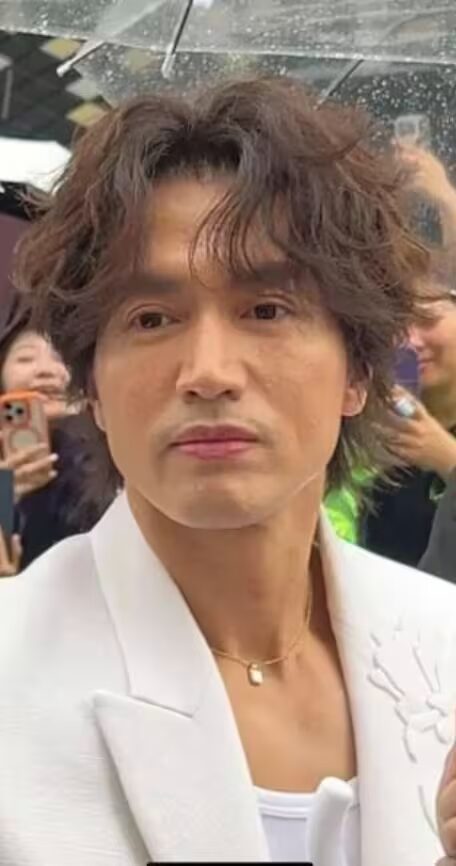
One particular close-up shot, taken by a netizen in the crowd, showcased Yan’s face without the benefit of studio lighting or post-production filters. The uploader noted that the actor’s skin appeared "duller than usual" and lacked the porcelain-smooth finish typically seen in his official media releases. The photograph revealed natural skin texture, including fine lines and slight hyperpigmentation, which are characteristic of a man approaching his fifth decade. This sparked an immediate wave of commentary across platforms like Weibo and Xiaohongshu, where users began comparing the "real-life" image to the curated photos posted on Yan’s official Weibo account earlier that same day.
A Comparative Analysis of Digital Perfection
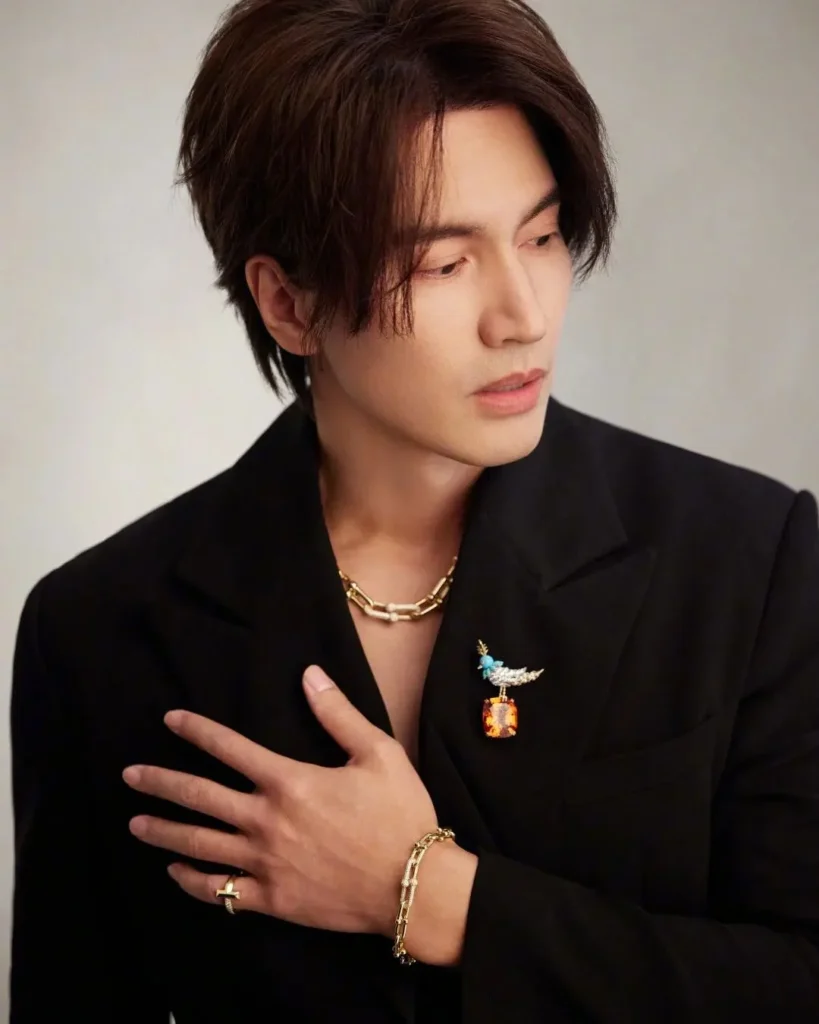
The disappointment voiced by a segment of the public stems largely from the stark contrast between professional photography and amateur captures. On Jerry Yan’s official social media channels, images from the Clé de Peau Beauté event depicted him with a flawless, luminous complexion, sharp jawline, and an overall youthful glow. These images, meticulously crafted through a combination of professional makeup, strategic lighting, and high-end digital retouching, reinforced the narrative that Yan is "frozen in time."
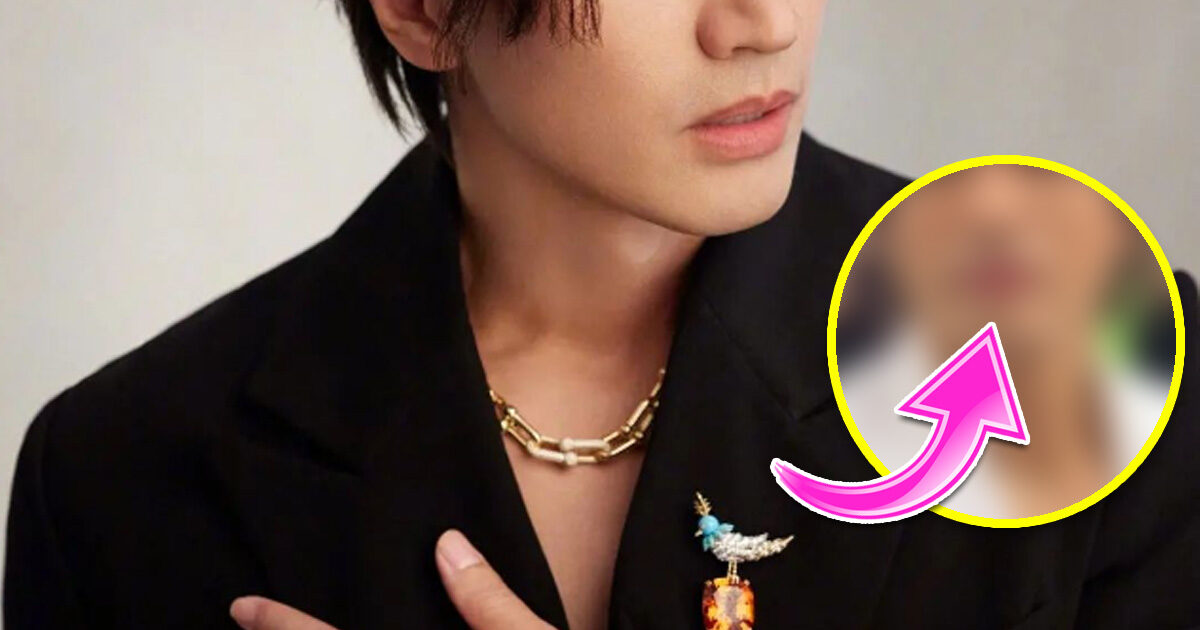
When the unedited fan photos surfaced, critics were quick to point out the differences. One commenter noted, "This is what Jerry Yan, who is pushing 50, really looks like," suggesting that the public has been misled by overly aggressive editing. The criticism highlights a growing tension in the entertainment industry: the reliance on digital enhancement to maintain an "ideal" image versus the inevitable biological process of aging. For a star like Yan, whose brand is heavily built on his enduring handsomeness, any sign of aging is often scrutinized with disproportionate intensity.
The "Meteor Garden" Legacy and the Burden of Timelessness
To understand the weight of these expectations, one must look back at Jerry Yan’s career trajectory. Yan achieved legendary status in 2001 as the lead character, Dao Ming Si, in the Taiwanese drama Meteor Garden. Alongside his F4 bandmates—Vic Chou, Ken Chu, and Vanness Wu—Yan became a pillar of the "Hallyu" equivalent of Taiwanese pop culture, known as the "Mando-pop" wave. For over two decades, he has maintained a level of popularity that few of his contemporaries have managed to sustain.
In recent years, Yan has undergone a career resurgence, particularly after his appearance on the reality competition show Call Me By Fire and his role in the 2023 hit drama The Forbidden Flower. In the latter, his physical fitness and youthful appearance were the primary talking points, with many viewers marveling at his ability to play a romantic lead opposite much younger actresses. This sustained "ageless" narrative created a pedestal that made the recent unedited photos particularly jarring for fans who had internalized his digital image as his absolute reality.
Public Defense and the Reality of Aging
Despite the initial wave of criticism, a significant portion of the internet rose to Yan’s defense. Many fans and objective observers argued that the criticism was not only harsh but also divorced from reality. Supporters pointed out that Jerry Yan, born in January 1977, is currently 47 years old. In the context of his age, many argued that he remains in the top percentile of physical maintenance.

"He already looks better than 99% of people his age," one viral comment stated, garnering thousands of likes. Others noted that the "dullness" mentioned by the original poster could easily be attributed to poor ambient lighting, fatigue from a grueling promotional schedule, or the limitations of a mobile phone camera sensor under harsh event lights. The defense centered on the idea that having skin texture is a human trait, not a professional failure. Furthermore, many argued that Yan looks at least a decade younger than his actual age, even in the unedited photographs.
The Role of Lighting and Technical Factors
From a technical perspective, the "failure to impress" can be analyzed through the lens of cinematography and photography. Public events often utilize high-intensity LED screens and overhead spotlights that create "top-down" shadows. This type of lighting is notoriously unforgiving, as it emphasizes every pore, wrinkle, and uneven surface on the human face. Professional studio photography, conversely, uses "soft" light to fill in those shadows, creating the illusion of a perfectly smooth surface.
Moreover, makeup used for public appearances is often applied more heavily to ensure it remains visible under bright lights and lasts throughout the day. In close-up, unedited mobile photography, this makeup can sometimes appear "cakey" or settle into fine lines, which the human eye might not notice in person but which a high-resolution camera sensor captures with clinical precision.
Broader Implications for the Entertainment Industry
The discourse surrounding Jerry Yan’s "real face" reflects a broader societal issue regarding ageism and the "uncanny valley" of celebrity culture. In the East Asian entertainment markets, particularly in China, South Korea, and Taiwan, there is an immense pressure on "idols" to maintain a youthful aesthetic well into their middle age. This has led to an industry-wide reliance on "beauty filters" during live streams and extreme retouching in promotional materials.
The backlash against Yan’s unedited photos suggests that while the public consumes these idealized images, there is a latent resentment or shock when the "illusion" is broken. However, it also signals a potential shift. As more "raw" photos of celebrities go viral, there is an increasing conversation about the need for more realistic beauty standards. The fact that Yan’s defenders outnumbered his critics indicates a growing maturity among some segments of the fanbase who recognize that aging is a natural process that should not be stigmatized, even for a "gorgeous actor."
Chronology of the Viral Moment
The timeline of the event and the subsequent social media storm can be broken down as follows:
- Morning of the Event: Jerry Yan’s official studio releases high-definition, edited promotional photos on Weibo to announce his participation in the Clé de Peau Beauté event. The photos show him with flawless skin.
- Mid-Afternoon: Yan appears at the physical event in China. Hundreds of fans and "station sisters" (dedicated fan photographers) capture images and videos.
- Evening: A netizen posts a series of unedited, close-up photos on a popular social media platform, noting the "dullness" of his skin. The post begins to gain traction.
- Overnight: The hashtag related to "Jerry Yan’s real state" begins to trend. Comparisons between the "studio version" and the "fan version" are widely circulated.
- Following Days: Entertainment news outlets and fashion bloggers weigh in, leading to a broader discussion on male celebrity aging and the ethics of digital retouching.
Conclusion: The Persistence of an Icon
While the headline "A Gorgeous Actor’s Real Face Failed To Impress" captures the initial shock of the online community, the deeper story is one of an enduring icon navigating the complexities of modern fame. Jerry Yan remains one of the most sought-after actors in the region, and his partnership with a brand like Clé de Peau Beauté underscores his status as a symbol of luxury and grooming.
Ultimately, the controversy serves as a reminder of the digital divide. In an era where every person carries a high-definition camera in their pocket, the "perfect" image of the celebrity is harder to maintain than ever before. For Jerry Yan, the "blemishes" revealed in a fan’s photo do little to diminish a career built on talent, charisma, and a legacy that spans over two decades. As the dust settles, the prevailing sentiment appears to be one of respect for an actor who, despite the intense scrutiny of the digital age, continues to stand at the forefront of the industry, proving that true star power transcends the smoothness of one’s skin.