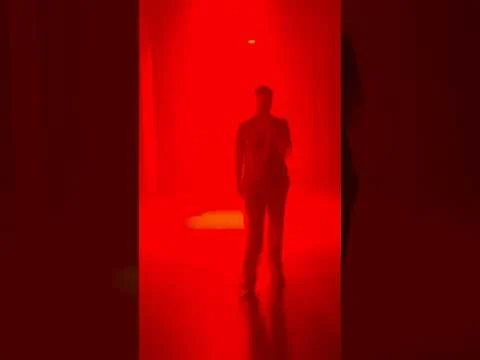

Perez Hilton, the renowned celebrity blogger and media personality, recently captivated his extensive audience with an enthusiastic dispatch from Museum Fiasco, an avant-garde art installation located within the groundbreaking Area 15 entertainment complex in Las Vegas. His public sharing, featuring a dynamic video showcasing the experience enhanced by sophisticated 3-D technology, highlighted the attraction’s unique fusion of high art and vibrant rave culture, a phenomenon he succinctly described as "intense." The widely shared content, originally posted on May 13, 2026, quickly circulated across digital platforms, drawing significant attention to one of Sin City’s burgeoning non-gaming entertainment destinations and underscoring the evolving landscape of modern experiential entertainment.
Hilton’s endorsement holds considerable weight within the digital sphere, given his long-standing presence and influence in pop culture commentary. His post, which featured him navigating the kaleidoscopic environments of Museum Fiasco, resonated with his followers, many of whom are consistently seeking novel and visually striking experiences. The simple yet impactful caption, "Those 3-D glasses take this to the next level! | Perez Hilton shares video of his visit to Museum Fiasco at Area 15 in Las Vegas. Art exhibition meets rave!", effectively encapsulated the essence of the attraction while leveraging his personal brand to amplify its appeal. This form of organic celebrity engagement has become a potent marketing tool for attractions, far surpassing traditional advertising in its authenticity and reach, particularly among younger, digitally native demographics who value peer recommendations and visual proof. Hilton’s explicit encouragement to "Watch above!" and "SHARE!" further amplified the content’s virality, positioning Museum Fiasco as a must-visit locale.
Museum Fiasco: A Symphony of Light, Sound, and Dimension
At its core, Museum Fiasco is not a museum in the traditional sense but rather an immersive art exhibition that transcends conventional boundaries. It is designed to be a multisensory journey, where light, sound, and spatial design converge to create a hypnotic and often disorienting experience. The use of advanced projection mapping, intricate LED installations, and bespoke soundscapes transforms static environments into dynamic, ever-changing canvases. Visitors are enveloped in a continuous flow of visual and auditory stimuli, intended to evoke a range of emotions from wonder to exhilaration.
The "3-D glasses" highlighted by Perez Hilton are not merely an accessory but an integral component of the experience, designed to enhance depth perception and manipulate visual reality within the exhibition space. These specialized optics work in tandem with the meticulously crafted visual content, adding layers of dimensionality and illusion that elevate the immersive effect. This technological integration is crucial to delivering the "next level" intensity described by Hilton, transforming flat projections into seemingly tangible, three-dimensional forms that swirl, expand, and contract around the viewer. The description "art exhibition meets rave" perfectly captures the essence of Museum Fiasco, blending the aesthetic contemplation of fine art with the high-energy, communal sensory overload typically associated with electronic music events. It offers a curated yet liberating environment where visitors are encouraged to move, interact, and become part of the art itself, blurring the lines between observer and participant.
Area 15: Las Vegas’s Nexus of Experiential Entertainment
Museum Fiasco finds its home within Area 15, a revolutionary entertainment complex that has rapidly become a cornerstone of Las Vegas’s evolving identity. Opened in September 2020 amidst unprecedented global challenges, Area 15 was conceived as an experiential retail and entertainment district, a "portal to another dimension" designed to offer an alternative to the city’s traditional casino-centric attractions. The complex spans over 200,000 square feet, housing a diverse array of immersive experiences, art installations, unique dining options, and live events. Its distinctive, industrial-chic architecture and sprawling, open-plan interior create an atmosphere ripe for exploration and discovery.
Area 15’s vision was to create a curated collection of best-in-class experiences, appealing to a broader demographic that includes families, younger travelers, and those seeking cultural and artistic engagement beyond gambling and traditional shows. Key anchor tenants alongside Museum Fiasco include Meow Wolf’s Omega Mart, a surreal, interactive supermarket art installation; Birdly VR, a full-body virtual reality flight simulator; Five Iron Golf, an urban indoor golf experience; and various axe-throwing, zip-lining, and arcade attractions. The complex also hosts a dynamic calendar of events, from concerts and art shows to corporate gatherings, further solidifying its reputation as a vibrant cultural hub. The success of Area 15 since its inception, despite opening during a pandemic, underscores a significant shift in consumer preferences towards immersive, shareable, and distinctly non-traditional entertainment options.
The Global Rise of Immersive Art and Entertainment
The phenomenon observed at Museum Fiasco is part of a much larger global trend towards immersive and experiential entertainment. Over the past decade, there has been a significant surge in attractions that prioritize sensory engagement and active participation over passive observation. This trend is driven by several factors:
- Demand for Unique Experiences: Modern consumers, particularly millennials and Gen Z, prioritize experiences over material possessions. They seek out novel, shareable moments that create lasting memories.
- Social Media Influence: The "Instagrammability" of immersive art is undeniable. These visually stunning environments provide perfect backdrops for social media content, encouraging visitors to share their experiences and inadvertently promote the attractions.
- Technological Advancements: Rapid developments in projection mapping, LED technology, virtual reality (VR), augmented reality (AR), and spatial audio have made it possible to create highly realistic and captivating immersive worlds that were once confined to science fiction.
- Escapism and Engagement: In an increasingly digitized and often stressful world, immersive experiences offer a powerful form of escapism, allowing visitors to disconnect from reality and engage their senses in a fantastical environment. They also foster a sense of wonder and curiosity, appealing to an innate human desire for exploration.
From the wildly successful Van Gogh immersive exhibitions that have toured cities worldwide to TeamLab Borderless in Tokyo and various VR arcades and escape rooms, the industry is witnessing a renaissance of interactive and technology-driven entertainment. These attractions often command premium ticket prices, demonstrating the public’s willingness to invest in high-quality, memorable experiences. The integration of cutting-edge technology with artistic expression creates a new frontier for cultural engagement, blurring the lines between art, entertainment, and digital innovation.
Las Vegas’s Strategic Diversification and Economic Impact
Perez Hilton’s visit to Museum Fiasco at Area 15 is more than just a celebrity endorsement; it symbolizes Las Vegas’s successful and ongoing strategy to diversify its tourism economy beyond its traditional reliance on gambling. For decades, the city was synonymous with casinos, lavish shows, and convention tourism. However, recognizing the need for resilience and broader appeal, particularly in the wake of economic downturns and changing consumer habits, Las Vegas embarked on a concerted effort to broaden its entertainment offerings.
Area 15 and its tenants like Museum Fiasco are pivotal to this diversification strategy. They attract a demographic less interested in slot machines and blackjack tables but highly motivated by unique cultural and entertainment experiences. This shift not only brings in new visitors but also encourages longer stays and repeat visits, as there are more non-gaming activities to explore. The success of such ventures contributes significantly to the local economy by:
- Job Creation: Developing, operating, and maintaining complex experiential attractions requires a diverse workforce, from artists and technicians to hospitality staff and marketing professionals.
- Increased Tourism Revenue: While non-gaming, these attractions still generate substantial revenue through ticket sales, merchandise, food and beverage, and indirect spending at nearby businesses.
- Enhanced City Branding: Positioning Las Vegas as a hub for innovation, art, and diverse entertainment experiences elevates its global brand, making it an attractive destination for a wider range of travelers and even businesses looking to relocate.
- Reduced Economic Volatility: By reducing dependence on a single sector (gaming), the city’s economy becomes more robust and less susceptible to fluctuations in any one industry.
The investment in non-gaming attractions complements other major developments in Las Vegas, such as the construction of world-class sports arenas (e.g., T-Mobile Arena, Allegiant Stadium), which now host professional sports teams and major international events like Formula 1 races and the Super Bowl. This holistic approach ensures that Las Vegas remains a dynamic and leading global entertainment capital, continually reinventing itself to meet contemporary demands.
The Future Trajectory of Experiential Entertainment
The enthusiastic reception of attractions like Museum Fiasco by influential figures such as Perez Hilton, coupled with robust visitor numbers, provides valuable insights into the future trajectory of the entertainment industry. The demand for highly immersive, interactive, and shareable experiences is not a fleeting trend but a fundamental shift in how people choose to spend their leisure time and disposable income.
Moving forward, we can anticipate several key developments:
- Further Technological Integration: Expect to see even more sophisticated applications of AI, haptics, and mixed reality (MR) to create experiences that are even more personalized, adaptive, and physically engaging.
- Expansion of Experiential Complexes: The success of Area 15 will likely inspire similar purpose-built experiential entertainment districts in other major cities worldwide, offering a curated collection of diverse attractions under one roof.
- Collaboration Between Art and Technology: The synergy between artists, technologists, and designers will deepen, leading to the creation of increasingly complex and emotionally resonant immersive narratives and environments.
- Sustainability and Accessibility: As the industry grows, there will be an increased focus on designing sustainable attractions and ensuring accessibility for all visitors, incorporating inclusive design principles from conception.
- Personalization: Future immersive experiences may leverage data and AI to tailor content and pathways to individual visitor preferences, making each journey unique.
Perez Hilton’s "intense" encounter at Museum Fiasco serves as a compelling testament to the power of immersive art and the visionary development of spaces like Area 15. It underscores a pivotal moment in the evolution of entertainment, where technology, creativity, and strategic urban planning converge to offer unparalleled experiences that captivate, inspire, and redefine leisure in the 21st century. As Las Vegas continues to innovate, its non-gaming attractions are poised to play an increasingly central role in shaping its identity as a truly global entertainment destination.