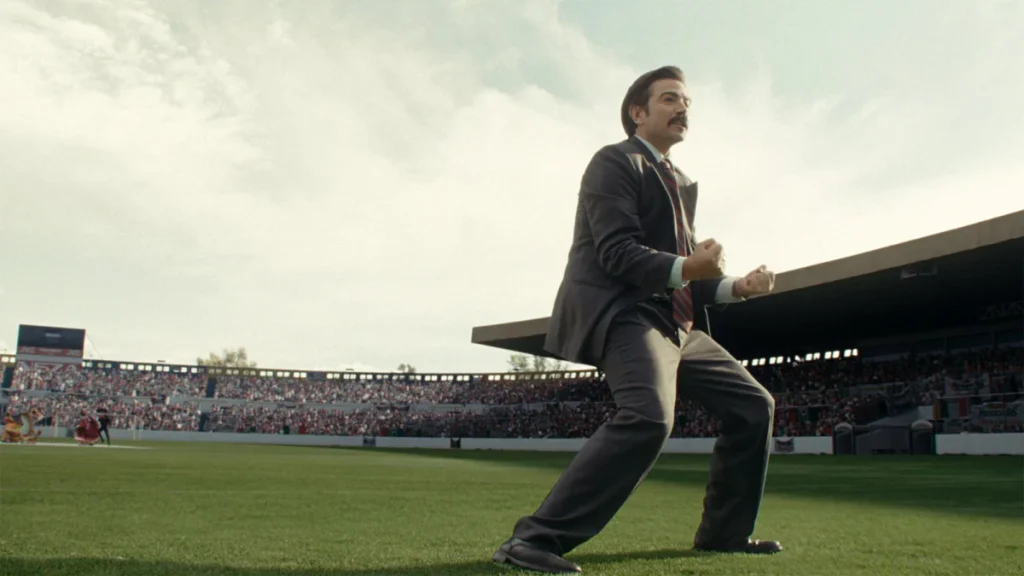

Netflix has unveiled the official trailer for "Mexico 86," a captivating true story comedy set to premiere globally on its streaming platform on June 5, 2026. The film, produced by and starring Diego Luna, chronicles the audacious and rule-bending journey of a Mexican bureaucrat who defied immense odds to secure the hosting rights for the 1986 FIFA World Cup, bringing the prestigious tournament back to Mexico for a second time. Directed by acclaimed Mexican filmmaker Gabriel Ripstein, the movie promises an entertaining dive into the high-stakes political gambits and behind-the-scenes drama that unfolded off the pitch, proving that not all crucial victories are scored within the confines of a soccer stadium.
The Unlikely Ascent to Hosting Glory
"Mexico 86" centers on Martín De La Torre, a fictionalized representation of the individuals whose relentless efforts and unconventional tactics were instrumental in Mexico being chosen as the host nation for the 1986 World Cup. The trailer hints at a narrative filled with suspense, humor, and a palpable sense of urgency, portraying De La Torre as a character armed with little more than "guts and audacity" as he navigates the complex corridors of FIFA. The film is positioned as a celebration of this remarkable achievement, highlighting the triumph of a nation against formidable international competition, particularly the United States, which was also vying for the hosting rights.

The story is particularly resonant given the context of the 1986 World Cup itself. Originally, Colombia was selected as the host nation in 1974. However, due to economic challenges, Colombia withdrew its bid in 1982. This withdrawal created an unexpected opening, and Mexico, which had successfully hosted the tournament in 1970, stepped in to fill the void. This last-minute opportunity presented a significant challenge and a remarkable opportunity, setting the stage for the dramatic behind-the-scenes maneuvering that "Mexico 86" aims to bring to light. The film’s release date, strategically placed in June 2026, intentionally coincides with the ongoing FIFA World Cup, drawing a parallel between past and present footballing spectacles and appealing to a global audience already immersed in the sport’s fervor.
A Star-Studded Ensemble Cast
Diego Luna, a prominent figure in both Mexican and international cinema, not only stars as Martín De La Torre but also serves as an executive producer, lending his considerable influence and talent to the project. Luna is known for his roles in critically acclaimed films such as "Y Tu Mamá También," "Rogue One: A Star Wars Story," and the critically lauded series "Narcos: Mexico." His involvement suggests a deep commitment to bringing this unique historical narrative to life with authenticity and compelling performance.
Joining Luna in the cast are a host of talented Mexican actors who are poised to deliver nuanced performances. Karla Souza, recognized for her roles in "How to Get Away with Murder" and "We Are the Truth," brings her strong screen presence to the film. Daniel Giménez Cacho, a veteran actor with a distinguished career in films like "Roma" and "The Skin I Live In," adds significant gravitas. The ensemble is further bolstered by the inclusion of Álvaro Guerrero, Memo Villegas, and Juan Pablo Fernández, all of whom have established themselves as respected artists within the Latin American film industry. This assembly of talent underscores the film’s ambition to be a significant cultural and cinematic event.

The Director and the Vision
Gabriel Ripstein, the director of "Mexico 86," is a filmmaker known for his distinctive style and compelling storytelling. His previous directorial work includes the gripping drama "600 Miles," which premiered at the Toronto International Film Festival and earned critical acclaim for its intense portrayal of border issues. Ripstein has also made a significant impact in television, directing episodes for popular series such as "An Unknown Enemy," "La Máquina," and "Midnight Family." His experience in navigating complex narratives and creating immersive cinematic worlds bodes well for the ambitious scope of "Mexico 86."
The screenplay, penned by Daniel Krauze and Gabriel Ripstein, is expected to blend historical accuracy with dramatic flair, capturing the essence of the era and the high stakes involved in securing the World Cup bid. The producers include Sidonie Dumas, Nicolas Atlan, and Christian Gabela, with Gaumont, a renowned production company with a long history in filmmaking, backing the project. This collaborative effort from seasoned professionals suggests a production of high caliber, poised to deliver a polished and engaging cinematic experience.
Historical Context: Mexico’s World Cup Legacy
Mexico’s relationship with the FIFA World Cup is deeply rooted. The country first hosted the tournament in 1970, a competition celebrated for its high-quality football and for being the first World Cup broadcast in color television globally. The 1970 tournament is often remembered for Brazil’s iconic team, featuring Pelé, clinching their third title. The subsequent hosting in 1986 further cemented Mexico’s status as a premier footballing nation and a capable organizer of major international sporting events.

The 1986 FIFA World Cup is particularly memorable for several reasons. It was the tournament where Diego Maradona, the legendary Argentine player, etched his name into footballing history with his performances, including the infamous "Hand of God" goal and the breathtaking "Goal of the Century" against England in the quarter-finals. Argentina went on to win the tournament, defeating West Germany in a thrilling final. The 1986 World Cup also saw the introduction of the spray can used by referees to mark the ball’s position for free kicks, a subtle but lasting innovation. The tournament’s success in Mexico, despite the country’s economic challenges and the late change of venue, was a testament to the organizational prowess and passion for football within the nation.
Analysis of Implications and Broader Impact
The decision to bring the FIFA World Cup to Mexico for a second time in 1986 was not merely a sporting event; it was a significant political and economic undertaking. The film "Mexico 86" has the potential to shed light on the intricate web of negotiations, lobbying, and perhaps even backroom deals that characterized international sports governance during that era. By focusing on the human element – the ambition, the resourcefulness, and the potential ethical compromises of individuals like Martín De La Torre – the movie can offer a compelling perspective on how major global events are shaped by human endeavor and political will.
The film’s narrative also taps into a broader theme of national pride and the power of sport to unite a country. For Mexico, hosting the World Cup was an opportunity to showcase its capabilities on a global stage, boost its international image, and generate economic activity. The success of the 1986 tournament, in particular, was a significant morale booster for a nation facing economic hurdles. "Mexico 86" can serve as a reminder of this achievement and the dedication required to make such ambitious projects a reality.

Furthermore, the film’s exploration of the bureaucratic and political machinations involved in securing hosting rights is highly relevant in today’s world. As major sporting bodies like FIFA continue to face scrutiny over transparency and governance, a film that delves into the historical precedents of such processes can offer valuable insights and spark conversations about integrity and accountability in international sports.
The choice of Netflix as the distributor ensures a wide global reach for "Mexico 86," allowing audiences worldwide to engage with this particular chapter of football history and Mexican cultural heritage. The film is poised to be more than just an entertaining comedy; it is an opportunity to explore the often-unseen efforts that bring monumental sporting events to fruition, celebrating the spirit of perseverance and the undeniable impact of football on a global scale. The trailer’s tagline, "Not all goals are scored on the field," perfectly encapsulates the film’s promise to reveal the compelling narratives that unfold beyond the roar of the crowd and the final whistle.