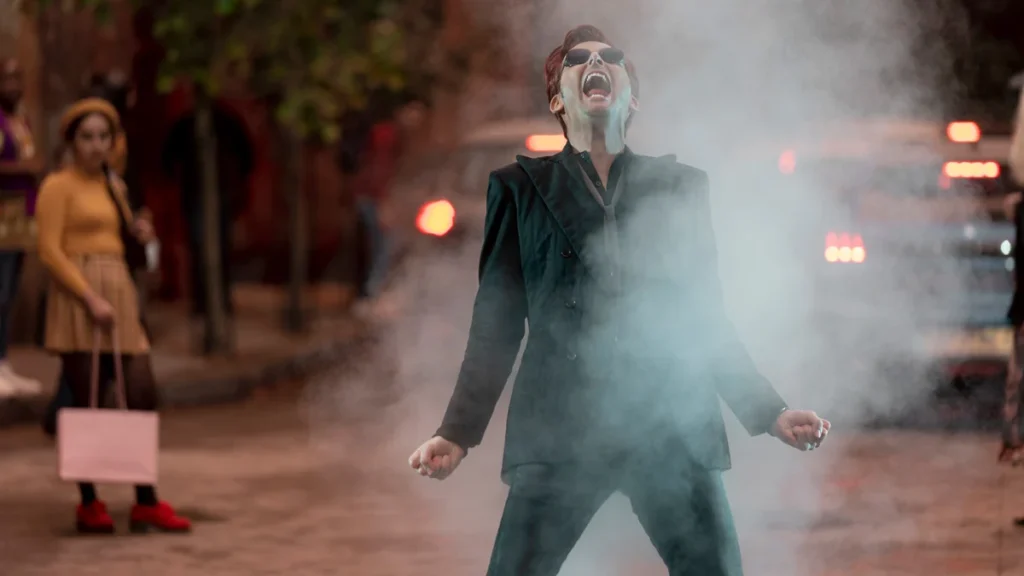

Once a titan of contemporary fantasy literature and a celebrated figure in the burgeoning world of screen adaptations, Neil Gaiman’s prolific career as a television creator appears to have been abruptly curtailed. This shift is starkly underscored by the recent release of a truncated "Season 3" of Prime Video’s Good Omens, a 99-minute special serving as an unexpected finale rather than a full season. The accelerated conclusion of Good Omens, alongside the cancellation or shelving of other high-profile projects based on his works, stems directly from a series of sexual assault and abuse allegations that surfaced against Gaiman in mid-2024, profoundly impacting his standing in the entertainment industry and among his vast readership.
The Ascendancy of a Literary Icon
For decades, Neil Gaiman occupied a rare space as a universally recognized author, a status increasingly uncommon in the modern literary landscape. His influence spanned multiple mediums, from comic books to novels, and later, film and television. His seminal comic book series, The Sandman, published by DC Comics under its Vertigo imprint from 1989 to 1996, is widely regarded as one of the most significant and artistically ambitious works in comic history. It garnered critical acclaim, including multiple Eisner Awards, and established Gaiman as a storyteller capable of weaving intricate mythologies with profound philosophical depth. This success translated into best-selling novels such as American Gods (2001), Coraline (2002), and Stardust (1999), each cementing his reputation for dark fantasy, intricate world-building, and compelling character narratives.
Gaiman’s public persona further amplified his celebrity. Instantly identifiable by his signature leather jacket and distinctive messy black hair, he was a familiar face at fan conventions worldwide, often drawing immense crowds. His cultural penetration was such that he was invited to guest star on The Simpsons on two separate occasions, a testament to his mainstream appeal beyond dedicated genre fans. At the peak of his career, Gaiman was not merely an author; he was a pop culture phenomenon, a creator whose work resonated deeply with millions and whose presence commanded attention.
His initial foray into television began with the 1996 BBC miniseries Neverwhere, which Gaiman later adapted into a successful novel, illustrating his versatility across storytelling formats. However, it was in the 2010s that Gaiman significantly expanded his footprint in television. He contributed two critically acclaimed original scripts to Seasons 6 and 7 of the iconic British science fiction series Doctor Who ("The Doctor’s Wife" and "Nightmare in Silver"). This period also saw him take on a more prominent role as a producer, notably on Starz’s ambitious adaptation of American Gods. Despite being plagued by significant behind-the-scenes drama, including a revolving door of showrunners, American Gods showcased flashes of creative brilliance and demonstrated the visual potential of Gaiman’s complex narratives on screen.
The late 2010s and early 2020s marked what appeared to be the zenith of Gaiman’s television empire. Good Omens, based on the beloved 1990 novel co-written with the late Terry Pratchett, premiered on Prime Video in 2019 to widespread critical and fan adoration. The series, which delightfully chronicled the antics of an angel (Aziraphale, played by Michael Sheen) and a demon (Crowley, played by David Tennant) as they sought to prevent the apocalypse, was initially conceived as a limited series. However, its immense popularity led to a second season in 2023, expanding on the characters’ relationship and the novel’s universe.
Simultaneously, the long-anticipated adaptation of The Sandman finally materialized on Netflix in 2022. This project, once deemed "unfilmable" due to the comic’s intricate mythology and expansive scope, received generally positive reviews for its faithful yet fresh interpretation of the source material. Its success further bolstered Gaiman’s reputation as a creative force capable of translating complex literary visions into compelling visual narratives. In April 2024, Netflix also launched Dead Boy Detectives, a series based on characters created by Gaiman within The Sandman universe, featuring direct cast crossovers, signaling a deliberate expansion of a shared Gaiman cinematic universe. Another significant project, a Prime Video adaptation of his novel Anansi Boys, concluded production in 2022 and was awaiting release, poised to further diversify his television portfolio.
The Precipitous Fall: Allegations and Industry Response
The carefully constructed edifice of Gaiman’s television empire began to crumble with the emergence of serious allegations against him. In July 2024, reports surfaced, initially from Tortoise Media, accusing Gaiman of sexual assault and abuse by two women. These initial reports were followed by a comprehensive deep-dive investigation published by New York magazine in April 2025, which detailed these and additional allegations. The extensive nature and gravity of these claims sent shockwaves through the entertainment industry and his fan base.
The immediate and profound impact of these allegations was evident in the rapid response from the production companies and streaming platforms involved in Gaiman’s projects. The previously greenlit third season of Good Omens, which had been ordered by Prime Video in December 2023, was drastically altered. Instead of a planned full season, the narrative was condensed into a single, 99-minute episode, essentially a speed-run through an entire season’s worth of material designed to provide a swift conclusion to the overarching story. Gaiman, who had been deeply involved in the series as a showrunner and writer, reportedly stepped away from its production following the allegations, a move indicative of the severity of the situation.
This truncation was not an isolated incident. The cascading effect of the 2024 allegations became apparent across his other projects:
- Dead Boy Detectives: Despite its recent launch and connection to The Sandman universe, Netflix canceled Dead Boy Detectives in August 2024 after just one season.
- The Sandman: While initially a critical and commercial success for Netflix, The Sandman also saw an unexpected conclusion. In the summer of 2025, Netflix wrapped up the series with its second season, despite a wealth of source material remaining in Gaiman’s original comics. This decision signaled a clear shift away from prolonged investment in Gaiman-associated properties.
- Anansi Boys: Perhaps the most definitive indication of Gaiman’s industry ostracization came with Anansi Boys. The series, which had wrapped production in 2022, was never released. Actor Delroy Lindo, a prominent cast member, expressed his disappointment in an EW interview in 2025, stating, "I don’t think that’ll ever see the light of day. It’s too bad on many levels, but I was really excited to do it." While Lindo held a glimmer of hope for its eventual release, the indefinite shelving of a completed project is a strong signal of its effectively permanent cancellation.
Gaiman’s Response and the Broader Industry Context
In the wake of the allegations, Neil Gaiman has consistently and firmly denied any wrongdoing. In January 2025, he issued a public statement vehemently refuting the multiple accounts of abuse, stating there was no truth to them. This stance contrasts sharply with some public figures who, when faced with similar accusations, have offered comprehensive apologies and sought to make amends, such as writer Dan Harmon, who addressed past problematic behavior with thorough public apologies. Gaiman’s unwavering denials have left the allegations to "fester in the imagination," as one critic observed, rather than allowing for any perceived healing or resolution through acknowledgment.
This situation unfolds within a broader industry context shaped by the #MeToo movement, which gained significant momentum in 2017. Since then, numerous high-profile figures across film, television, and literature have faced accusations of misconduct, leading to a re-evaluation of accountability and consequences for those in positions of power. The industry, and by extension the public, has been grappling with the complex "art versus artist" calculus, particularly when beloved creators are implicated in serious ethical breaches. Figures like Joss Whedon and Woody Allen have seen their careers and public perception irrevocably altered by such allegations, and Gaiman’s case now sits alongside theirs, albeit with a later emergence of accusations. The impact on his fans has been similar, forcing them to confront difficult questions about how to reconcile their admiration for his work with the disturbing nature of the claims against him.
A noteworthy aspect of Anansi Boys being shelved is its largely Black cast. While the decisions by Prime Video and other platforms were undoubtedly driven by the allegations against Gaiman, the outcome has led to uncomfortable discussions about which projects are ultimately prioritized for release versus those quietly disappeared. The fact that Good Omens and The Sandman, both led by predominantly white casts, managed to conclude their stories on screen, albeit in altered forms, while a project featuring a largely Black ensemble was shelved indefinitely, raises questions about equity within the industry’s crisis management strategies, even if unintentional.
Implications for Gaiman’s Legacy and the Future of Creator Worship
The consequences for Neil Gaiman’s professional legacy are profound. Once a revered figure synonymous with imaginative storytelling, his name is now inextricably linked to serious allegations. The rapid unwinding of his extensive television slate signifies a near-total withdrawal of industry support and investment. While his published works will continue to exist, the likelihood of new major adaptations or projects directly involving him appears slim. This effective cancellation extends beyond the screen, potentially impacting future publishing deals, public appearances, and his overall cultural standing.
The situation also reignites critical discussions about the "deification of creators" within fan culture, particularly in the rise of mainstream "nerd culture." For many years, figures like Gaiman were elevated to near-mythic status by passionate fan bases, their creative output and personal integrity often intertwined in the public imagination. This intense veneration, while fueling creativity and community, can also create an environment where accountability is difficult to enforce and where the fall from grace is particularly jarring.
The Good Omens truncated finale, despite its on-paper "happy ending" for its central characters, leaves a lingering sense of unease. The joy of seeing a beloved story conclude is overshadowed by the knowledge of why it concluded so abruptly. This inability to separate the art from the artist, a common struggle in such situations, underscores the personal and ethical quandaries faced by audiences.
The erosion of Gaiman’s career serves as a stark reminder of evolving industry standards and the growing demand for accountability, regardless of a creator’s artistic achievements. The most positive sentiment emerging from this difficult period is perhaps a sense of relief, a hope that as much as his fantasy tales once entertained, they may now begin to recede from the public consciousness, allowing for new voices and stories to emerge unburdened by such controversy.
The final lesson from Good Omens, where Aziraphale and Crowley ultimately devise a new plan for the universe — one without the meddling of Heaven or Hell, allowing humanity to chart its own course — offers an ironic parallel. It suggests a world without "gods" or deified figures dictating destiny. Perhaps, in the entertainment industry and beyond, the time has come to let such figures, Neil Gaiman included, fade away, fostering a more equitable and accountable creative landscape. The industry is left to navigate the complex aftermath, ensuring that future collaborations are built on foundations of respect, safety, and ethical conduct, rather than on the unchecked adoration of individuals.