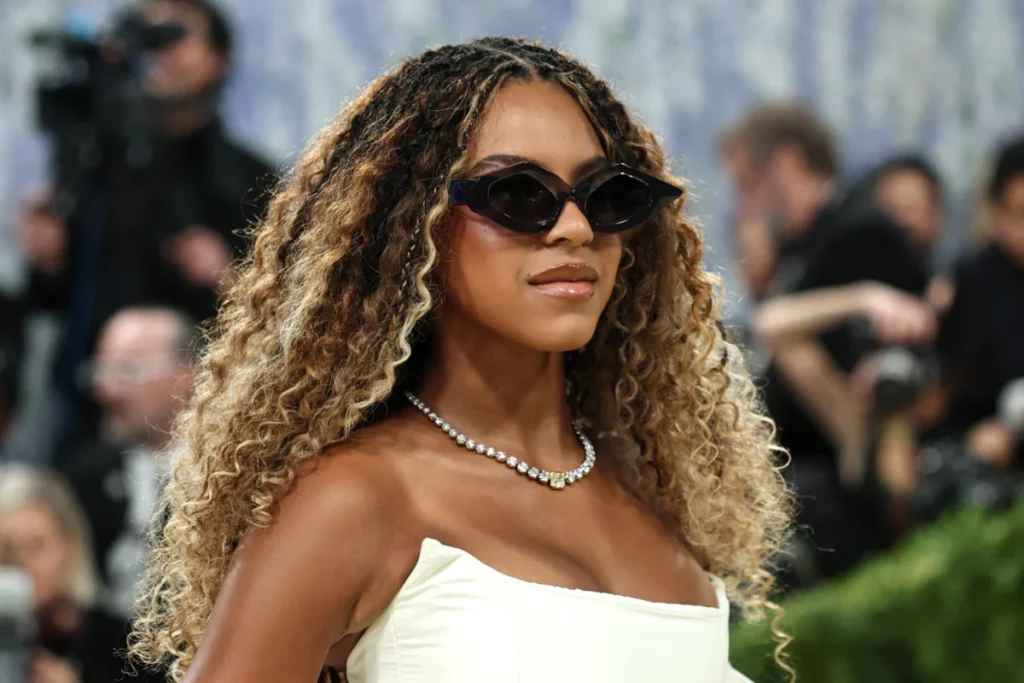

The Metropolitan Museum of Art’s Costume Institute Benefit Gala, affectionately known as the Met Gala, once again cemented its status as fashion’s most exclusive and anticipated event on Monday, May 5, 2026. This year’s spectacle, themed "Fashion as an Embodied Art Form," drew a glittering constellation of celebrities, designers, and cultural titans to New York City, all vying to interpret the sartorial challenge with unprecedented creativity. However, it was the surprising debut of Blue Ivy Carter, the 14-year-old daughter of Beyoncé and Jay-Z, that captured immediate global attention, raising eyebrows and questions about the event’s long-standing age restriction.
Blue Ivy Carter’s Groundbreaking Debut and the Age Rule Controversy
Blue Ivy Carter made an undeniable statement as she graced the hallowed red carpet alongside her iconic parents, marking her first appearance at the prestigious event. At just 14 years old, her presence appeared to directly contravene the Met Gala’s established rule, which stipulates that attendees must be at least 18 years of age. While there have been rare exceptions in the past, primarily for children accompanying their parents in a very limited capacity or for specific artistic reasons aligned with a theme, Blue Ivy’s prominent walk down the carpet as a fully styled participant immediately sparked widespread discussion across social media and traditional news outlets.

Dazzling in a custom cream bubble-hem strapless gown by Balenciaga, Blue Ivy exuded a sophisticated composure that belied her age. Fashion commentators were quick to note her striking resemblance to her superstar mother, Beyoncé, with many praising her elegant posture and confident demeanor. Her ensemble, a testament to Balenciaga’s avant-garde yet timeless aesthetic, featured a voluminous, structured skirt that provided a dramatic silhouette, perfectly complementing the evening’s artistic theme. The decision by Beyoncé and Jay-Z to bring their daughter, coupled with her impeccably styled appearance, underscored the unparalleled influence of the Carter family within the entertainment and fashion industries, suggesting that for certain power players, traditional rules can occasionally be bent or reimagined. This move not only highlighted Blue Ivy’s burgeoning public profile but also set a precedent, potentially signaling a shift in how the gala approaches its guest list in future iterations.
Beyoncé’s Triumphant Return and the Evening’s Artistic Theme
The evening was further electrified by the long-awaited return of Beyoncé, who had not attended the Met Gala in a decade. As one of the evening’s co-chairs, her presence was highly anticipated, and she did not disappoint. The global superstar made a powerful statement in a breathtaking, bejeweled skeleton gown, meticulously curated by French designer Olivier Rousteing, creative director of Balmain. The intricate design, which appeared to be a stunning architectural marvel crafted from delicate embellishments, was a masterclass in high fashion and thematic interpretation. Rousteing, renowned for his opulent and empowering designs, collaborated with Beyoncé to create a piece that not only showcased his distinctive aesthetic but also paid homage to the evening’s theme, "Fashion as an Embodied Art Form." The gown served as a powerful visual metaphor, celebrating the human form as a canvas for artistic expression.
The 2026 Met Gala theme invited guests to delve into the profound relationship between clothing and the body, challenging them to explore fashion not merely as adornment but as a tangible, living art form. This intellectual underpinning resonated throughout the evening’s sartorial choices, encouraging designers and celebrities to push boundaries and consider the historical and artistic contexts of their ensembles. The theme accompanied the opening of the Costume Institute’s spring exhibition at the Metropolitan Museum of Art, a cornerstone of the gala’s annual purpose. This year’s exhibition promised a deep dive into how various cultures and eras have conceptualized and depicted the "dressed body" in art, from classical sculptures to contemporary digital installations. The gala, therefore, served as both a fundraiser and a living, breathing preview of the museum’s scholarly exploration.

The Gala’s Enduring Purpose and Financial Impact
Beyond the dazzling display of celebrity and haute couture, the Met Gala maintains its fundamental purpose: to raise vital funds for the Metropolitan Museum of Art’s Costume Institute. Established in 1948 by fashion publicist Eleanor Lambert and the museum’s curator of costume, Irene Lewisohn, the gala has evolved from a relatively modest society dinner into one of the world’s most high-profile fundraising events. Under the formidable leadership of Vogue editor-in-chief Dame Anna Wintour, who has chaired the event since 1995, the gala has become a global cultural phenomenon, routinely raising tens of millions of dollars.
Tickets for the 2026 gala were reportedly priced at an astronomical $75,000 per individual, with tables costing upwards of $350,000, underscoring the event’s exclusivity and its capacity to attract significant philanthropic contributions. In recent years, the gala has consistently raised over $20 million annually, with the 2024 event reportedly pulling in a record-breaking $26 million. These funds are crucial for the Costume Institute, enabling it to mount its acclaimed exhibitions, acquire new pieces for its vast collection of over 35,000 garments and accessories, and support its ongoing conservation and research initiatives. The gala’s financial success ensures the preservation and celebration of fashion as a significant art form for future generations.
A Pantheon of Co-Chairs and Distinguished Guests

Dame Anna Wintour, the architect of the modern Met Gala, once again handpicked a distinguished group of co-chairs to help steer the evening. Joining Beyoncé were actress Nicole Kidman, tennis champion Venus Williams, Yves Saint Laurent creative director Anthony Vaccarello, and actress Zoe Kravitz. This diverse group of luminaries brought together the worlds of music, film, sports, and high fashion, reflecting the gala’s broad cultural appeal. The broader host committee for 2026 also featured an eclectic mix of influential figures, including English singer Sam Smith, actress Gwendoline Christie, Irish writer and activist Sinead Burke, alongside musical talents Sabrina Carpenter and Doja Cat, among others, further solidifying the event’s status as a nexus of global creativity.
Red Carpet Highlights: A Symphony of Style and Interpretation
The red carpet served as a living canvas, with attendees interpreting the "Fashion as an Embodied Art Form" theme in myriad ways:
- The Kardashian-Jenner Dynasty: The family known for their indelible impact on popular culture made their customary splash. A reality star, whose armored look, repurposed from a cast artist Jones made in the 1960s, was paired with a striking leather skirt by London-based studio Whitaker Malem. This ensemble was a powerful nod to Jones’s legacy in the pop art movement, where his controversial sculptures often incorporated the human body, directly aligning with the gala’s theme. She attended with her mother, Kris Jenner, rather than rumored boyfriend and F1 driver Lewis Hamilton. Kylie Jenner turned heads in a nude illusion Schiaparelli dress, a house celebrated for its surrealist and sculptural designs. Her gown featured a daring sculptural bodice that mimicked a bare chest, flowing into a long, intricate lace skirt and train, pushing the boundaries of perception and form. Kendall Jenner, ever the supermodel, looked statuesque in a custom GapStudio creation designed by Zac Posen, a designer known for his architectural silhouettes and elegant drapery.
- British Flair and European Elegance: British model and actress Cara Delevingne was an early arrival, posing for photographers in a figure-hugging dark-colored Ralph Lauren gown. The dress featured elegant sheer details over her shoulders and back, culminating in a dramatic train, embodying classic sophistication with a modern edge. Sam Smith wowed crowds in a dramatic black feather headpiece that paired with a Giles Deacon ensemble, demonstrating a theatrical interpretation of the theme. Gwendoline Christie also donned a Giles Deacon creation, carrying an intriguing mask that added an element of mystery and performance.
- The YSL Contingent: Zoe Kravitz, attending without rumored fiancé Harry Styles, showcased a sheer black lace dress with structured hips by Yves Saint Laurent, a testament to Anthony Vaccarello’s modern vision for the iconic house, blending sensuality with sharp tailoring. Brat hitmaker Charli XCX and supermodel Kate Moss also championed the same fashion house, with Charli describing her dress as featuring "an iris flower made out of resin, stitched onto its centre," influencing her translucent makeup palette.
- Prada’s Enduring Allure: Prada remained a favored choice among the British contingent. F1 star Damson Idris and actor Nicholas Hoult both donned sleek Prada outfits, showcasing the brand’s contemporary yet classic menswear. Actress Carey Mulligan captivated in an archival red silk column gown from Prada’s revered 1998 spring collection, a beautiful fusion of historical elegance and enduring design.
- Diverse Interpretations: Irish actress Daisy Edgar-Jones floated down the steps in a custom white Alexander McQueen look, a house celebrated for its dramatic and often ethereal creations. Nicole Kidman, accompanied by her daughter Sunday Rose, radiated in a red sequin gown with a striking feather detail around her waist, a vibrant celebration of glamour. Other notable attendees included Serena Williams, Anne Hathaway, Hailey Bieber, and Margot Robbie, each bringing their unique stylistic vision to the carpet. British actor Joe Alwyn, making his first Met Gala appearance since 2016, opted for a classic Valentino suit, while Suki Waterhouse channeled a Grecian goddess in a low-cut pink gown, embodying fluidity and grace.
- New Faces and Bold Transformations: Romeo Beckham, the middle son of Sir David and Victoria Beckham, made his Gala debut in a sophisticated Burberry tuxedo, marking a significant step into the high-fashion world. English fashion designer Stella McCartney walked arm-in-arm with American director Greta Gerwig, while Bridgerton actress Simone Ashley stunned in a draped chain dress by McCartney, showcasing the designer’s commitment to sustainable yet luxurious fashion. Bad Bunny, fresh off his Super Bowl half-time show, provided one of the evening’s most dramatic transformations, arriving in a black suit complemented by facial prosthetics and a wig that rendered him an old man – a profound embodiment of art and identity. German model Heidi Klum transformed into a "living sculpture" in a custom look crafted from latex and spandex, creating the head-to-toe illusion of carved stone, a literal interpretation of the theme. American singer SZA, who garnered acclaim for her yellow ensemble by Bode, uniquely sourced her dress fabric from eBay, highlighting a more accessible and resourceful approach to high fashion.
- Rihanna and A$AP Rocky’s Grand Entrance: Maintaining their tradition of arriving fashionably late, Rihanna and A$AP Rocky made their highly anticipated entrance. Rihanna stunned in a sculptural metallic bejeweled ensemble by Maison Margiela, a house renowned for its deconstructed and avant-garde designs, which flawlessly integrated with the "embodied art" theme. A$AP Rocky complemented her look in a chic pink Chanel suit, solidifying their status as one of fashion’s most influential power couples.
Broader Impact and Cultural Significance

The 2026 Met Gala underscored its unparalleled position as a global cultural touchstone. More than just a fundraiser, it serves as an annual barometer for fashion trends, a platform for artistic innovation, and a powerful engine for media engagement. The sheer volume of global media coverage, social media buzz, and public discussion generated by the event highlights its profound impact on popular culture. From the intricate designs that challenge conventional notions of beauty and form to the bold interpretations of a challenging theme, the Met Gala consistently pushes the boundaries of sartorial expression.
The event’s influence extends far beyond the red carpet, shaping public discourse on fashion, art, and celebrity. It provides a unique opportunity for designers to showcase their most ambitious and conceptual work, for celebrities to express their personal style through a high-art lens, and for the public to engage with fashion as a dynamic and thought-provoking art form. The 2026 gala, with its blend of established icons, emerging talents, and even a groundbreaking teenage debut, reaffirmed its legacy as "fashion’s biggest night," a spectacular celebration of creativity, philanthropy, and the enduring power of style.