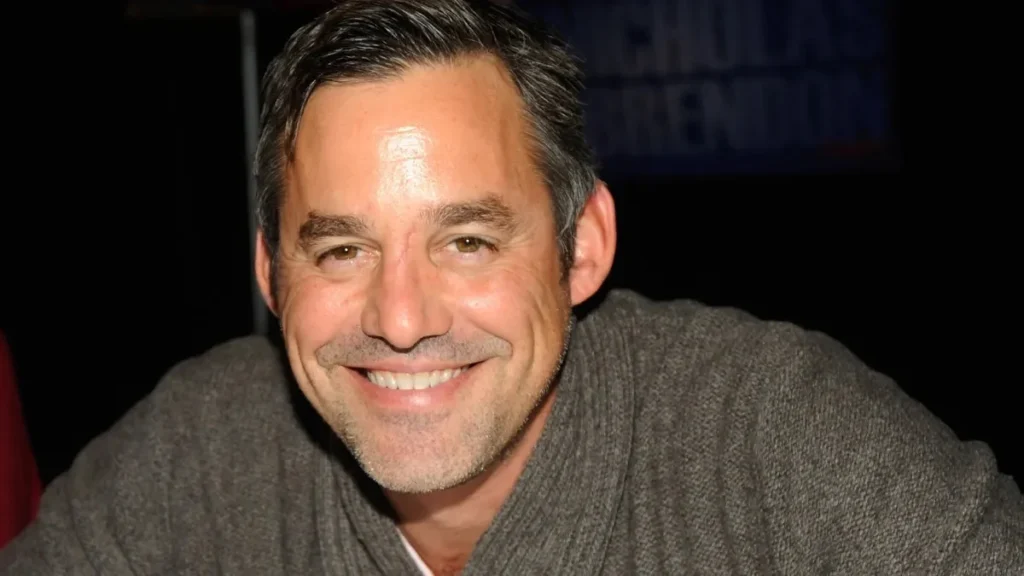

The Putnam County Coroner’s office has officially ruled the cause of death for Nicholas Brendon, widely known for his role as Xander Harris in the iconic television series Buffy the Vampire Slayer, as natural due to complications related to cardiovascular disease. The detailed report, released recently, provides clarity on the circumstances surrounding the actor’s passing in March, bringing a definitive close to inquiries into his sudden demise at age 54.
Official Findings from the Coroner’s Report
According to the findings presented by Coroner Todd Zeiner, Brendon died of natural causes stemming from atherosclerotic and hypertensive cardiovascular disease. The report further identified acute pneumonia and a previous myocardial infarction (heart attack) as significant contributing factors to his death. A critical detail highlighted in the autopsy was a severe, 90% blockage found in Brendon’s right coronary artery, indicating advanced arterial disease.
The comprehensive autopsy report meticulously documented the state of Brendon’s health at the time of his passing. Zeiner wrote, “Autopsy demonstrated an adult male with a markedly enlarged heart, severe stenosis of the right coronary artery, moderate stenosis of the left anterior descending and left circumflex arteries, acute pneumonia and inflammation of the small bowel.” The report elaborated on the potential interrelation of these conditions, suggesting that “The small bowel inflammation is most likely secondary to ischemic changes related to the cardiogenic shock,” meaning the heart’s inability to pump enough blood led to a lack of oxygen in the bowel tissue.
Law enforcement officials, who assisted the coroner’s office, confirmed that there were “no obvious signs of foul play” at the scene. Zeiner noted, “Nothing seemed out of place or disturbed,” reinforcing the conclusion of a natural, albeit sudden, death.
The Immediate Circumstances of Discovery
Nicholas Brendon was discovered by his longtime manager and friend, Theresa Fortier, just before 8:30 a.m. local time. Fortier found him “in a sleeping position on the couch” and promptly contacted 911. Her account to authorities provided crucial insight into Brendon’s health in the days leading up to his death.
Fortier informed the coroner’s office that Brendon had been experiencing a “persistent cough” and had been attempting to alleviate his symptoms by self-medicating with over-the-counter medications. Critically, he had also been “complaining about chest pain.” Despite Fortier’s suggestion that he seek professional medical attention at a hospital, Brendon expressed apprehension. According to the report, he was “apprehensive about going due to his recent back surgery” and “declined any further treatment at that time.” This decision, while understandable given the discomfort of recent surgery, unfortunately coincided with a rapidly deteriorating cardiac condition.
A History of Health Challenges: Cardiovascular Disease and Cauda Equina Syndrome
Brendon’s family had announced his death on March 20th, at the age of 54. It was known that the actor had a history of heart issues, a factor now confirmed as central to his passing. The specific conditions cited in the coroner’s report – atherosclerotic and hypertensive cardiovascular disease – are common yet serious forms of heart disease. Atherosclerosis involves the hardening and narrowing of arteries due to plaque buildup, restricting blood flow, while hypertension (high blood pressure) strains the heart and damages blood vessels over time. Both significantly increase the risk of heart attacks, strokes, and other cardiovascular events. The severe blockage in his right coronary artery points to advanced atherosclerotic disease.
Beyond his heart conditions, Brendon had also been diagnosed with cauda equina syndrome. This rare but serious neurological condition affects the bundle of nerves at the lower end of the spinal cord (the cauda equina), often leading to symptoms such as severe low back pain, numbness in the groin and legs, and bowel or bladder dysfunction. It frequently requires emergency surgery to prevent permanent damage. Brendon’s recent back surgery, presumably for this condition, likely contributed to his reluctance to seek hospital care for his escalating chest pain, a decision that proved tragically consequential. The discomfort and recovery associated with such a significant surgical procedure can make individuals hesitant to engage with the medical system for new, seemingly unrelated symptoms.
Nicholas Brendon’s Enduring Legacy: From Sunnydale to Screen
Nicholas Brendon carved out a significant place in pop culture history primarily through his portrayal of Xander Harris in Joss Whedon’s critically acclaimed supernatural drama Buffy the Vampire Slayer. From 1997 to 2003, Brendon’s character served as the relatable everyman, the witty best friend and often the moral compass amidst a world of vampires, demons, and existential threats. Xander’s journey from a high school outcast to a steadfast hero resonated deeply with audiences, making Brendon a beloved figure in the show’s enduring fandom. His performances often blended comedic timing with profound emotional depth, particularly in episodes exploring Xander’s vulnerabilities and his unrequited love for Buffy.
Following Buffy, Brendon continued to work in television and film, appearing in shows such as Criminal Minds, Kitchen Confidential, and Private Practice. He also maintained a strong connection with Buffy fans, frequently attending conventions and engaging with the community that had embraced him for decades.
However, Brendon’s life in the public eye was also marked by well-documented personal struggles, including battles with depression, substance abuse, and legal issues. While these challenges were distinct from the natural causes of his death, they often underscored the broader complexities of his health and well-being. His candor about his mental health struggles, at times, provided a platform for important conversations, even as he navigated difficult personal circumstances. These struggles, while not directly causative of his cardiovascular issues, can be acknowledged as part of the broader context of a life lived under intense public scrutiny and pressure, factors that can indirectly impact overall health management and access to consistent care.
Understanding Cardiovascular Disease: A Critical Public Health Issue
Nicholas Brendon’s passing serves as a stark reminder of the pervasive and often silent threat of cardiovascular disease. Atherosclerotic and hypertensive cardiovascular disease are leading causes of mortality worldwide, responsible for millions of deaths annually. In the United States alone, heart disease remains the leading cause of death for both men and women, according to the Centers for Disease Control and Prevention (CDC).
Atherosclerosis develops when plaque—a sticky mixture of fat, cholesterol, calcium, and other substances—builds up inside the arteries. Over time, this plaque hardens and narrows the arteries, limiting the flow of oxygen-rich blood to vital organs, including the heart itself. When this narrowing occurs in the coronary arteries, it leads to coronary artery disease, which can result in angina (chest pain), heart attacks, or heart failure. A 90% blockage, as found in Brendon’s right coronary artery, represents a critically severe obstruction that significantly compromises blood flow.
Hypertension, or high blood pressure, often works in tandem with atherosclerosis. It forces the heart to work harder to pump blood, which can thicken and stiffen the heart muscle over time, leading to an enlarged heart—a condition noted in Brendon’s autopsy. High blood pressure also damages the inner lining of arteries, making them more susceptible to plaque buildup.
Acute pneumonia, a severe lung infection, can be particularly dangerous for individuals with underlying heart conditions. It places additional strain on the cardiovascular system, requiring the heart to work even harder to oxygenate the blood. For someone with a significantly compromised heart, such as Brendon’s, pneumonia can precipitate a cardiac crisis, leading to cardiogenic shock or further heart damage. A previous myocardial infarction further weakens the heart muscle, making it more vulnerable to subsequent stressors.
Risk factors for these conditions are multifactorial and include genetics, age, obesity, diabetes, high cholesterol, smoking, sedentary lifestyle, and chronic stress. While some factors are unmodifiable, a significant portion of cardiovascular disease is preventable through lifestyle changes and proactive medical management.
The Critical Importance of Early Medical Intervention
Brendon’s reluctance to seek hospital care for his chest pain due to recent back surgery highlights a common, yet dangerous, dilemma many individuals face. While the apprehension about further medical procedures and discomfort is understandable, symptoms like persistent chest pain and a severe cough, especially in someone with a known history of heart issues, are red flags that necessitate immediate professional medical evaluation. Self-medicating with over-the-counter drugs can mask serious symptoms without addressing the underlying pathology, leading to potentially fatal delays in treatment.
Medical professionals consistently emphasize that symptoms of a heart attack, such as chest pain or discomfort, shortness of breath, pain in the arm or shoulder, and fatigue, should never be ignored. Even atypical symptoms or general malaise warrant investigation, particularly in at-risk populations. Rapid diagnosis and intervention for cardiovascular events can be life-saving, often involving procedures to restore blood flow to the heart or medications to stabilize cardiac function. Brendon’s case underscores the critical importance of overcoming barriers to care, whether they be fear, discomfort, or a lack of awareness regarding the severity of symptoms.
Broader Implications and Community Response
The official revelation of Nicholas Brendon’s cause of death provides closure for his family, friends, and the legions of fans who mourned his passing. The detailed medical findings serve as a somber reminder of the complexities of human health and the often-hidden dangers of cardiovascular disease.
His passing has resonated deeply within the Buffy the Vampire Slayer community, prompting an outpouring of condolences and reflections on his impact. While no official statements from former cast members or the show’s creators were released directly concerning the coroner’s report, the general sentiment among fans and colleagues has been one of profound sadness and remembrance for the actor who brought so much joy and humanity to the screen.
Ultimately, Brendon’s story, as illuminated by the coroner’s report, serves as a poignant public health message: the silent progression of heart disease, the critical nature of recognizing symptoms, and the paramount importance of seeking timely medical attention, even when faced with discomfort or apprehension. His legacy as an actor will endure, and his untimely death will hopefully contribute to a greater public awareness of cardiovascular health.